Tag Archives: design

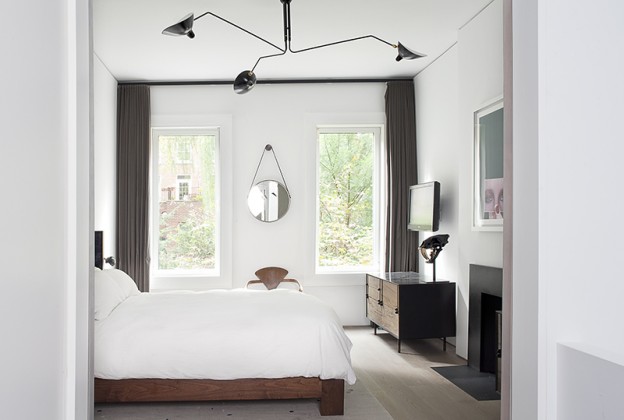
a madrid penthouse in white.

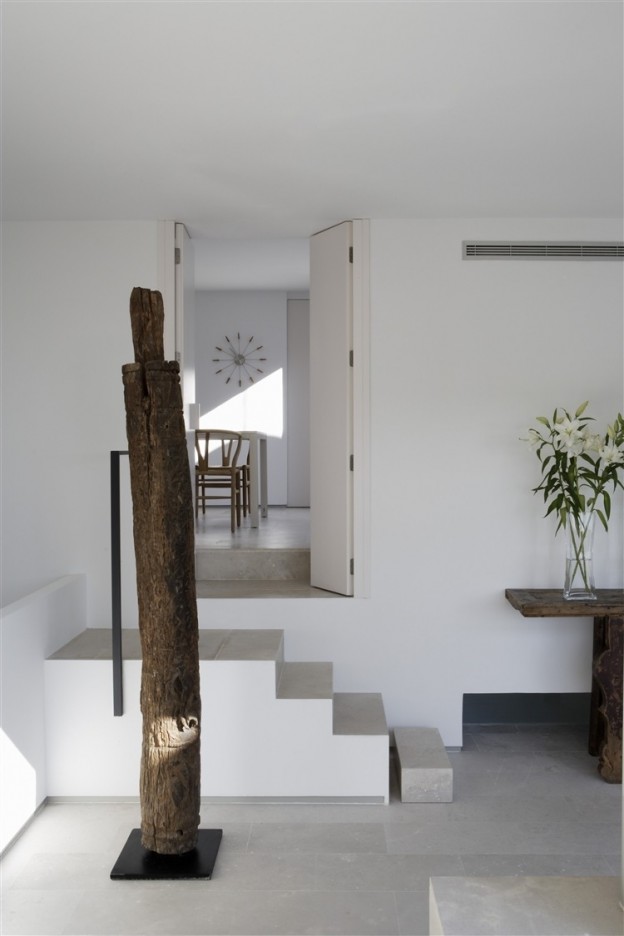
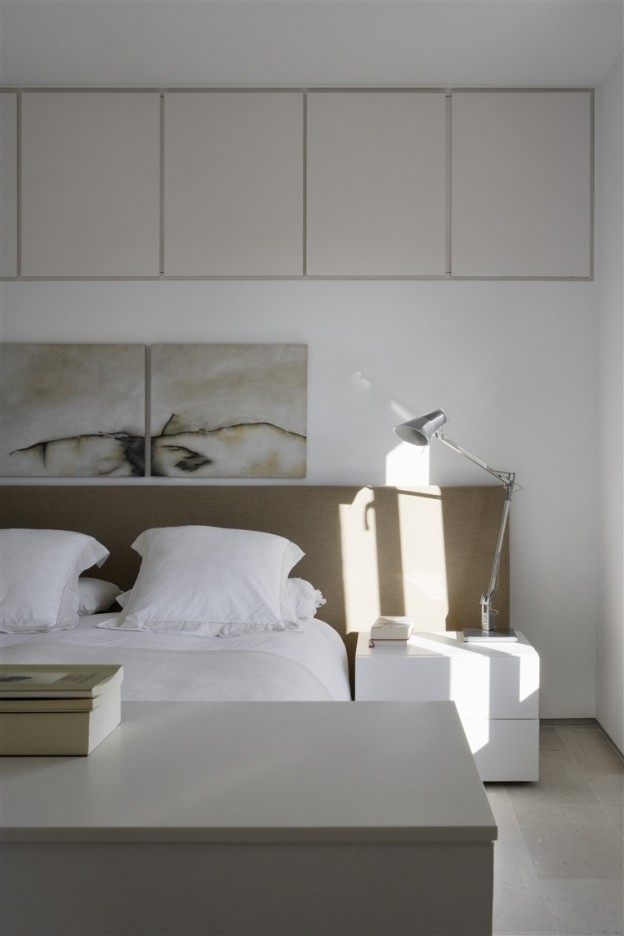
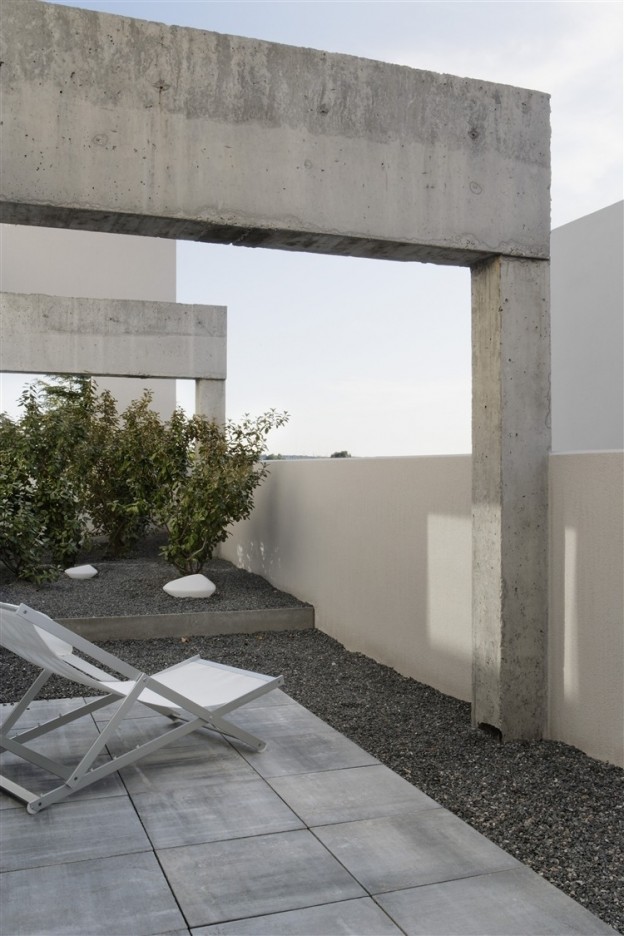
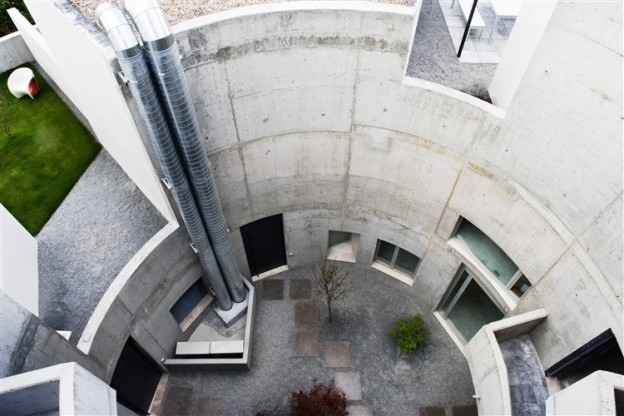
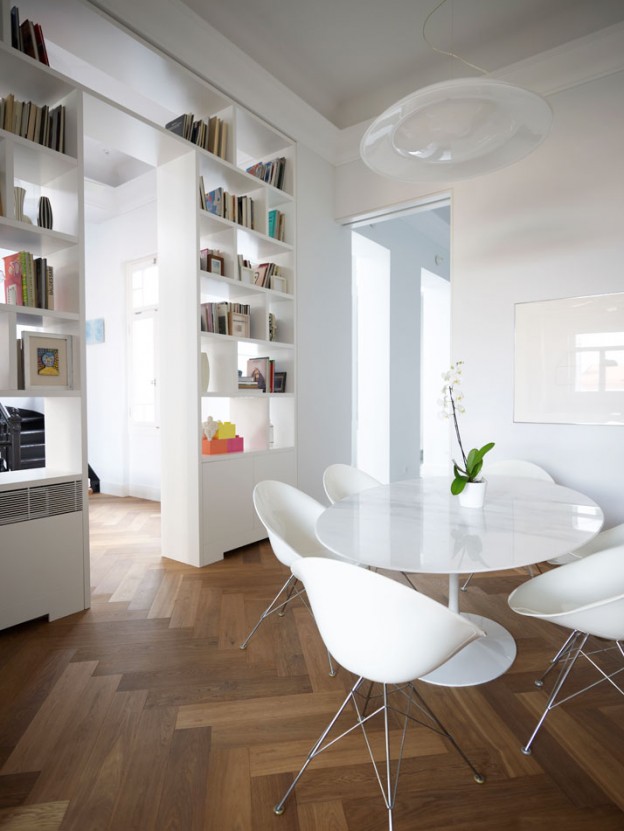
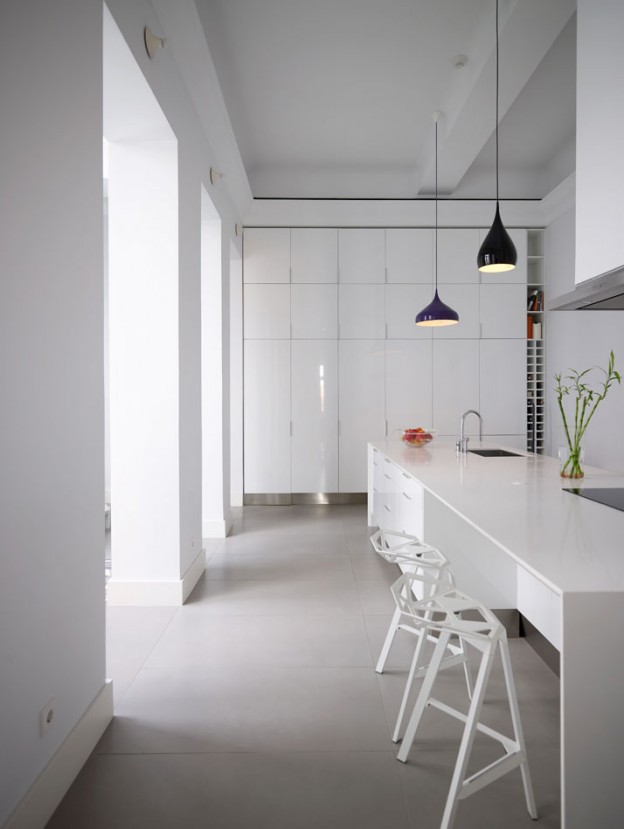
Coolness and light abound in this split-level penthouse in Madrid. All access areas to the property were conceived as outdoor spaces to increase privacy and a sense of seclusion. Terraces on different levels are fed with a natural irrigation system and rain water from the roof tops; these terraces of warm earth along with the concrete structure also serve as insulators.

Internally, white walls provide the backdrop, pale wood floors and stone offer coolness under-foot. Seamlessness is created with flush, built-in cupboards and shadow gaps where level changes meet the floor. I spy: light wood Wishbone chairs, Eames DSW and Catifa chairs with their shells in white; a George Nelson clock, Panthella table lamp. The simplest metal handrails.

009-atico-en-u-abaton-arquitectura007-atico-en-u-abaton-arquitectura011-atico-en-u-abaton-arquitectura014-atico-en-u-abaton-arquitectura015-atico-en-u-abaton-arquitectura019-atico-en-u-abaton-arquitectura

Which details do you like best?

Split-level penthouse in Madrid by Abaton Architects, here.

More wonderful, cool, white spaces, here.

shearers quarters house.

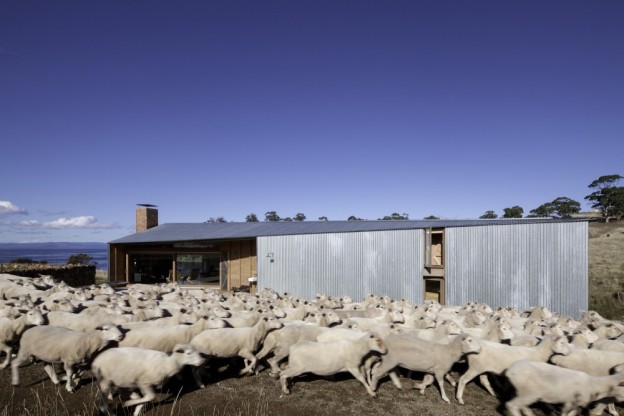
Vernacular architecture has always fascinated me – a building that is perfectly allied to its landscape, is contextual, and serves its end use with maximum function and purpose. This building appears to follow that philosophy and then some..

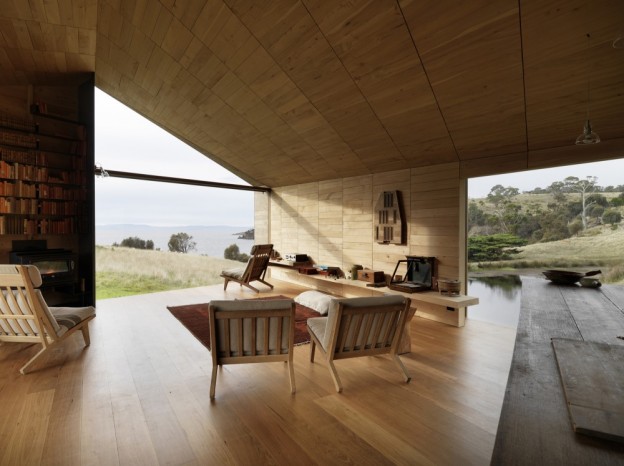
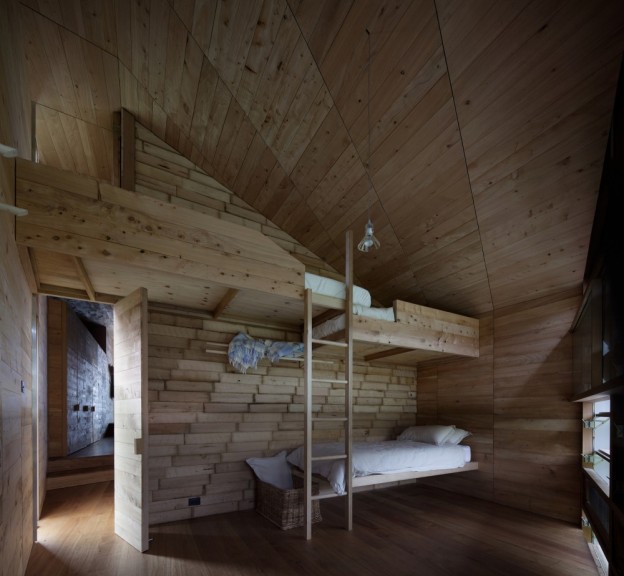
Shearers Quarters house sits as a companion building to an existing historic cottage on a working sheep farm, on an island off the Tasmanian coast. Not your average brief – it was designed to house shearers, family and friends on annual tree planting weekends and retreats. It comprises an open-plan living/dining/kitchen, bathroom and utility, two bedrooms and a bunkroom. A slender skillion roof at one end transforms to a broad gable at the other, opening up the form to the wonderful views beyond. The geometry of this shift is evident internally in the geometry of the internal walls and window frames.

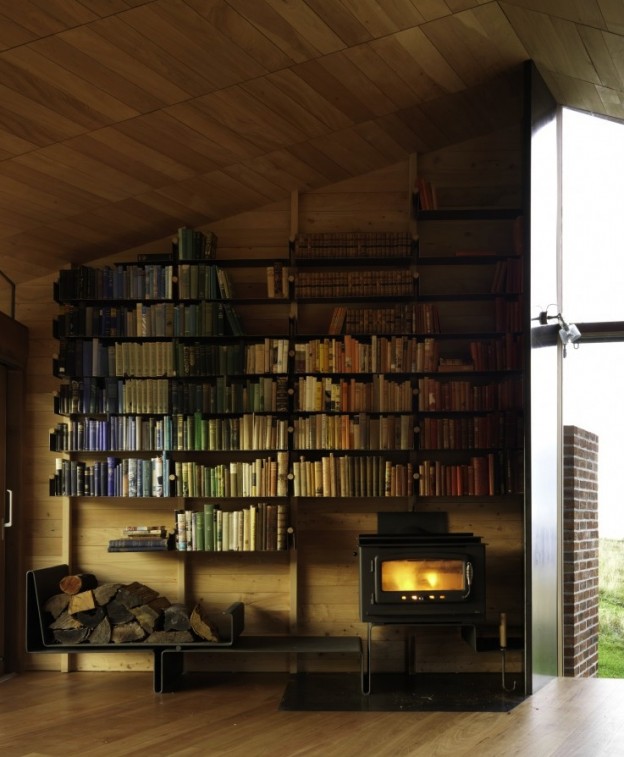
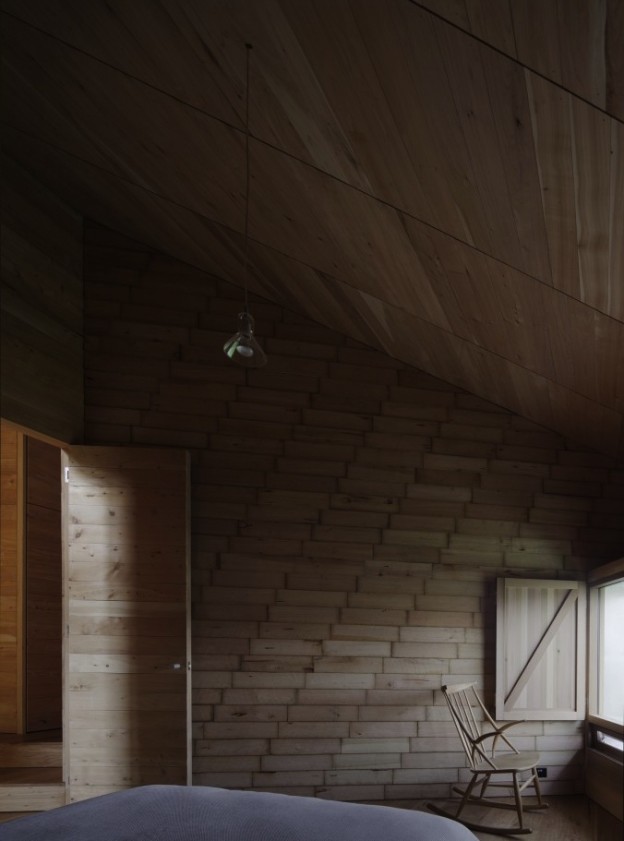
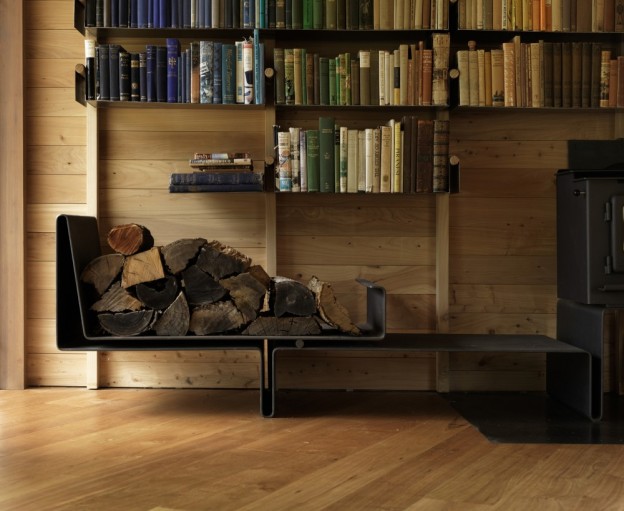
The simplest palette of materials has been used: corrugated galvanised iron to the exterior, timber internally. Pinus Macrocarpa is the primary timber used, sourced from old rural windbreaks. The bedrooms are lined out in recycled applebox crates, gathered from orchards of a nearby valley where the timber had remained stacked but unused since the late 1960s. This rhythm of small, regular pieces of wood becomes the decoration. Metal is also used folded to form shelves to store logs, and to create a wall of books.

shearers-quarters-john-wardle-architects_08_trevor-mein_owlshouselondon shearers-quarters-house-john-wardle-architects_09_trevor-mein_owlshouselondonshearers-quarters-house-john-wardle-architects_15_trevor-mein_owlshouselondonshearers-quarters-house-john-wardle-architects_14_trevor-mein_owlshouselondonshearers-quarters-house-john-wardle-architects_10_trevor-mein_owlshouselondon

Shearers Quarters House by John Wardle Architects, via

Photographs: Trevor Mein

Another wonderful example of vernacular building, this time in the Danish forest, here

a modern neo-classicist.

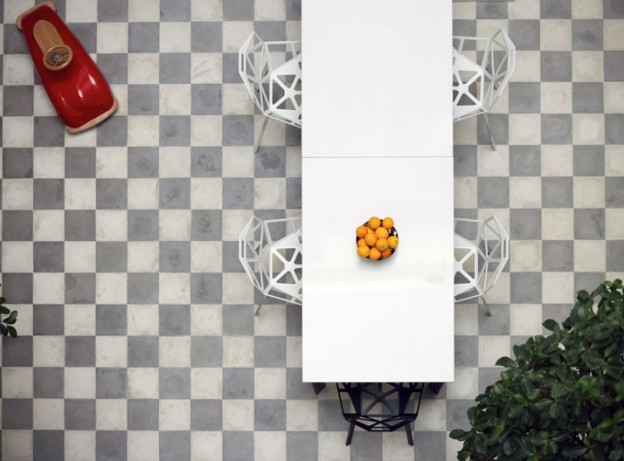
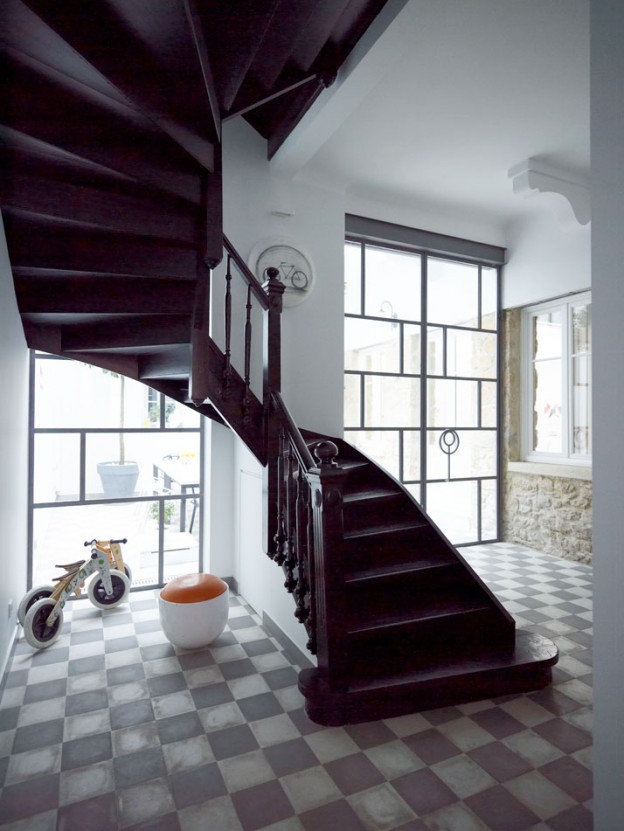
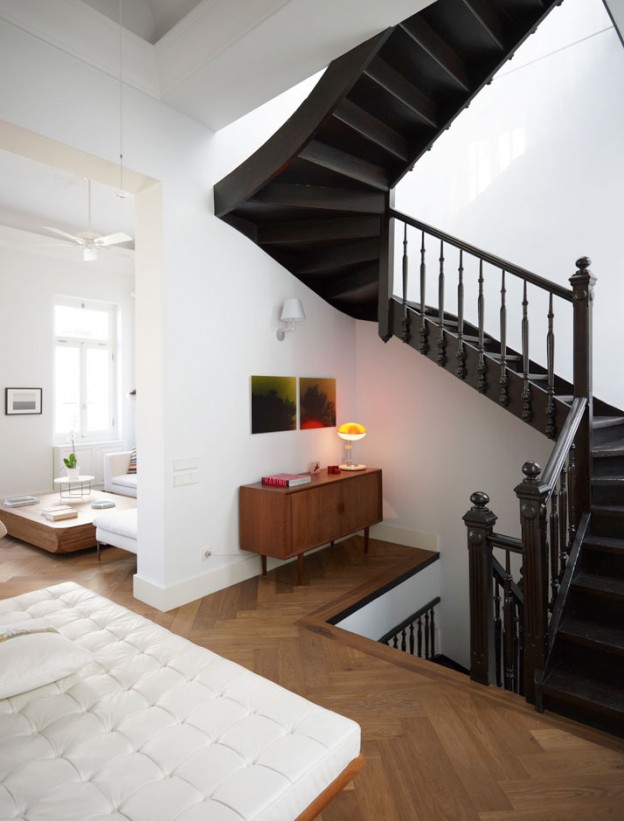
Set within a neoclassical building in Piraeus, Greece, the journey begins in the wonderful, tiled ground floor courtyard, previously a place for residents of old to meet and chat. Then on, up through original stonework and 19th century walls to the 1930s, and on to the contemporary new build extension and penthouse on the fourth floor.

The original staircase painted glossy black wends and winds its way through the spaces in dramatic fashion; elsewhere, white predominates as the background. Original tiles are maintained in the courtyard, new wood floors are laid in a herringbone pattern giving warmth and a contemporary flavour.  Original details are evident throughout. All existing interior walls have been demolished and replaced with sliding doors and walls for flexible living; the courtyard too has over-sized glazed doors emphasising the verticality of the space. Bold colours and contemporary furniture pieces chosen for their sculptural forms create a wonderful blend of old and new.

The-Grand-Dame-stella-konstantinidis-askarchitects-photo-Vangelis-Paterakis-yatzer-1The-Grand-Dame-stella-konstantinidis-askarchitects-photo-Vangelis-Paterakis-yatzer-19The-Grand-Dame-stella-konstantinidis-askarchitects-photo-Vangelis-Paterakis-yatzer-7The-Grand-Dame-stella-konstantinidis-askarchitects-photo-Vangelis-Paterakis-yatzer-10The-Grand-Dame-stella-konstantinidis-askarchitects-photo-Vangelis-Paterakis-yatzer-13The-Grand-Dame-stella-konstantinidis-askarchitects-photo-Vangelis-Paterakis-yatzer-12Grand Dame by ASKarchitects, Piraeus, Greece via

Photos: Vangelis Paterakis

More wonderful spaces, here

a cabin for living.

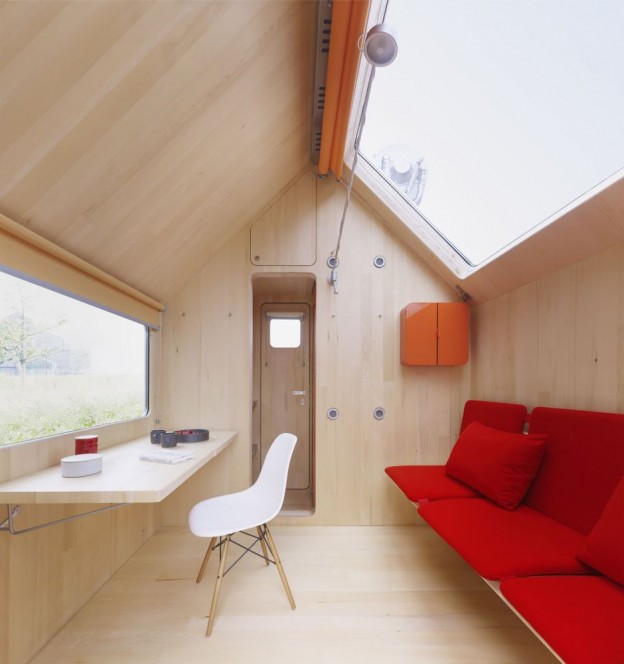
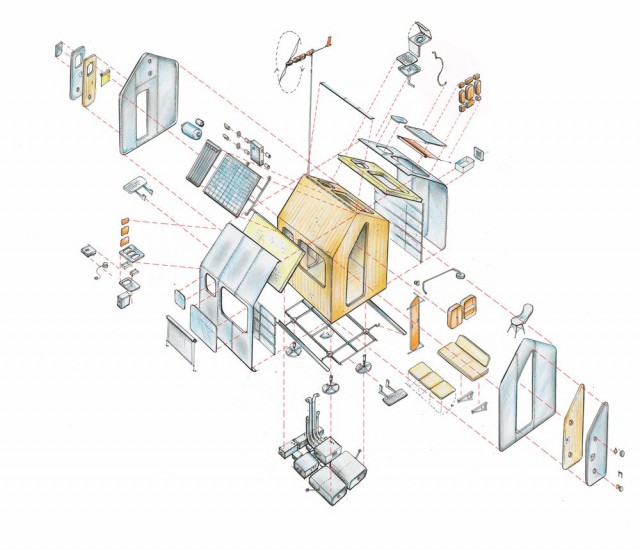
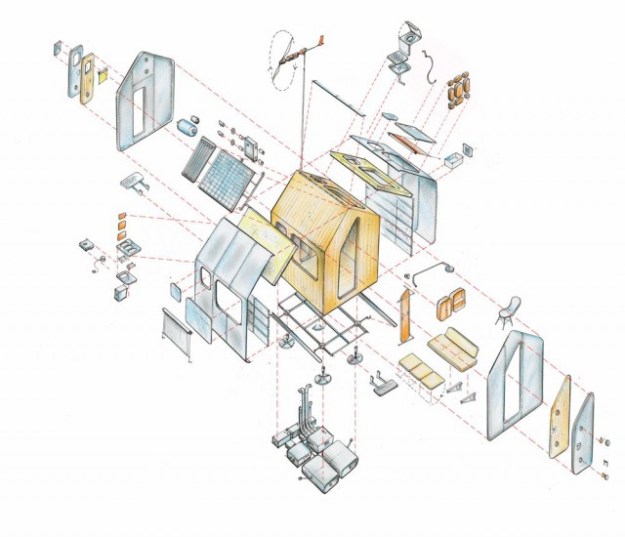
Diogene is a minimalist living unit that functions as a self-contained system independent of its environment. It is named after the ancient philosopher Diogenes, who is said to have lived in a barrel because he considered worldly luxuries to be superfluous.

Designed by Renzo Piano (who paradoxically also designed Western Europe’s tallest building, the Shard), Diogene is fully equipped with everything one needs to live. The front serves as a living room, with a pull-out sofa on one side and a folding table under the window on the other. Behind a partition are a shower, toilet and kitchen. It is constructed from wood which also informs the interior; the exterior is coated with aluminium cladding for weather protection. With a footprint of 2.5 x 3 metres when fully assembled, it can be loaded onto a lorry and transported anywhere. The house’s simple exterior, corresponding to a child’s image of a house, belies the complexity of photovoltaic cells and solar modules, a rainwater tank, biological toilet, natural ventilation and triple glazing, all required to allow it to exist autonomously. Diogene has many possible uses: It can serve as a weekend house, as a studio, or as an office. It can be placed freely in nature, but also right next to a workplace, even in the middle of an open plan office.

vitra_diogene_owl'shouselondon.vitra_diogene.

Renzo Piano cites Le Corbusier’s Cabanon as one of his architectural references. Le Corbusier, who believed a house was a ‘machine for living’, constructed the cabin for his own use in the 1950s in Cap Martin in the Côte d’Azur. Based on human proportions – the walls are 2.26m high, the height of a six-foot man with one arm above his head –  it is for me the ultimate summerhouse. More on Cabanon, here

CABANON-LE-CORBUSIER-de-jeunes-gens-modernes-4-jpeg_201019

Image of Cabanon via Domus

Renzo Piano’s Diogene is installed on the Vitra campus in Germany. What do you think? Could you live in a house this size? Or is this Airstream caravan, with full size bathtub, more your style? (via the wonderful Girl and the Abode)

More good design series, here

a loft in the trees.

The main feature of this New York loft is a large, glass window wall. Framed with polished black lacquer panels, it claims the view as if it belonged within, like a picture on the wall. Due to the elevation, one appears high amongst the trees.

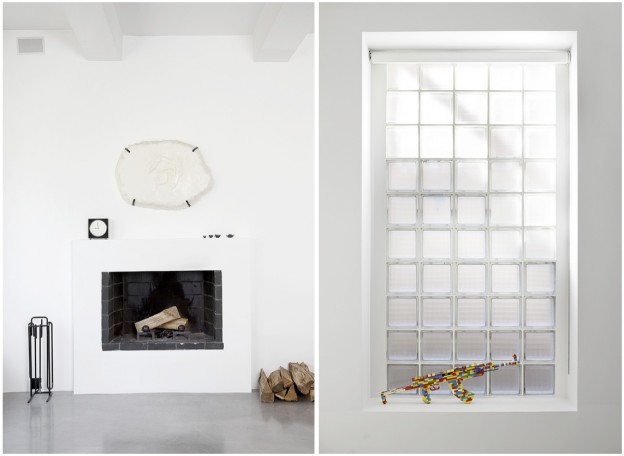
Perimeter walls and concrete beams are painted white to emphasise the inherent qualtites of the loft; a concrete floor poured throughout provides a seamless, flowing space. A pair of full height doors defines back from front when separation is necessary. Glass blocks diffuse light along the hallway and provide privacy from neighbours. The open plan kitchen is an L-shaped wall of book-matched, mahogany cabinets; the timber panels obscure a series of doors, including the powder room and pantry. Wood is chosen again in the dining table and chairs, which together with the wonderful, tree-top aspect, provides the warmth and texture to an otherwise monochrome palette.

rd_diningrd_dining_2ny loft on owl's house londonrd_bedroomny loft2 on owl's house london

Richardson ⁄ Dondoe loft by Workshop for Architecture, here

More wonderful spaces, here.

the wonderful world of oliver jeffers.

If you haven’t read the stories of Oliver Jeffers then you should begin at once. He is a children’s book writer, and his stories are sweet, poignant and hilarious (my favourite, Stuck, is laugh-out-loud funny, and my three-year-old doesn’t mind it, either..). The illustrations are just beautiful, too – spare in detail, rich in context.

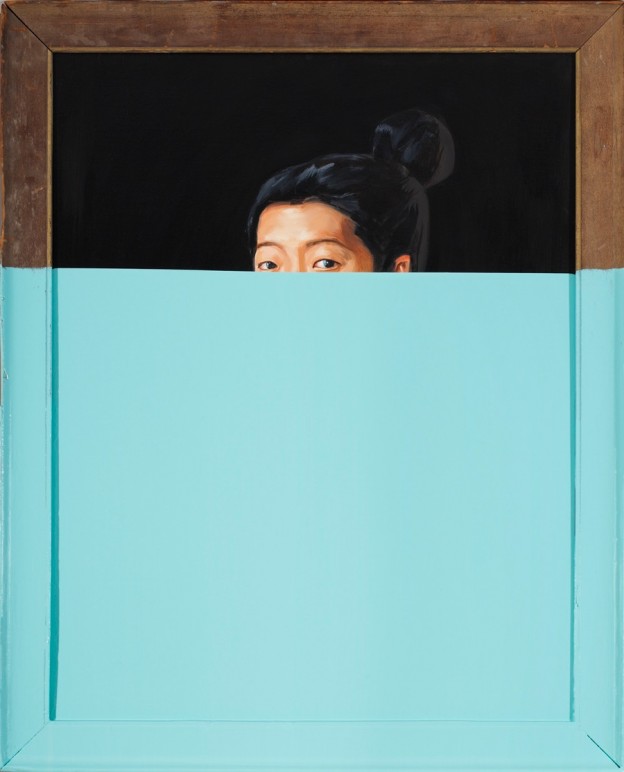
Now I have discovered (via the always wonderful French by Design blog), his dipped paintings. And now I’m crazy about them, too.

WITHOUT A DOUBT PART 2 (CUTOUT) LORESWITHOUT A DOUBT PART 1 LORESWithout a Doubt Part 3/Without a Doubt Part 2 (cutout)/Without a Doubt Part 1 all courtesy Oliver Jeffers studio

What do you think of these dipped paintings? More dipped things, here.

More in the gallery, here, and more fabulous children’s stories, here.

interior of the year.

I’m always curious to see what is new and happening in my home town of Melbourne, especially when it comes to design. Winner of the Residential Design awards at this year’s Australian Interior Design Awards was this house – Park House in Melbourne. The design was celebrated for its ‘seamless and effortless spatial flow, which achieves a sincere sense of livability and controlled softness throughout’.

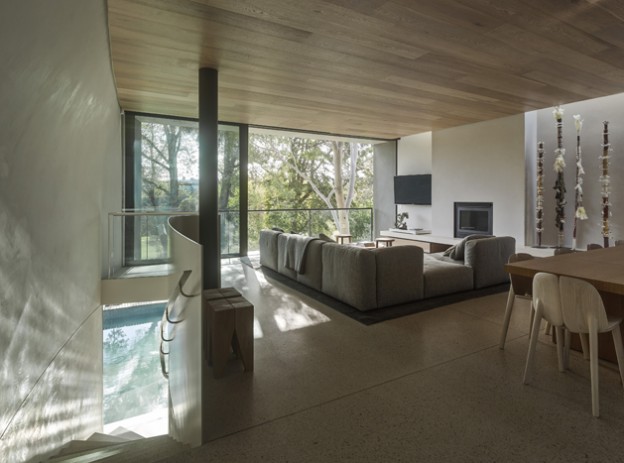
Everything in this home is highly controlled, from the super-fine, curved metal balustrade and opposing recessed handrail through to the vertical garden. However, an organic quality also exists – horizontally, in the flow of the spaces, as well as vertically, with curved, plastered walls continuing up past the ceiling planes, allowing the light to stream down in between in a controlled, but playful, manner.

The palette and detailing is again purposefully restrained, with a clear emphasis on materiality. Wood ceilings, for example, are a wonderful way to bring in warmth and softness as a counterpoint to the hard stone floors. Glass, plaster and metal elements are all utilised in the creation of the flowing forms and spaces. Furniture and fittings are perfectly suited and again selected for finish and form.

park house on owl's house london2owl's house london. park house4owl's house london. park house1park-house-05

The house was a collaboration between Leeton Pointon Architects + Interiors and Allison Pye Interiors. Park House via Australian Design Review, here. Photographs, Peter Bennetts.

Which of the elements stand out for you?

More wonderful spaces, here

an italian summer house :: from the archive.

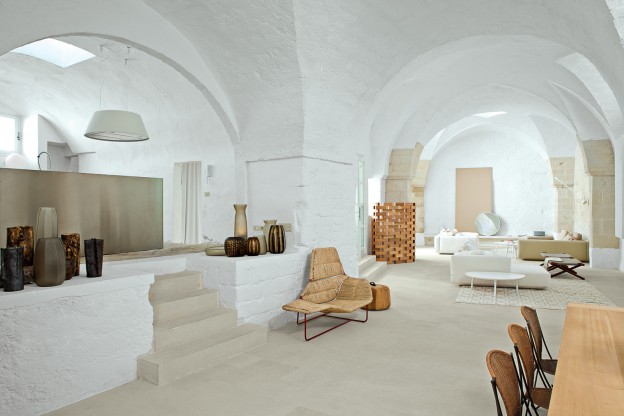
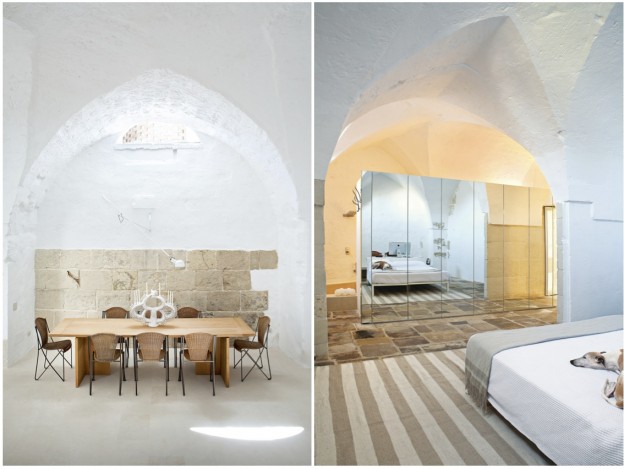
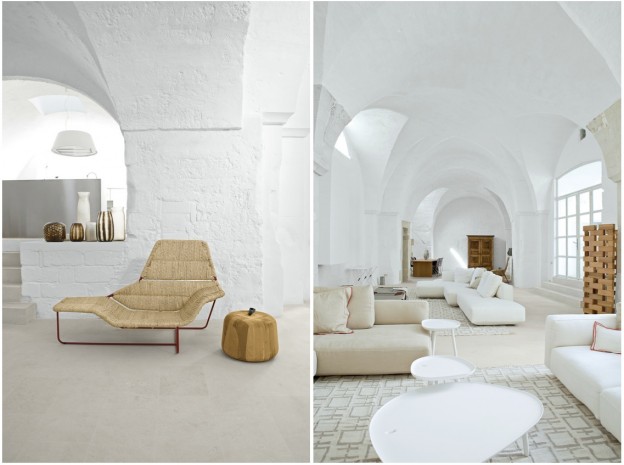
There is good reason this 17th-century oil mill in southern Italy looks more like a furniture showroom than an inhabited summer house. The dwelling is filled to the brim with the designs of the owners, the architects (and husband and wife team) behind Palomba Serafini Associati, who have together designed bathrooms, kitchens, furniture and lighting for some of the biggest names in Italian design: Boffi, Cappellini, Foscarini and Zanotta.

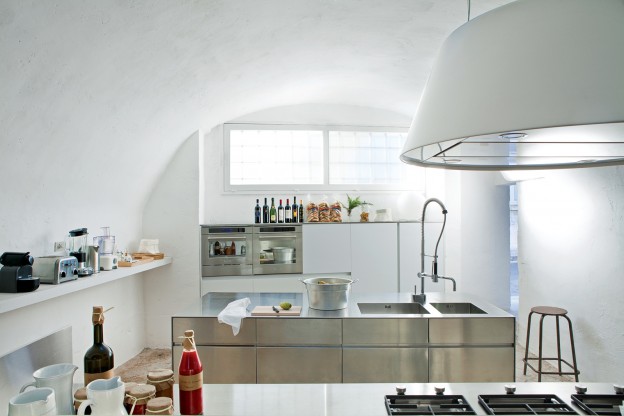
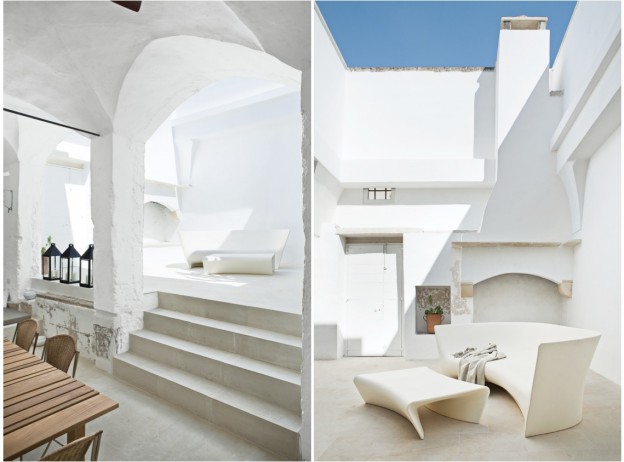
Retaining the rawness of the existing structure, they have made few interventions, retaining ancient stone floors, walls and arches. A lack of windows in the old mill has been overcome with the use of skylights carved out of the stone, as well as a patio at the rear, allowing the daylight to flood in. In the kitchen they have adapted to the existing space, adding only a sleek, minimal but multi-functional stainless steel island, originally designed for the Italian cabinetry company Elmar. A stainless steel screen separates the work and sleeping areas.

As well as their manufactured products, the home contains bespoke pieces, all commissioned from local craftspeople. One piece that really stands out is the Lama chaise longue, originally designed for Zanotta in steel and leather (see it, here); here they have upholstered it in straw and red metal. It is a beautiful and fluid stand-alone piece.

owl's house london1owl's house london2

palomba-kitchenowl's house london3

 Via Dwell. Images by Francesco Bolis.

What do you think of Italian summer house – showroom or home?

More wonderful spaces, here
a chelsea townhouse.

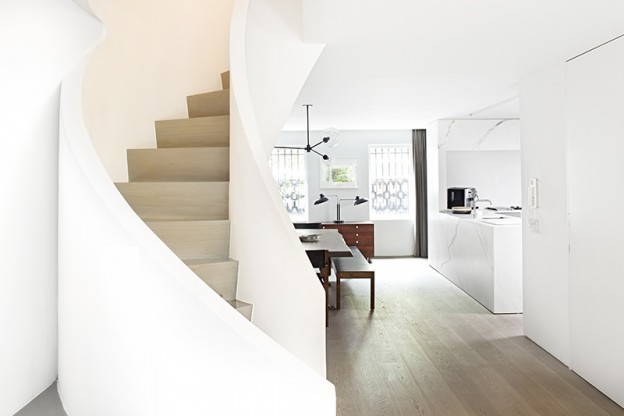
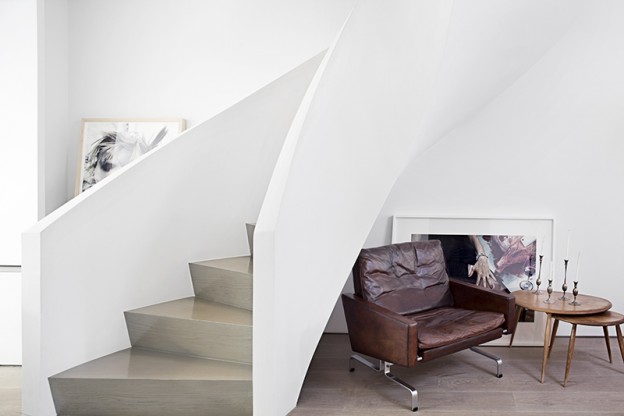
The renovation of this brick townhouse in New York’s Chelsea neighbourhood was designed to connect the garden level spaces with the exterior and to create open living spaces throughout. With this intention it succeeds – a large glass sliding wall system connects the living room and garden, framing the view; casement windows at the upper levels have been fully glazed to allow the master bedroom and bathroom uninhibited views to outside. A spiral stair within winds organically between the two levels, the continuation of the wood floor assists the flow upwards between the spaces.

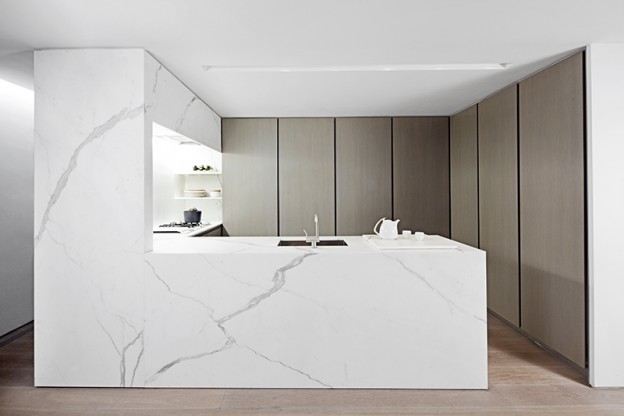
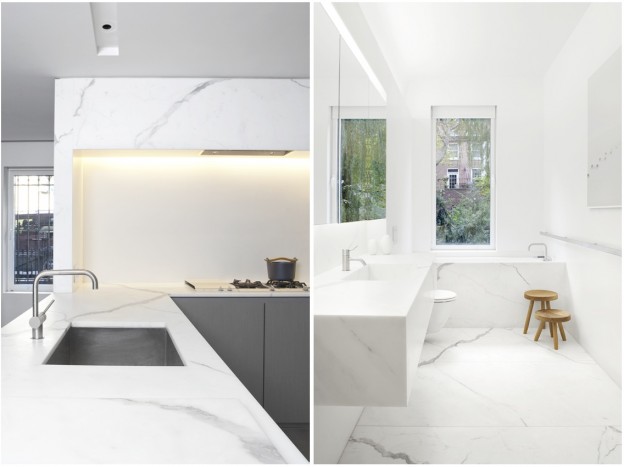
The palette is a simple one – grey oil-stained European White Oak, white walls and large slabs of white marble. Lighting in linear slots between horizontal and vertical planes provides an ambient, warm glow. The white and grey-veined Calacatta marble of the kitchen worktop forms a strong sculptural element, with everyday utensils and appliances hidden away behind doors. The marble slabs also create a seamless bathroom, where the surfaces are seemingly carved out of stone. (Similar to Carrara marble, Calacatta marble also comes from the Carrara region of Italy, but has a bolder, more dramatic vein, which can vary from grey to brown. It is also a whiter white, which makes it more valuable).

Built-in storage and shelving and beautiful mid-century furniture pieces furnish the spaces simply.

temp_kitch_1images2 ny townhouse by ohl

temp_stair_4temp_liv_1temp_bed_2

ext ny townhouse by ohl

Templer Townhouse by Workshop for Architecture LLP, here.

More wonderful spaces, here.