Tag Archives: architecture

old jaffa house.

dezeen_Jaffa-House-by-Pitsou-Kedem_11

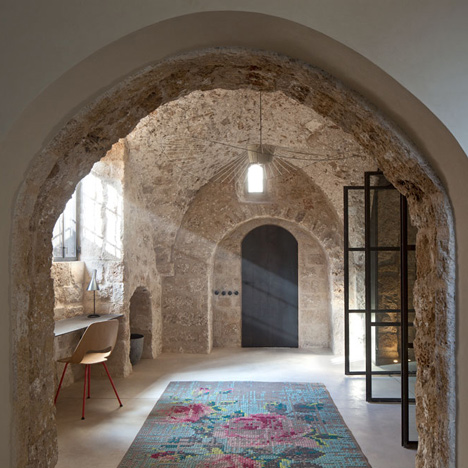
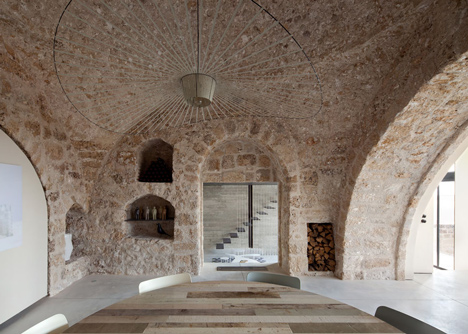
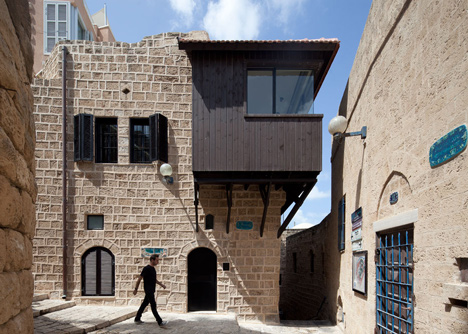
In the ancient port city of Old Jaffa in Israel, a building hundreds of years old has been stripped of all extraneous elements to reveal the original structure of broken clay and shells, vaulted ceilings and huge archways. These textures and materials have been left expressed, and contemporary elements added to allow the home to respond to modern life.

Highly tensioned stainless steel cables form a vertical balustrade, drawing the eye on up. Cor-ten steel treads cantilever out of a béton brut wall; the concrete left unfinished with the imprint of the plywood formwork used for pouring still visible on the surface. Openings are framed out in darkest metal. Niches are carved into the stone to create storage and space for a desk. Furnishings are kept simple – exposed concrete floors are scattered with patterned rugs; the floating, dancing Vertigo pendant lamp one of only a few  decorative elements (I wrote about Vertigo a little while back, here)

dezeen_Jaffa-House-by-Pitsou-Kedem_28

dezeen_Jaffa-House-by-Pitsou-Kedem_3dezeen_Jaffa-House-by-Pitsou-Kedem_4sqjaffa_house-ohldezeen_Jaffa-House-by-Pitsou-Kedem_8dezeen_Jaffa-House-by-Pitsou-Kedem_18

Jaffa House by Pitsou Kedem architects, via  Photography, Amit Geron. 

More wonderful spaces, here.
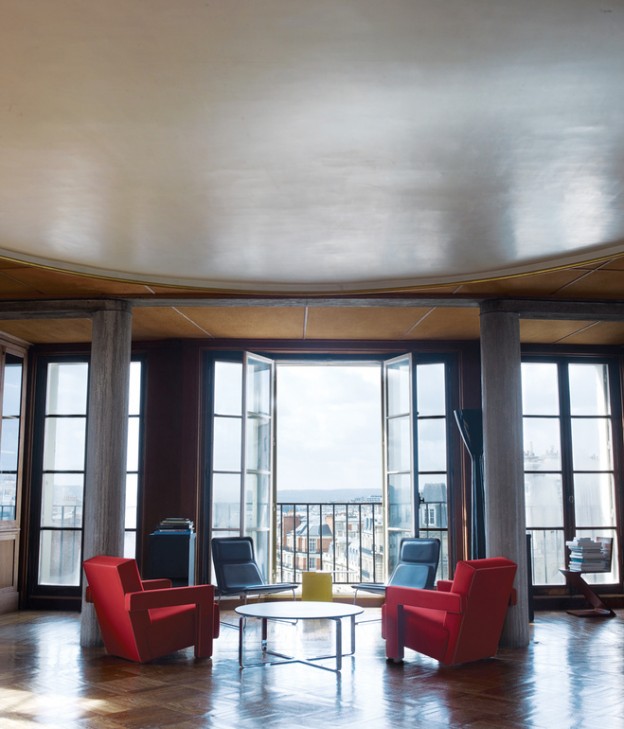
a parisian pied-à-terre.

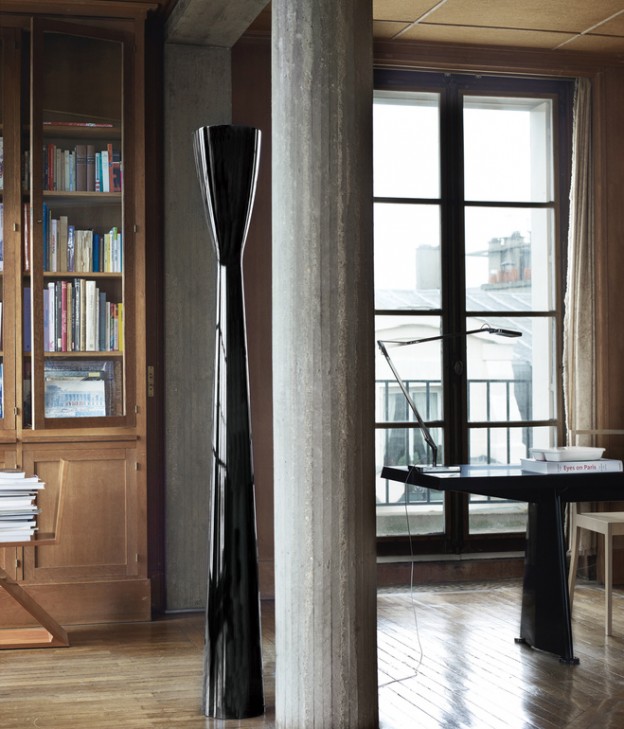
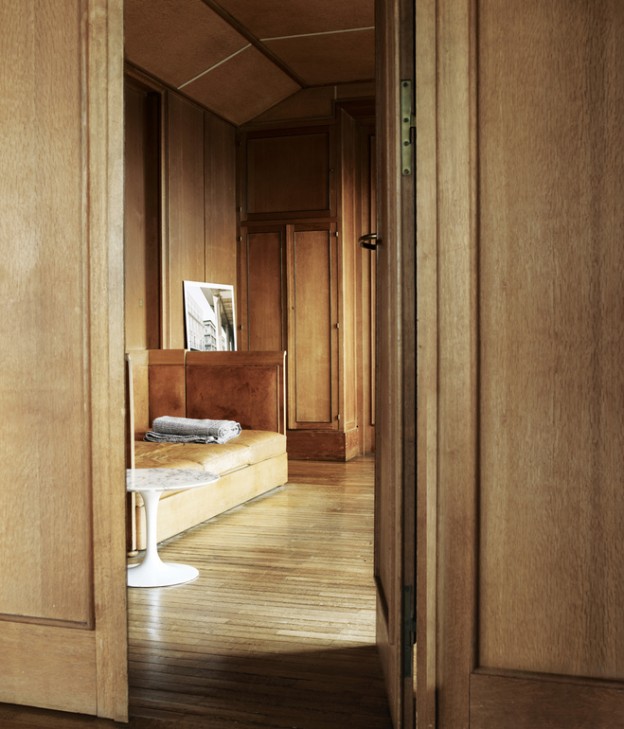
51 rue Raynouard is an apartment block in the16th arrondissement in Paris, designed and built in 1932 by Auguste Perret. Perret is a seminal architect of the 20th century, responsible for heading the re-build of Le Havre post–Second World War (now a World Heritage Site), and for his pioneering use of reinforced concrete. He constructed no. 51 to house his design firm and his family, in an apartment on the top floor. His concern was not so much how his building looked from the ground, but rather how the world outside would appear from his building. Perret  wrote that the apartment ‘is filled with sunlight from dawn to dusk’. Now a listed building, architectural interventions are restricted and the architect owner has refused to make even minor repairs. But he has certainly filled it with pretty things…

paris-match-dining-roomparis-match-living-roomparis-match-bedroomparis-match-banquetteparis-match-bathroom

The walls throughout are lined with French oak panelling in the most beautiful pale honey colour, floors are narrow timber boards of a similar hue and columns are made from stone-blasted concrete, not the marble one would expect of the era.

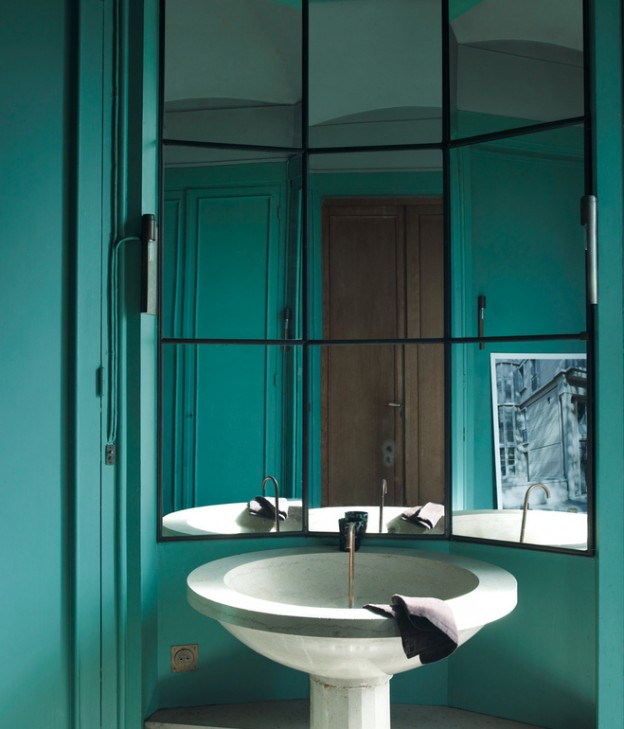
The furniture is a master-class of design classics. In the dining room, black marble-topped Eero Saarinen table and Eames wire chairs. I spy an AJ floor lamp by Arne Jacobsen and Flos desk lamp. Red Utrecht armchairs by Gerrit Rietveld and his Zig Zag chair sit alongside more modern pieces – Low Pad chairs by Jasper Morrison and a Still coffee table which echoes the circular plaster feature ceiling above. A beautiful, circular stone basin sits within the turquoise-green bathroom.

Modern High Design Pied-à-Terre Paris, via Dwell, here, and ‘One hundred houses for one hundred European Architects’ by Gennaro Postiglione.

Photographs: Hotze Eisma.

Or do you prefer a pared back parisian, here?

house in noto.

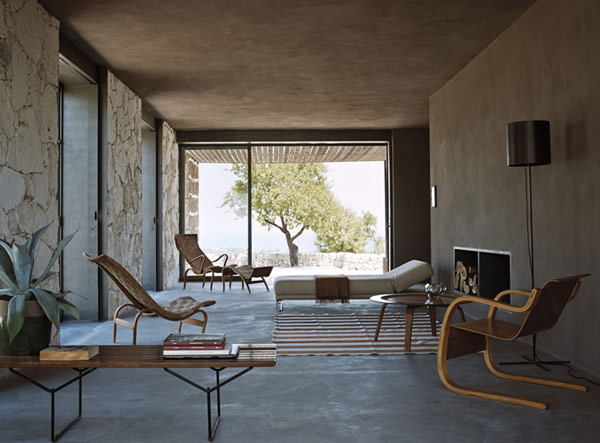
I’ve always been an Italophile but last year was the first time I had visited Sicily. Having been seduced by the superior piece of writing Il Gattopardo (‘The Leopard’), and the rather lighter, but no less charming stories of Inspector Montelbano, it was raw and intense and wonderful. This house is in Noto, a jewel of a Baroque town on the east coast (we stayed just outside Noto, in this fabulous hotel).

White stone walls that look as if they have been laid dry are juxtaposed with surfaces of smooth render. Other hard surfaces – concrete floors and full height metal framed openings – help to achieve the feeling of respite from the hot sun. Mid-century furniture languishes in the cool interior –  Bertoia walnut bench; Alvar Aalto tables and PH5 pendant (more PH5, here); beautiful, sculptural moulded plywood armchairs.

gordonguillaumier1Noto_03Noto_10gordonguillaumier3gordonguillaumier10Noto_13Have you visited Sicily? Casa Eloro by Gordon Guillaumier (also worth a look: Casa Muro, also in Noto, here)

More wonderful spaces, here

a neutral palette.

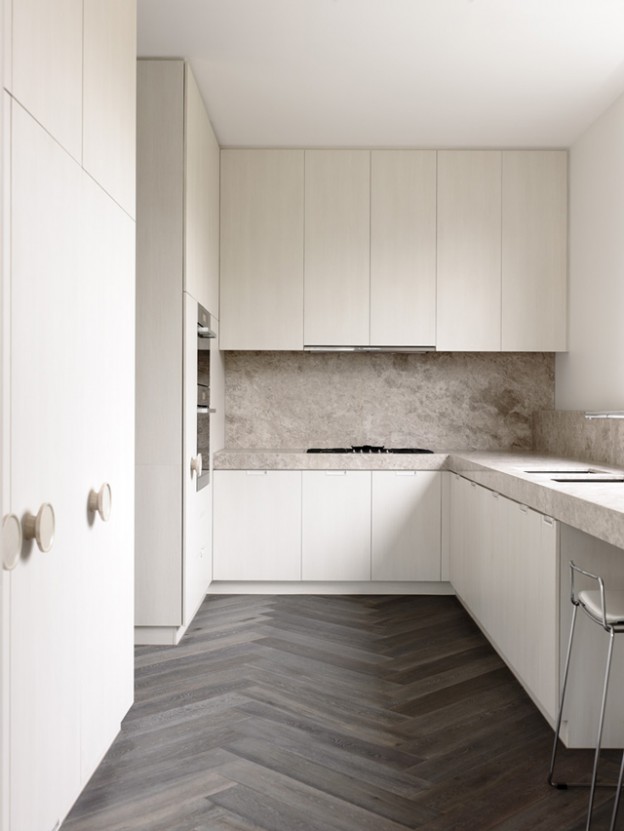
A development of five apartments in Melbourne caught my eye whilst scouring the internet, as did the design blog of its author, pages from my moleskine (well worth a peek, here). Although undecorated and uninhabited, a bland developer’s palette has been avoided with rich, subtle texture and beautifully detailed finishes. French grey parquetry flooring, palest timber veneer panelling and honed limestone provide the neutral backdrop. Generous proportions are evident with full height doors, and weighty stone benchtops. Plate sized, bespoke turned timber handles are the only extraneous elements. The black shutters of the facade create the only pattern within – that of the sunlight striping across the floor.

The otherwise achromatic colour scheme is only broken in the Powder room, with rich, grey/green mosaic tiles, and a single Alvar Aalto-designed A330 brass pendant floating assymetrically in the space. I love this palette of materials most of all.

CJA_Washington_015CJA_Washington_017CJA_Washington_013CJA_Washington_016CJA_Washington_023CJA_Washington_002

Gorgeous photographs by Derek Swalwell give life to the otherwise vacant spaces.

Could you live here? Toorak apartments, Melbourne by Chamberlain Javens Architects, via

More wonderful spaces, here.

cabin in wood and grey.

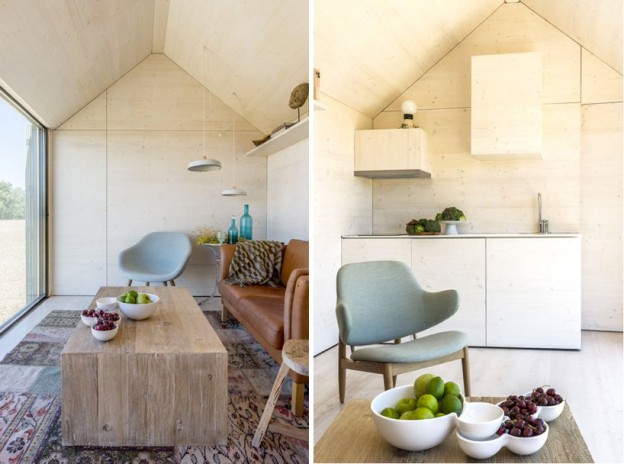
I wrote about Diogene, an experimental, minimalist living unit, here. APH80 is not autonomous (nor is the name poetic…), but it is a similarly small, perfectly formed, portable dwelling designed by architecture firm abaton.

Measuring 9 x 3 metres, it comprises a fully equipped interior with living-room/kitchen, bathroom and double bedroom. The material palette is all pale woods – a selection of FSC-certified spanish fir, local lumber and grey cement wood board cladding the facade. A solid timber skeleton allows large openings to the outdoors. It can be transported by road and placed anywhere.

abaton-low-cost-prefab-cement-home-designboom01abaton-low-cost-prefab-cement-home-designboom08

Just perfect for two. Low cost Prefab Home by Abaton via

Another small space, this time an enchanting, magical shed, here

More wonderful spaces, here

off to the beach.

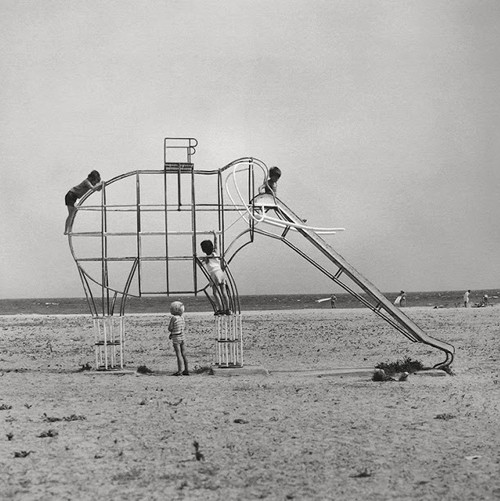
elephant slide on owl's house london.

After a brief foray into Surrey (in the shadows of Box Hill, known notably for its role in Jane Austen’s Emma, as well as the Olympic cycling last year), we are off to the beach.

I wrote about the Modernist architect John Winter in an earlier post (here); the Beach House was designed by him for his own use, and it’s available to rent. This is where we shall be ensconced, a stone’s throw from the east Norfolk coast. It’s not the charming curvaceous beaches of Sicily’s east coast, or the expansive endless horizon of sand of Australia’s coast, but it has sand crabs at low tide, and starfish at high; and the only accoutrement required is a bucket and spade. Just perfect for a three-year-old. Happy summer!

Elephant Slide (Girona 1975) via

elemental house.

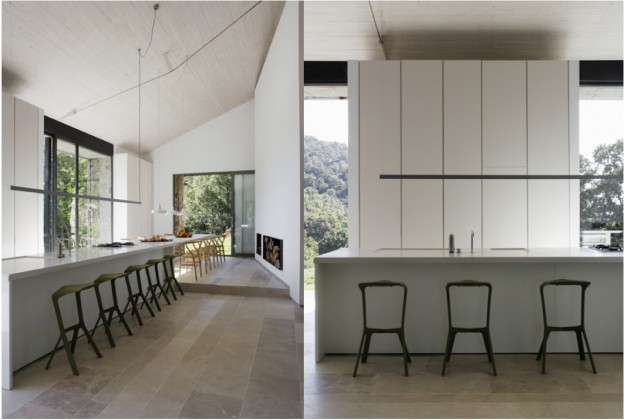
What was a crumbling stone stable in the countryside of western Spain is now a totally self-sufficient family home. Too remote to be connected to an electrical grid or water supply, the converted stable utilizes renewable energy sources such as hydro electricity and drinking and bathing water from two nearby streams. Deep eaves help control summer sun, large wooden shutters that slide closed like a second skin cover the windows at night to trap the daily solar heat gain.

The rustic stone of the exterior was restored using cement and local stone. Windows sit within deep recesses and can be screened behind large wooden shutters, referencing old stable doors. Within, floors are limestone, walls of exposed concrete are interspersed with slender metal posts and pale wood-lined ceilings rising to form double-height spaces. The internal structure of iron beams, metal posts and corten metal landings and steps are kept deliberately light and elegant. Internal interventions – kitchen units for example – are simple, white and linear. The kitchen bench top extends the length of the main room to form a table for dining, flanked by classic wishbone chairs and minimal black stools.

dezeen_Off-Grid-Home-in-Extremadura-by-Abaton_ss_4stablehouse_ohlimagesimages4

Did you notice the books hanging from the top bunks to allow easy reach?

Off Grid Home in Extremadura by Abaton Architects, here.

More wonderful spaces, here.

a madrid penthouse in white.

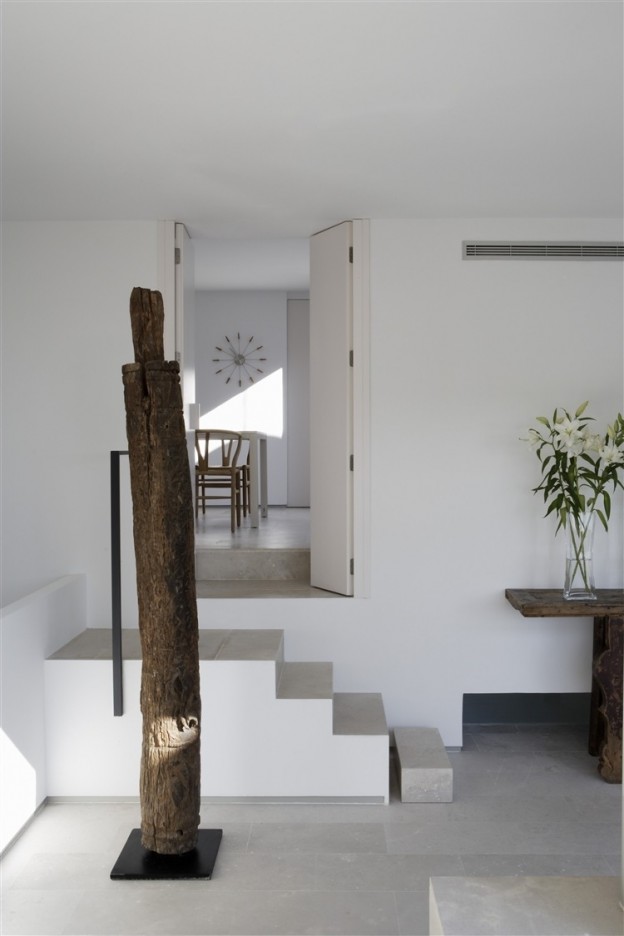
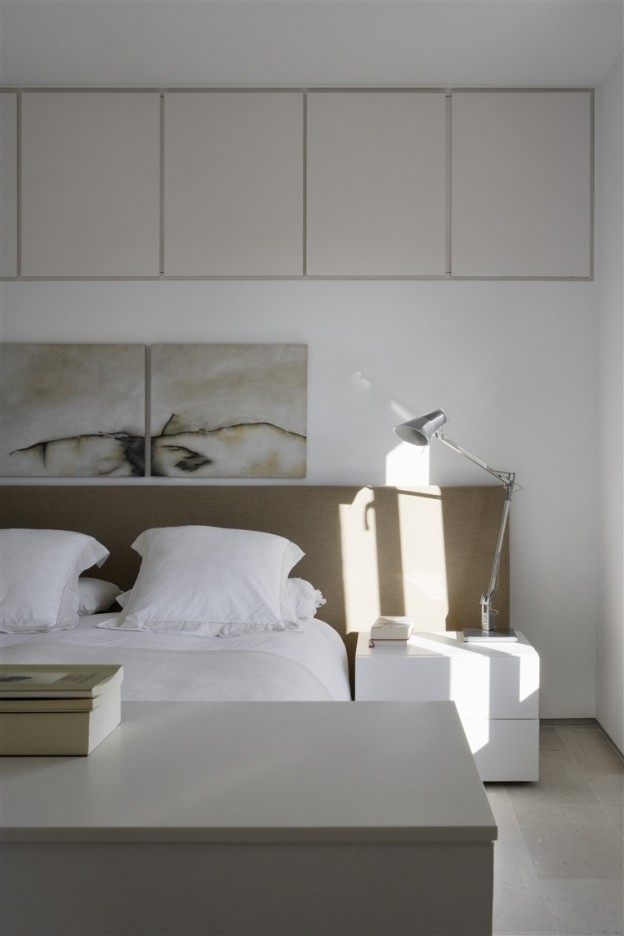
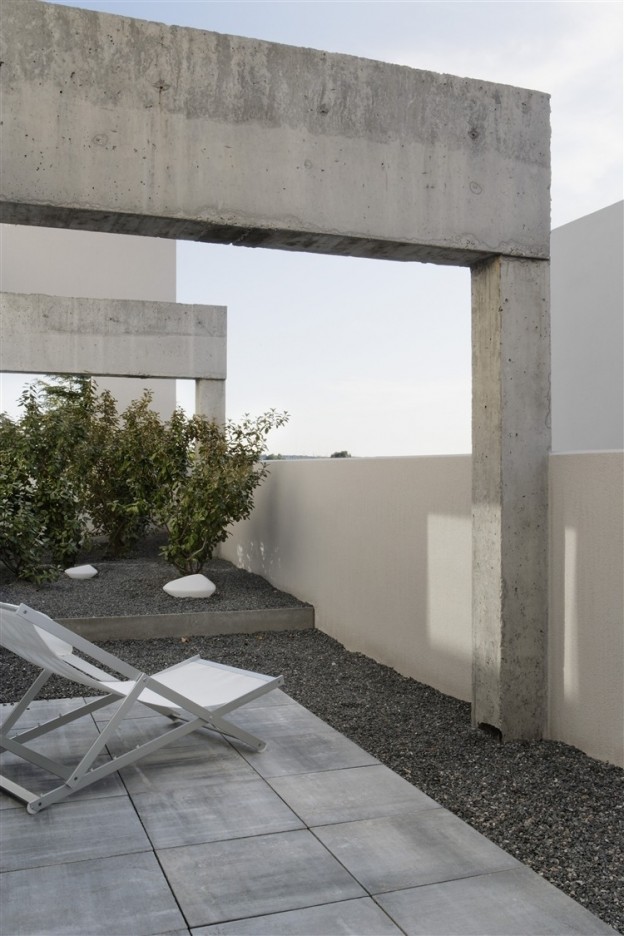
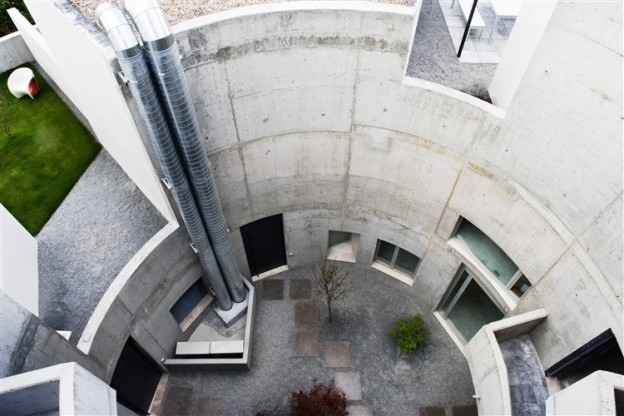
Coolness and light abound in this split-level penthouse in Madrid. All access areas to the property were conceived as outdoor spaces to increase privacy and a sense of seclusion. Terraces on different levels are fed with a natural irrigation system and rain water from the roof tops; these terraces of warm earth along with the concrete structure also serve as insulators.

Internally, white walls provide the backdrop, pale wood floors and stone offer coolness under-foot. Seamlessness is created with flush, built-in cupboards and shadow gaps where level changes meet the floor. I spy: light wood Wishbone chairs, Eames DSW and Catifa chairs with their shells in white; a George Nelson clock, Panthella table lamp. The simplest metal handrails.

009-atico-en-u-abaton-arquitectura007-atico-en-u-abaton-arquitectura011-atico-en-u-abaton-arquitectura014-atico-en-u-abaton-arquitectura015-atico-en-u-abaton-arquitectura019-atico-en-u-abaton-arquitectura

Which details do you like best?

Split-level penthouse in Madrid by Abaton Architects, here.

More wonderful, cool, white spaces, here.
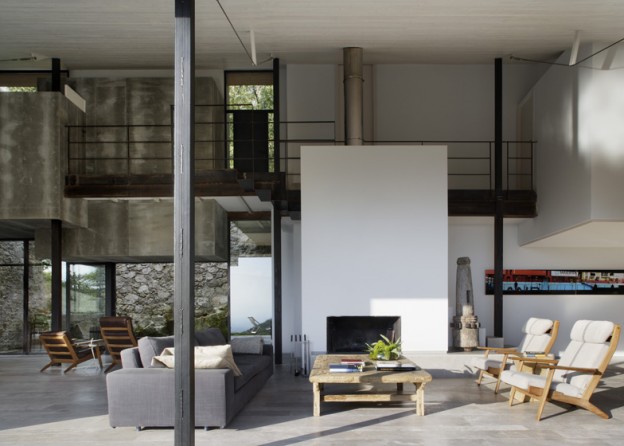
shearers quarters house.
Vernacular architecture has always fascinated me – a building that is perfectly allied to its landscape, is contextual, and serves its end use with maximum function and purpose. This building appears to follow that philosophy and then some..
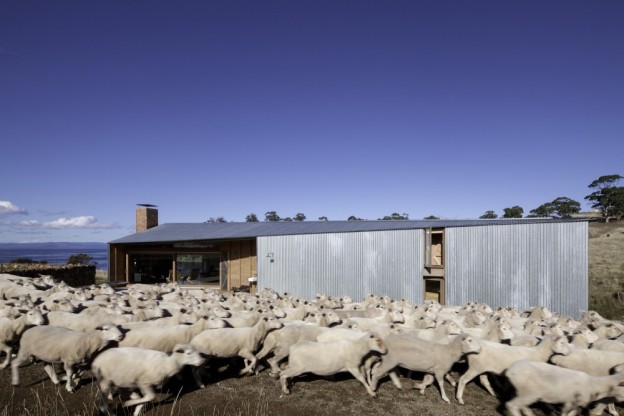
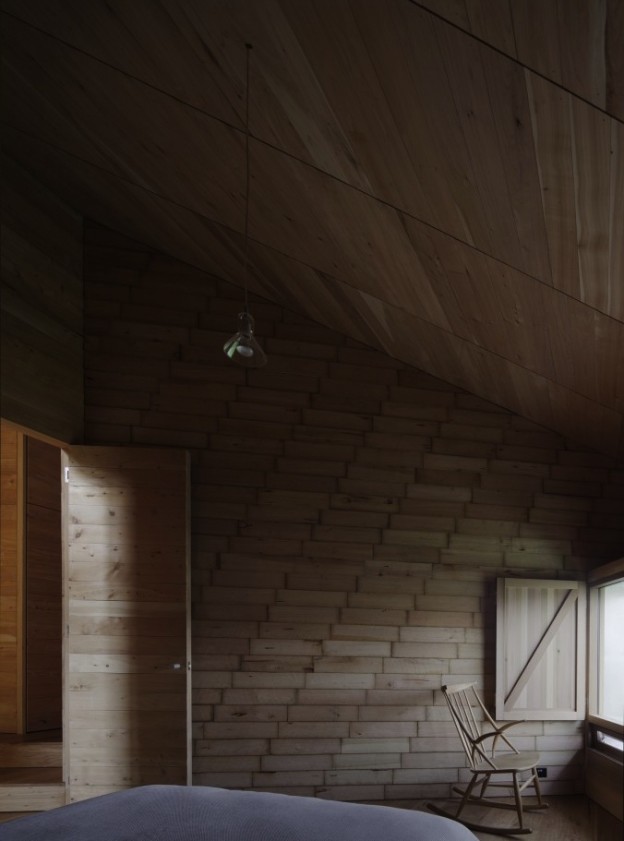
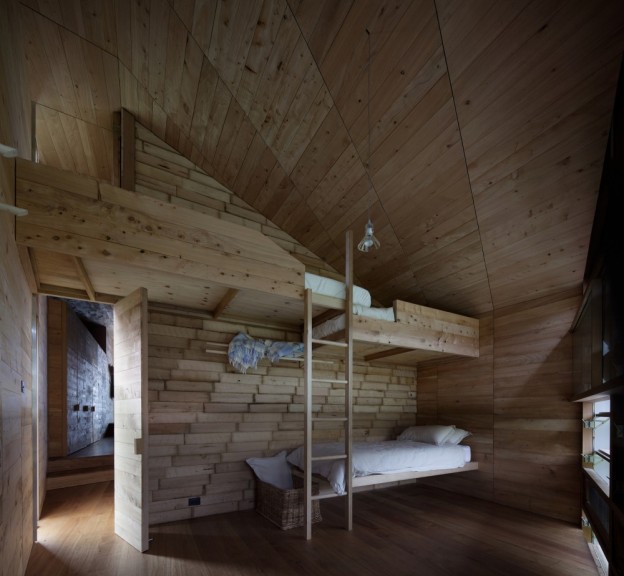
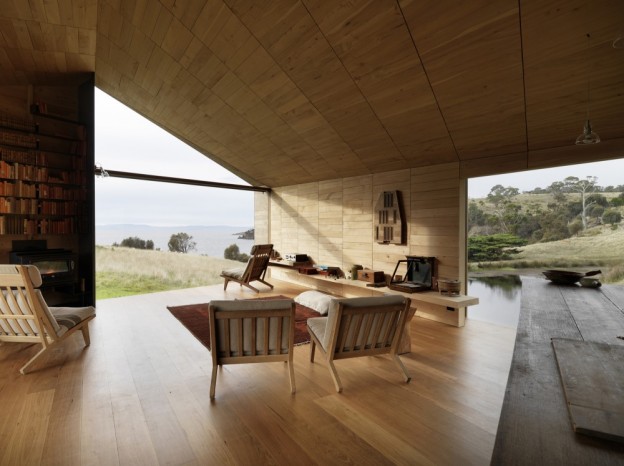
Shearers Quarters house sits as a companion building to an existing historic cottage on a working sheep farm, on an island off the Tasmanian coast. Not your average brief – it was designed to house shearers, family and friends on annual tree planting weekends and retreats. It comprises an open-plan living/dining/kitchen, bathroom and utility, two bedrooms and a bunkroom. A slender skillion roof at one end transforms to a broad gable at the other, opening up the form to the wonderful views beyond. The geometry of this shift is evident internally in the geometry of the internal walls and window frames.

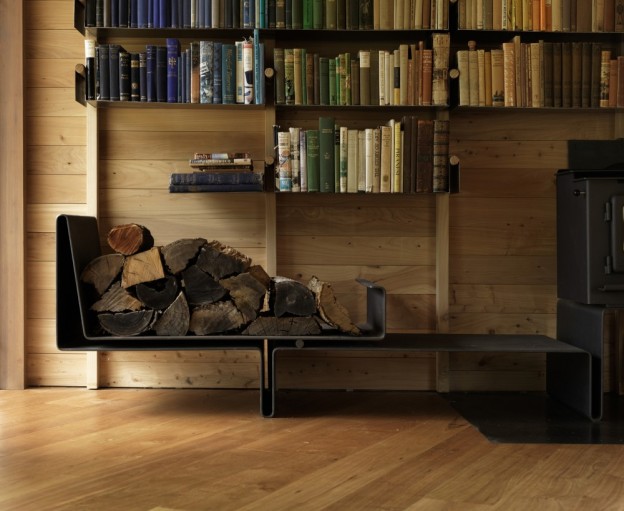
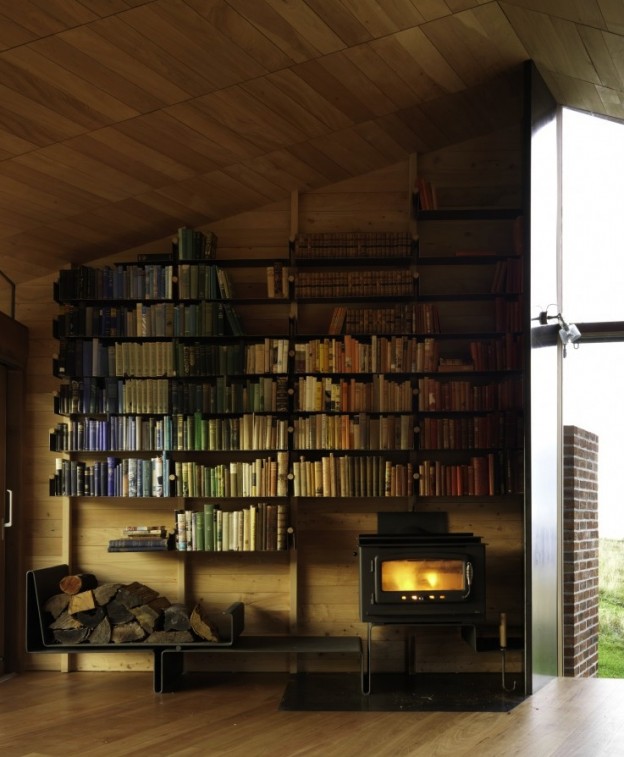
The simplest palette of materials has been used: corrugated galvanised iron to the exterior, timber internally. Pinus Macrocarpa is the primary timber used, sourced from old rural windbreaks. The bedrooms are lined out in recycled applebox crates, gathered from orchards of a nearby valley where the timber had remained stacked but unused since the late 1960s. This rhythm of small, regular pieces of wood becomes the decoration. Metal is also used folded to form shelves to store logs, and to create a wall of books.

shearers-quarters-john-wardle-architects_08_trevor-mein_owlshouselondon shearers-quarters-house-john-wardle-architects_09_trevor-mein_owlshouselondonshearers-quarters-house-john-wardle-architects_15_trevor-mein_owlshouselondonshearers-quarters-house-john-wardle-architects_14_trevor-mein_owlshouselondonshearers-quarters-house-john-wardle-architects_10_trevor-mein_owlshouselondon

Shearers Quarters House by John Wardle Architects, via

Photographs: Trevor Mein

Another wonderful example of vernacular building, this time in the Danish forest, here

a modern neo-classicist.

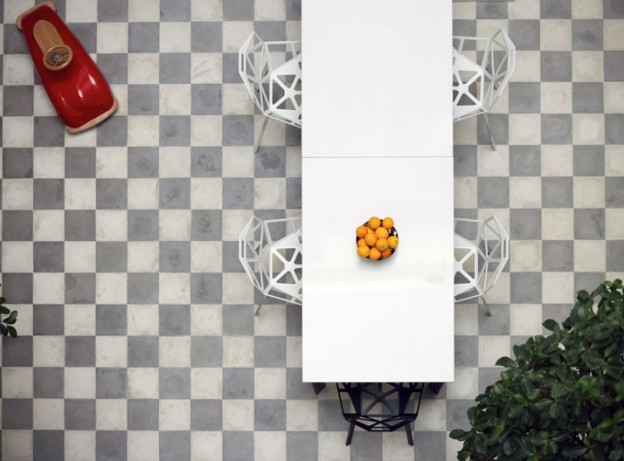
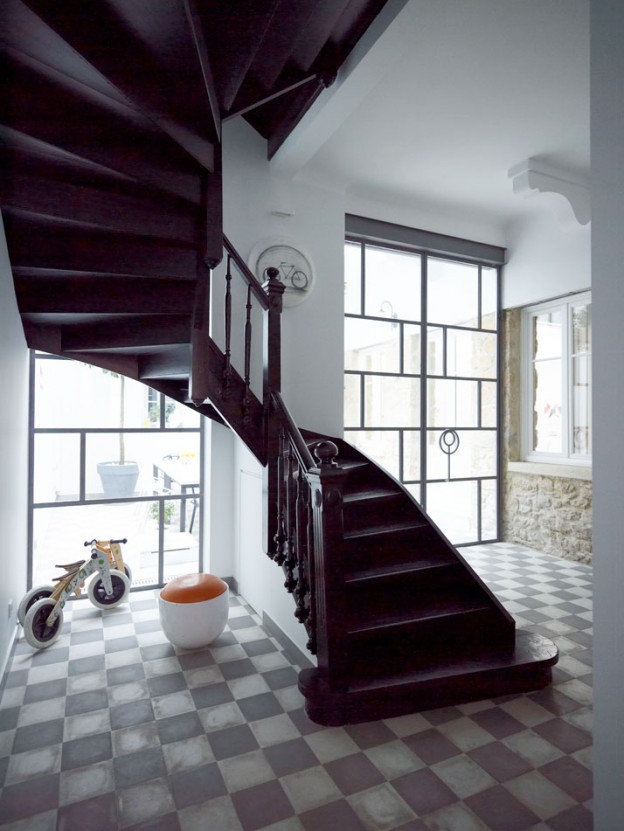
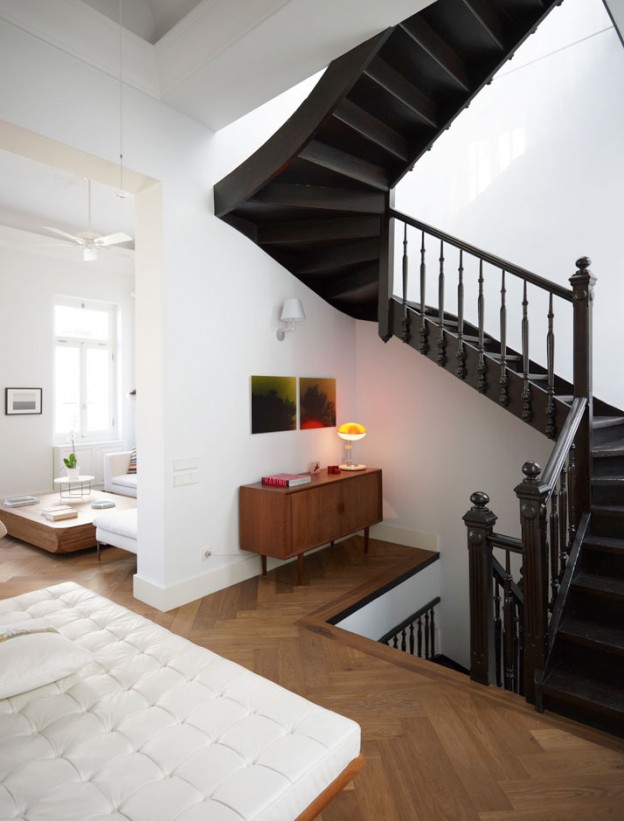
Set within a neoclassical building in Piraeus, Greece, the journey begins in the wonderful, tiled ground floor courtyard, previously a place for residents of old to meet and chat. Then on, up through original stonework and 19th century walls to the 1930s, and on to the contemporary new build extension and penthouse on the fourth floor.

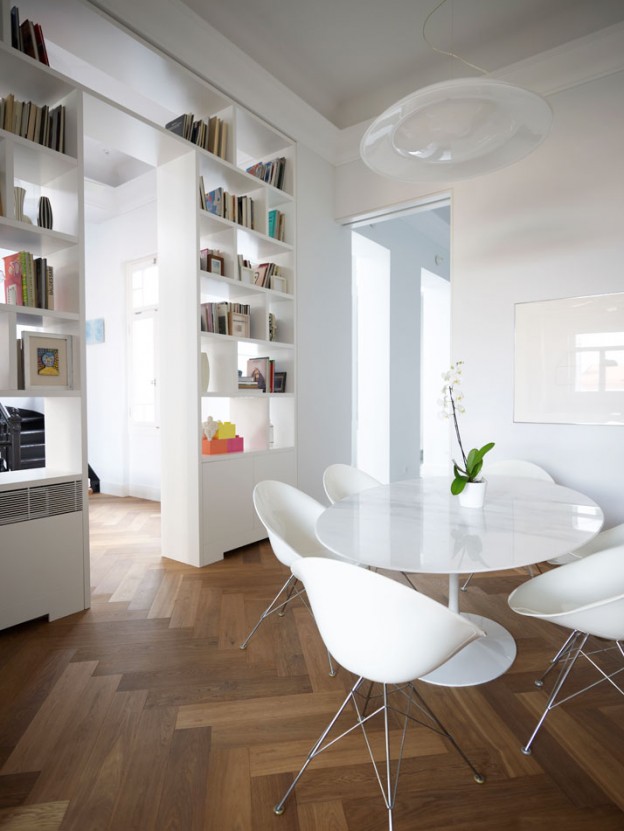
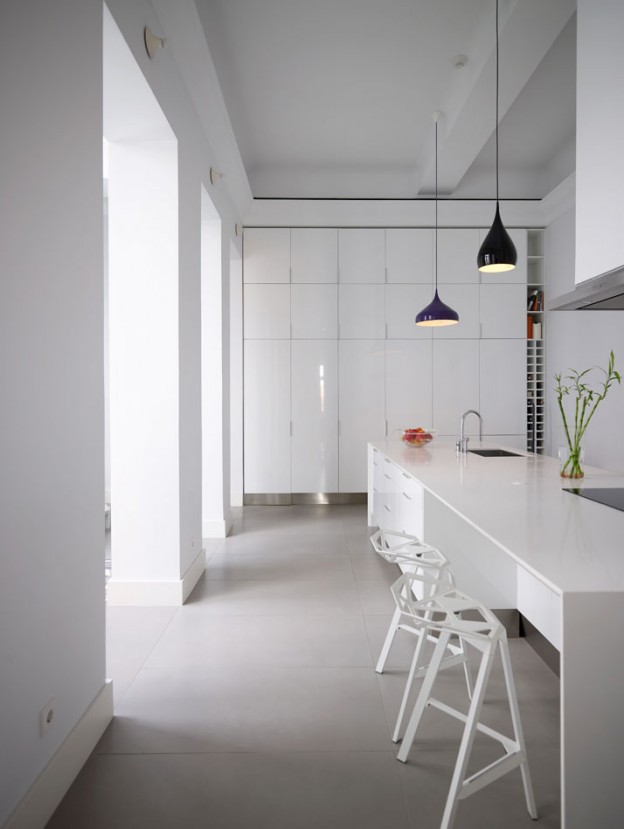
The original staircase painted glossy black wends and winds its way through the spaces in dramatic fashion; elsewhere, white predominates as the background. Original tiles are maintained in the courtyard, new wood floors are laid in a herringbone pattern giving warmth and a contemporary flavour.  Original details are evident throughout. All existing interior walls have been demolished and replaced with sliding doors and walls for flexible living; the courtyard too has over-sized glazed doors emphasising the verticality of the space. Bold colours and contemporary furniture pieces chosen for their sculptural forms create a wonderful blend of old and new.

The-Grand-Dame-stella-konstantinidis-askarchitects-photo-Vangelis-Paterakis-yatzer-1The-Grand-Dame-stella-konstantinidis-askarchitects-photo-Vangelis-Paterakis-yatzer-19The-Grand-Dame-stella-konstantinidis-askarchitects-photo-Vangelis-Paterakis-yatzer-7The-Grand-Dame-stella-konstantinidis-askarchitects-photo-Vangelis-Paterakis-yatzer-10The-Grand-Dame-stella-konstantinidis-askarchitects-photo-Vangelis-Paterakis-yatzer-13The-Grand-Dame-stella-konstantinidis-askarchitects-photo-Vangelis-Paterakis-yatzer-12Grand Dame by ASKarchitects, Piraeus, Greece via

Photos: Vangelis Paterakis

More wonderful spaces, here