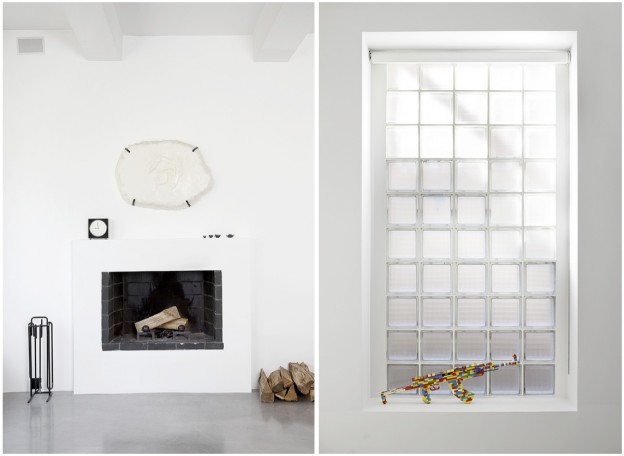
a madrid penthouse in white.

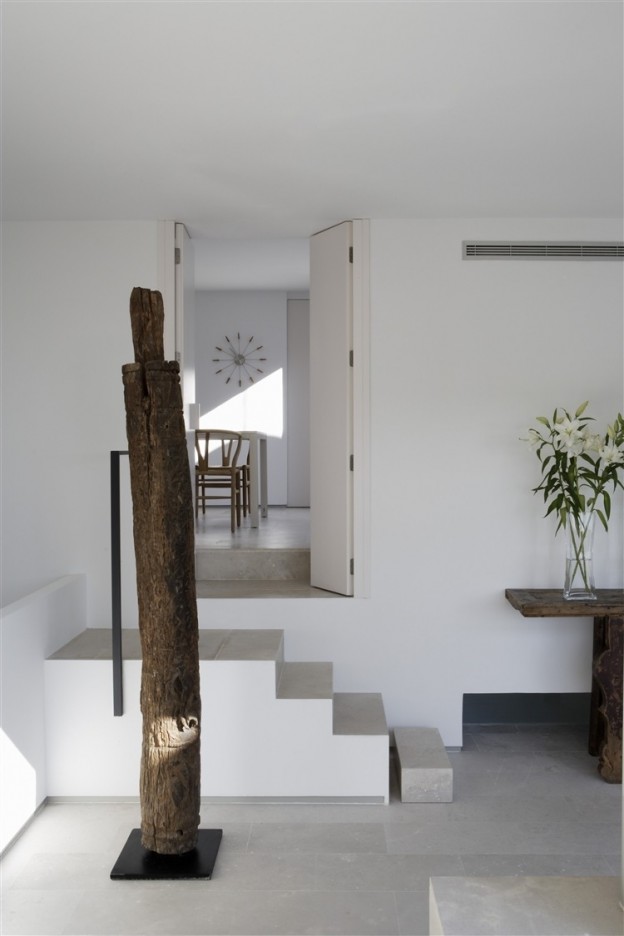
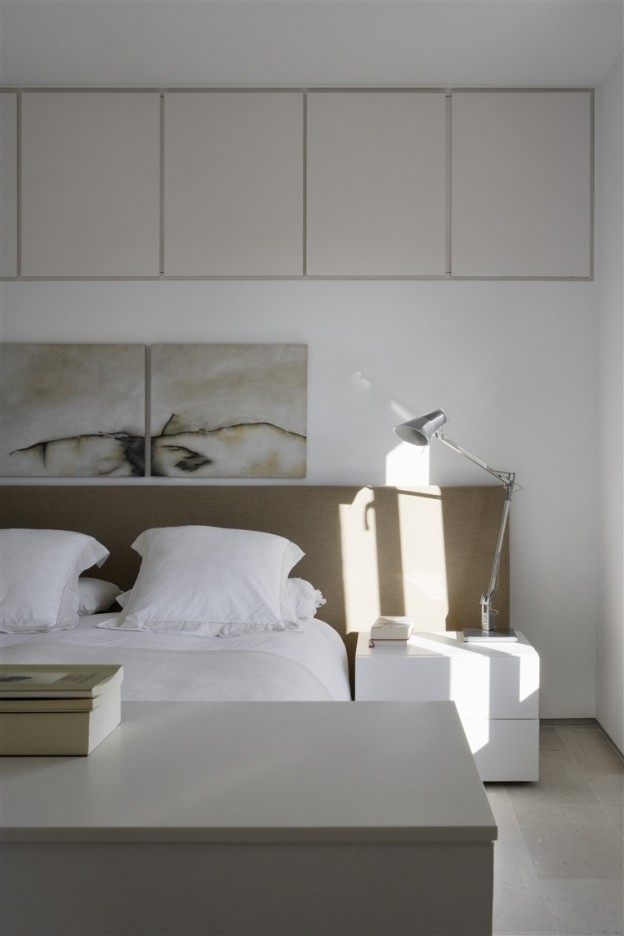
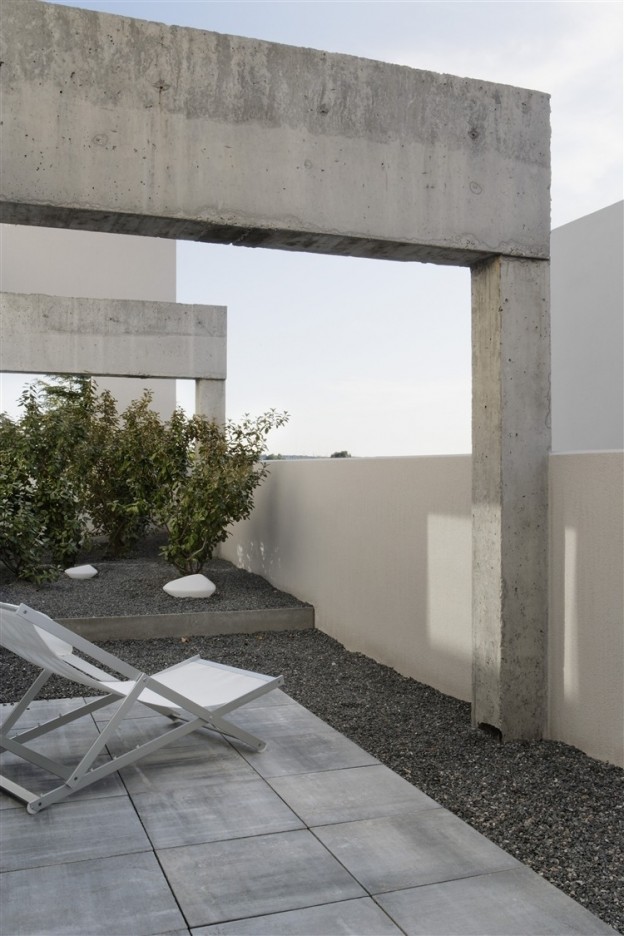
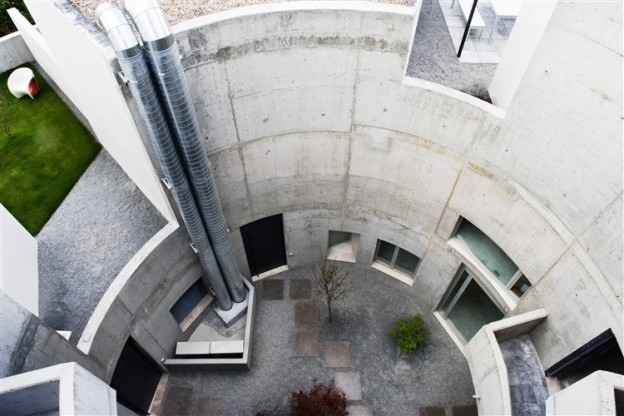
Coolness and light abound in this split-level penthouse in Madrid. All access areas to the property were conceived as outdoor spaces to increase privacy and a sense of seclusion. Terraces on different levels are fed with a natural irrigation system and rain water from the roof tops; these terraces of warm earth along with the concrete structure also serve as insulators.

Internally, white walls provide the backdrop, pale wood floors and stone offer coolness under-foot. Seamlessness is created with flush, built-in cupboards and shadow gaps where level changes meet the floor. I spy: light wood Wishbone chairs, Eames DSW and Catifa chairs with their shells in white; a George Nelson clock, Panthella table lamp. The simplest metal handrails.

009-atico-en-u-abaton-arquitectura007-atico-en-u-abaton-arquitectura011-atico-en-u-abaton-arquitectura014-atico-en-u-abaton-arquitectura015-atico-en-u-abaton-arquitectura019-atico-en-u-abaton-arquitectura

Which details do you like best?

Split-level penthouse in Madrid by Abaton Architects, here.

More wonderful, cool, white spaces, here.

white dahlia.

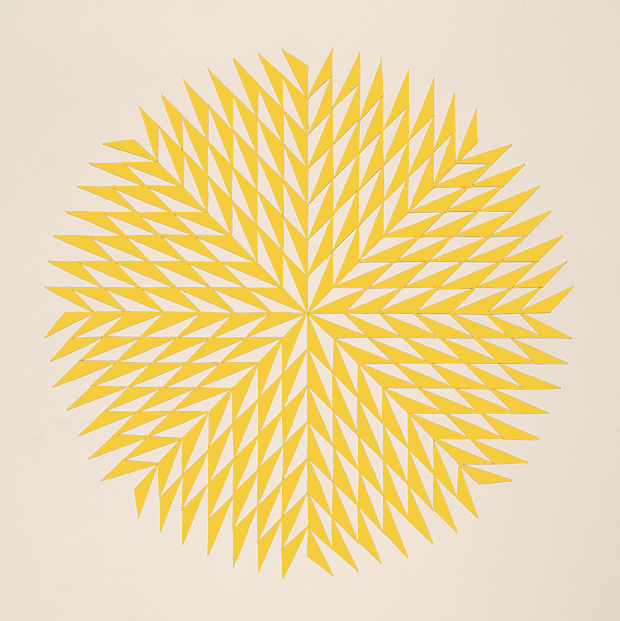
I first featured Lena Wolff’s work in an earlier post ‘black dahlia’ (see it, here). Lena’s latest work is currently on show at Ampersand Gallery in Portland, Oregon. Called Call & Response, the title of the show alludes to the traditions of craft and folk art, and the pattens and iconography of American quilt making that are so deeply entrenched in Lena’s work. Through a reductive process of paring down and honing in, the resulting collages, prints and drawings reveal a dynamic pattern and rhythm creating contemporary, geometric abstraction.

GoldenDahlia copy

Lena Wolff, Golden Dahlia, 2013, letterpress relief print, 17 3/4 x 17 in. edition of 40

double_red_lines_ohl.

Lena Wolff, Double Red Lines Stars , 2012, pen on paper, 6 x 12 in.

BLackDahlia

Lena Wolff, Black Dahlia, 2012, letterpress relief print, 12 3/4 x 12 1/2 in. edition of 40
Feature image: White Dahlia, 2013 collage with hand-cut paper 30 x 30 in.

Call & Response, Ampersand Gallery, Portland, Oregon until July 21st.

All images courtesy of the artist.

What do you think of Lena’s work? More in the gallery, here

shearers quarters house.

Vernacular architecture has always fascinated me – a building that is perfectly allied to its landscape, is contextual, and serves its end use with maximum function and purpose. This building appears to follow that philosophy and then some..

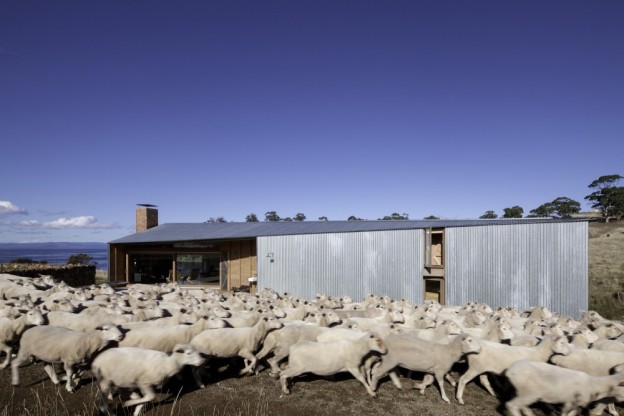
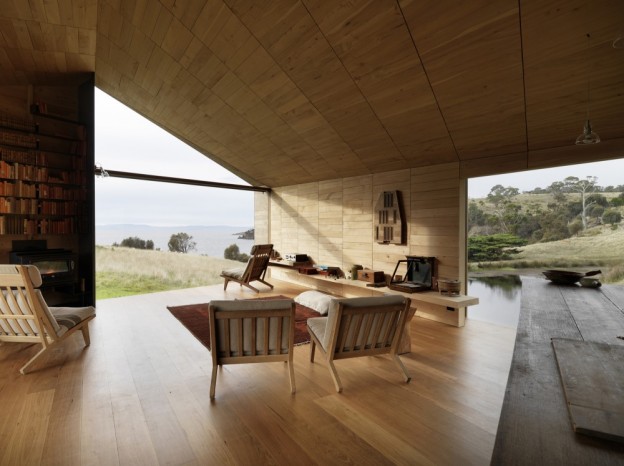
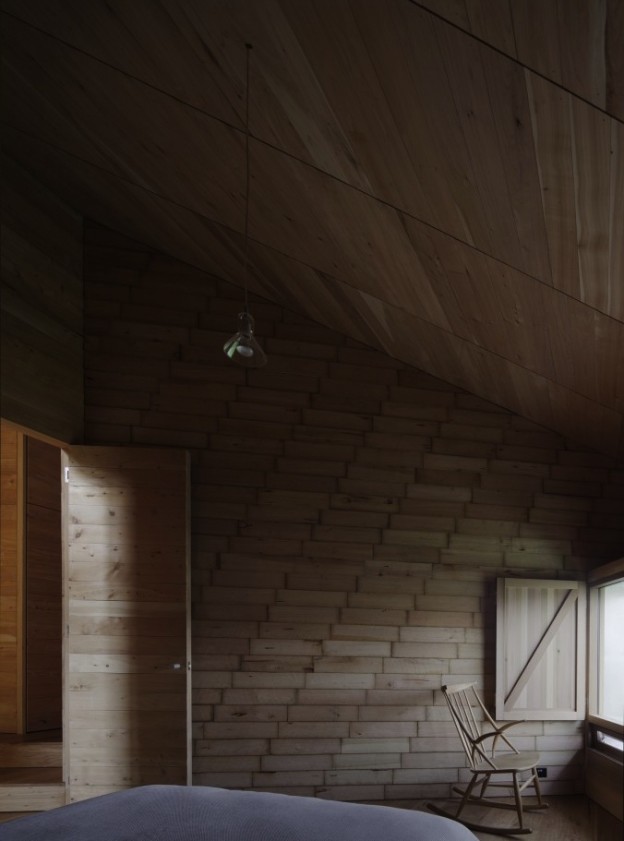
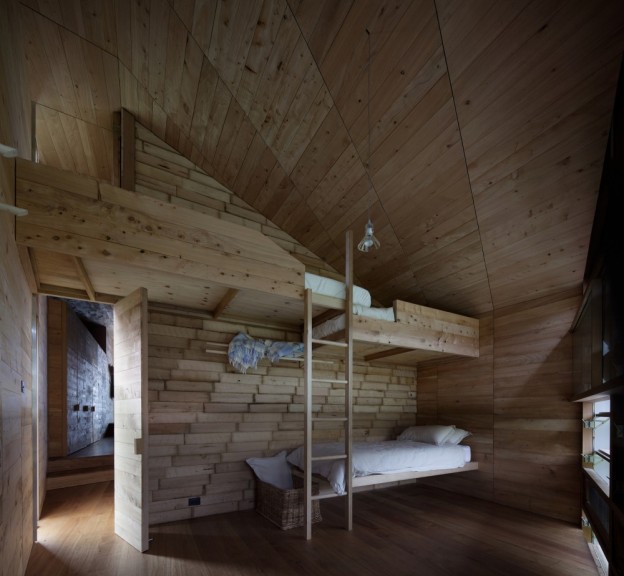
Shearers Quarters house sits as a companion building to an existing historic cottage on a working sheep farm, on an island off the Tasmanian coast. Not your average brief – it was designed to house shearers, family and friends on annual tree planting weekends and retreats. It comprises an open-plan living/dining/kitchen, bathroom and utility, two bedrooms and a bunkroom. A slender skillion roof at one end transforms to a broad gable at the other, opening up the form to the wonderful views beyond. The geometry of this shift is evident internally in the geometry of the internal walls and window frames.

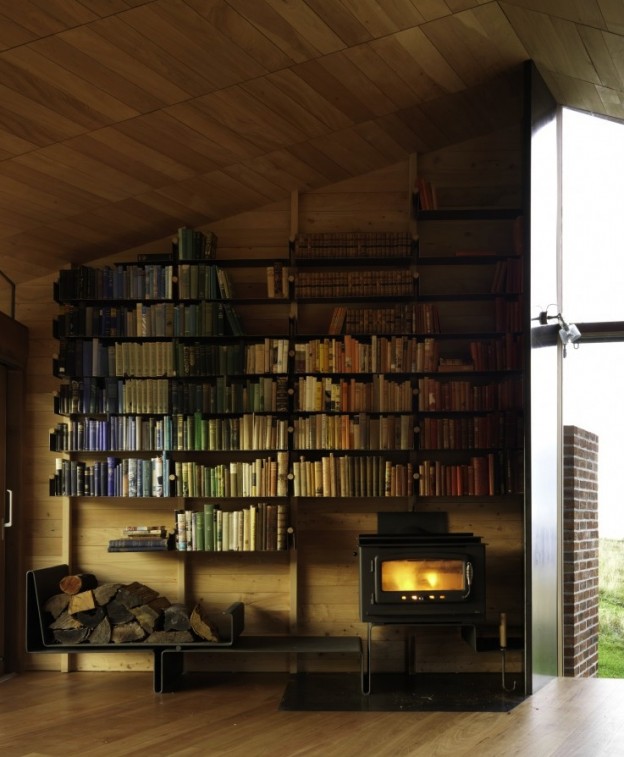
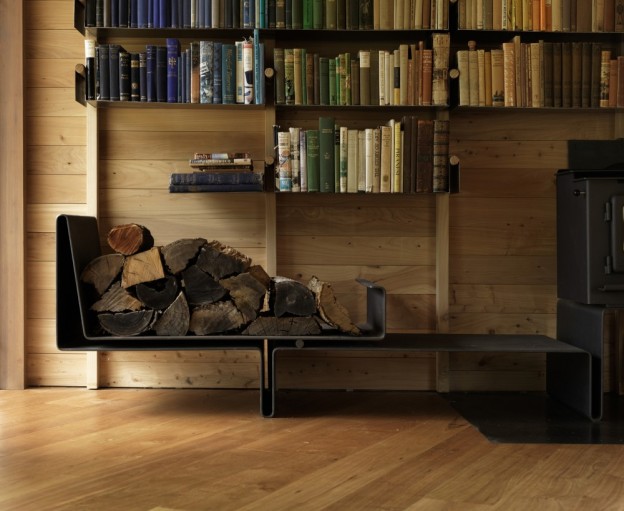
The simplest palette of materials has been used: corrugated galvanised iron to the exterior, timber internally. Pinus Macrocarpa is the primary timber used, sourced from old rural windbreaks. The bedrooms are lined out in recycled applebox crates, gathered from orchards of a nearby valley where the timber had remained stacked but unused since the late 1960s. This rhythm of small, regular pieces of wood becomes the decoration. Metal is also used folded to form shelves to store logs, and to create a wall of books.

shearers-quarters-john-wardle-architects_08_trevor-mein_owlshouselondon shearers-quarters-house-john-wardle-architects_09_trevor-mein_owlshouselondonshearers-quarters-house-john-wardle-architects_15_trevor-mein_owlshouselondonshearers-quarters-house-john-wardle-architects_14_trevor-mein_owlshouselondonshearers-quarters-house-john-wardle-architects_10_trevor-mein_owlshouselondon

Shearers Quarters House by John Wardle Architects, via

Photographs: Trevor Mein

Another wonderful example of vernacular building, this time in the Danish forest, here

happy weekend.

James-Turrell-exh_ph020-504x800
James Turrell, Aten Reign, 2013
Daylight and LED light, dimensions variable © James Turrell
Photo: David Heald © Solomon R. Guggenheim Foundation, New York
Site specific, the installation consists of a series of rings suspended from the ceiling of the Guggenheim’s rotunda. Each ring is lit from below by a series of ever-changing LED lights, and from above by the sunlight filtering down from the rotunda’s oculus. The piece cycles between colors, and over the course of the day, varying amounts of sunlight mean that Aten Reign is composed of an almost infinite variety of colors and states. 

James Turrell, Solomon R. Guggenheim Museum, New York, June 21–September 25, 2013

More happenings, here

a modern neo-classicist.

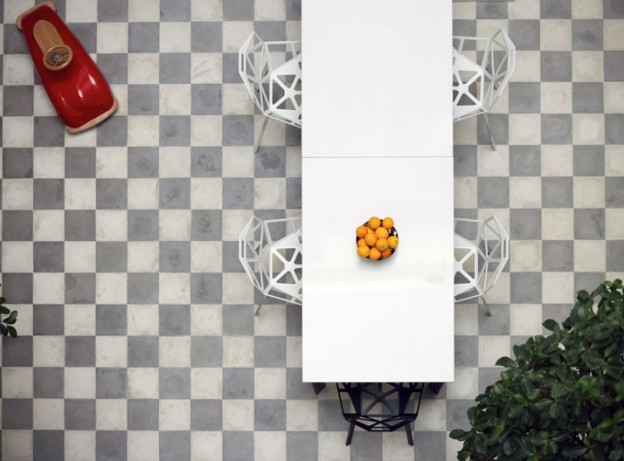
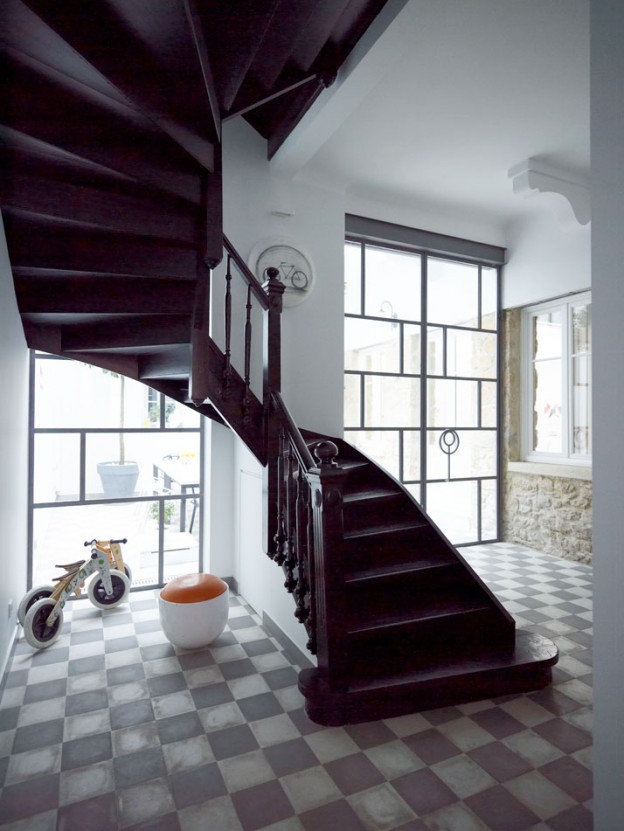
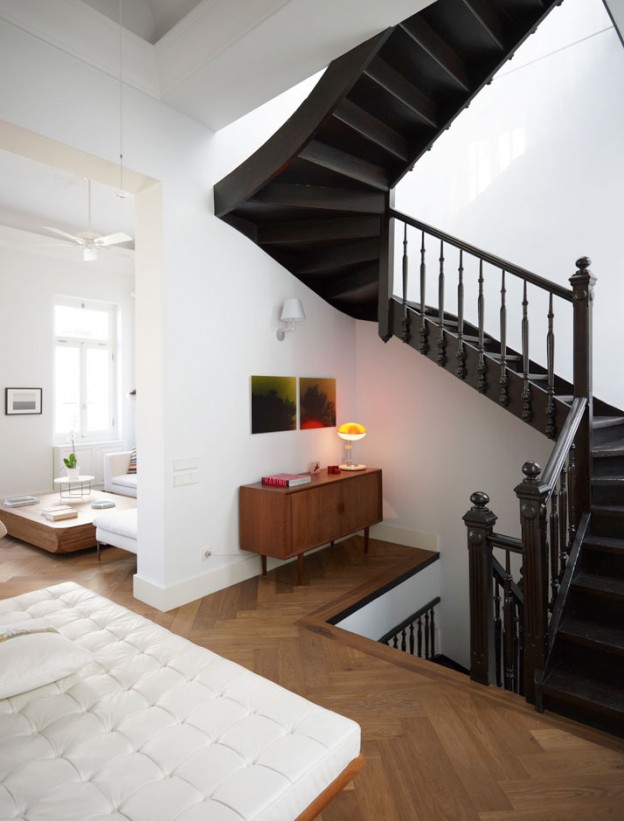
Set within a neoclassical building in Piraeus, Greece, the journey begins in the wonderful, tiled ground floor courtyard, previously a place for residents of old to meet and chat. Then on, up through original stonework and 19th century walls to the 1930s, and on to the contemporary new build extension and penthouse on the fourth floor.

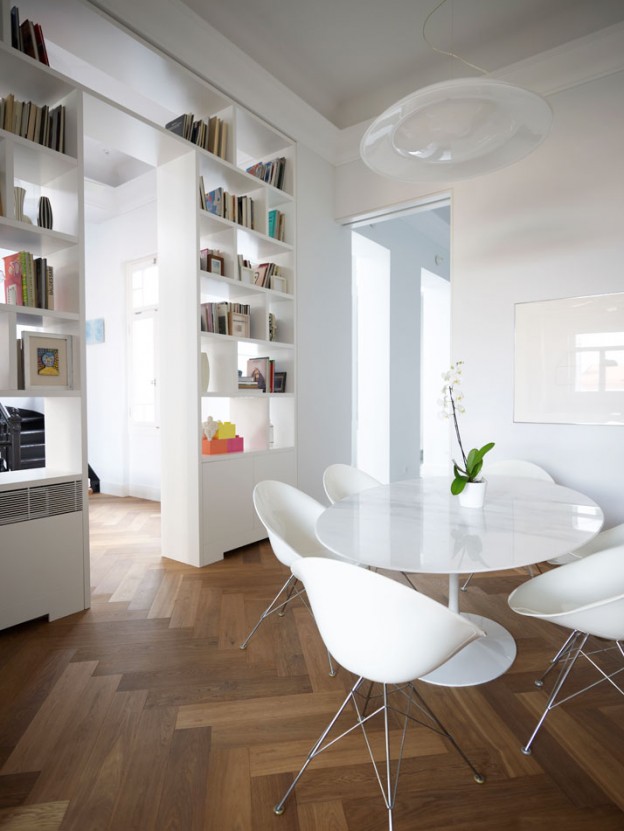
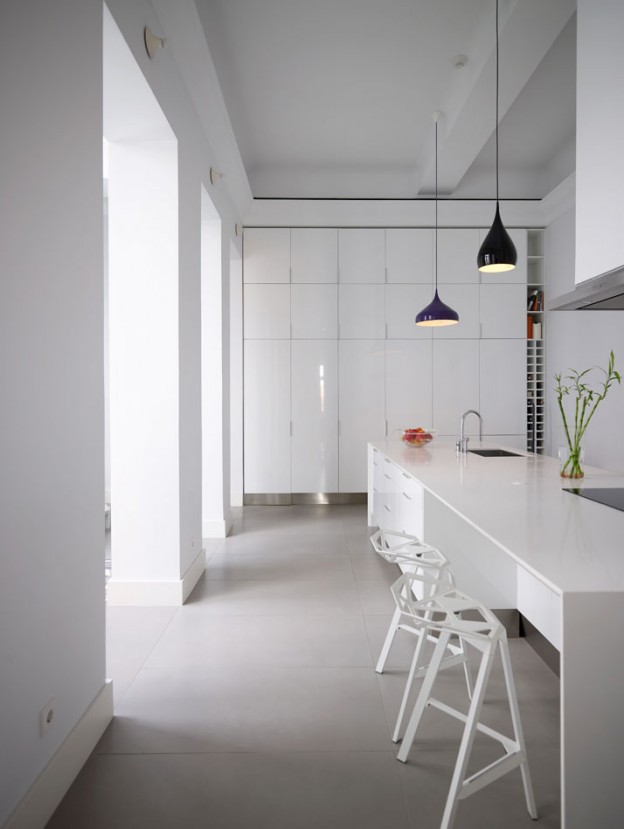
The original staircase painted glossy black wends and winds its way through the spaces in dramatic fashion; elsewhere, white predominates as the background. Original tiles are maintained in the courtyard, new wood floors are laid in a herringbone pattern giving warmth and a contemporary flavour.  Original details are evident throughout. All existing interior walls have been demolished and replaced with sliding doors and walls for flexible living; the courtyard too has over-sized glazed doors emphasising the verticality of the space. Bold colours and contemporary furniture pieces chosen for their sculptural forms create a wonderful blend of old and new.

The-Grand-Dame-stella-konstantinidis-askarchitects-photo-Vangelis-Paterakis-yatzer-1The-Grand-Dame-stella-konstantinidis-askarchitects-photo-Vangelis-Paterakis-yatzer-19The-Grand-Dame-stella-konstantinidis-askarchitects-photo-Vangelis-Paterakis-yatzer-7The-Grand-Dame-stella-konstantinidis-askarchitects-photo-Vangelis-Paterakis-yatzer-10The-Grand-Dame-stella-konstantinidis-askarchitects-photo-Vangelis-Paterakis-yatzer-13The-Grand-Dame-stella-konstantinidis-askarchitects-photo-Vangelis-Paterakis-yatzer-12Grand Dame by ASKarchitects, Piraeus, Greece via

Photos: Vangelis Paterakis

More wonderful spaces, here

happy weekend.

erlich_installation_barbican-ohl.

Argentine artist Leandro Erlich has been commissioned by the Barbican to create a new installation in Dalston. Resembling a theatre set, the detailed facade of a Victorian terraced house lies horizontally on the ground with mirrors positioned overhead. The reflections of visitors give the impression they are standing on, suspended from, or scaling the building vertically like so many acrobats. Erlich’s installation will be accompanied by talks, workshops and live performances, exploring themes of architectural history, urbanism and perception. More, here.

Leandro Erlich’s previous, gorgeous Parisian installation, here

a cabin for living.

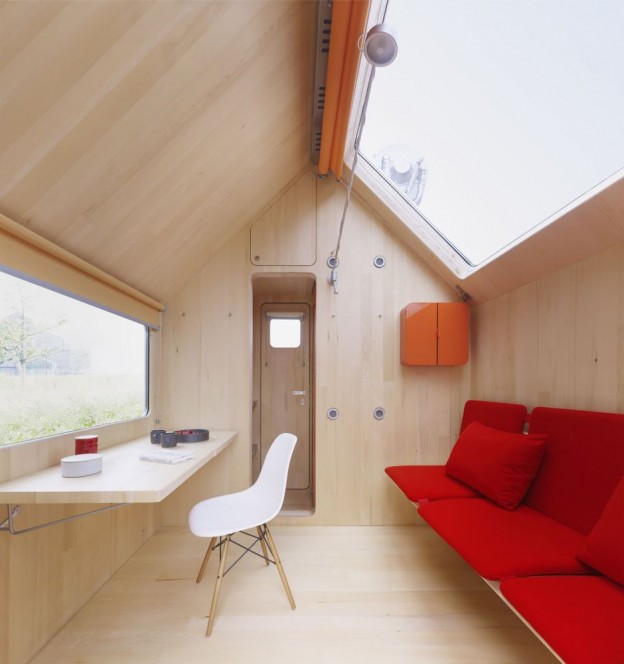
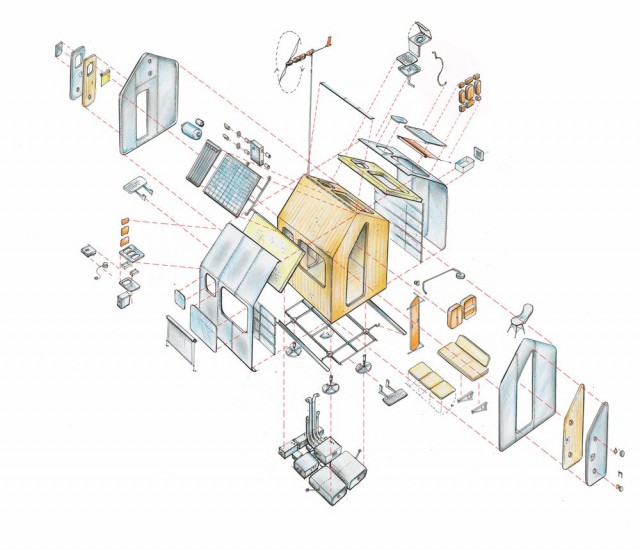
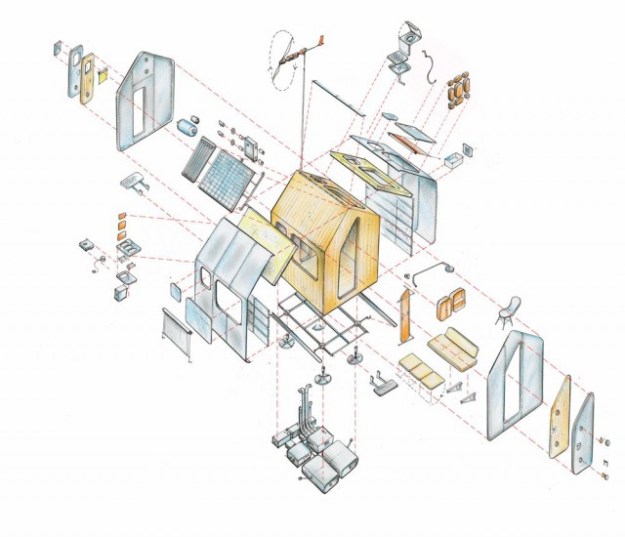
Diogene is a minimalist living unit that functions as a self-contained system independent of its environment. It is named after the ancient philosopher Diogenes, who is said to have lived in a barrel because he considered worldly luxuries to be superfluous.

Designed by Renzo Piano (who paradoxically also designed Western Europe’s tallest building, the Shard), Diogene is fully equipped with everything one needs to live. The front serves as a living room, with a pull-out sofa on one side and a folding table under the window on the other. Behind a partition are a shower, toilet and kitchen. It is constructed from wood which also informs the interior; the exterior is coated with aluminium cladding for weather protection. With a footprint of 2.5 x 3 metres when fully assembled, it can be loaded onto a lorry and transported anywhere. The house’s simple exterior, corresponding to a child’s image of a house, belies the complexity of photovoltaic cells and solar modules, a rainwater tank, biological toilet, natural ventilation and triple glazing, all required to allow it to exist autonomously. Diogene has many possible uses: It can serve as a weekend house, as a studio, or as an office. It can be placed freely in nature, but also right next to a workplace, even in the middle of an open plan office.

vitra_diogene_owl'shouselondon.vitra_diogene.

Renzo Piano cites Le Corbusier’s Cabanon as one of his architectural references. Le Corbusier, who believed a house was a ‘machine for living’, constructed the cabin for his own use in the 1950s in Cap Martin in the Côte d’Azur. Based on human proportions – the walls are 2.26m high, the height of a six-foot man with one arm above his head –  it is for me the ultimate summerhouse. More on Cabanon, here

CABANON-LE-CORBUSIER-de-jeunes-gens-modernes-4-jpeg_201019

Image of Cabanon via Domus

Renzo Piano’s Diogene is installed on the Vitra campus in Germany. What do you think? Could you live in a house this size? Or is this Airstream caravan, with full size bathtub, more your style? (via the wonderful Girl and the Abode)

More good design series, here

saul leiter – paintings.

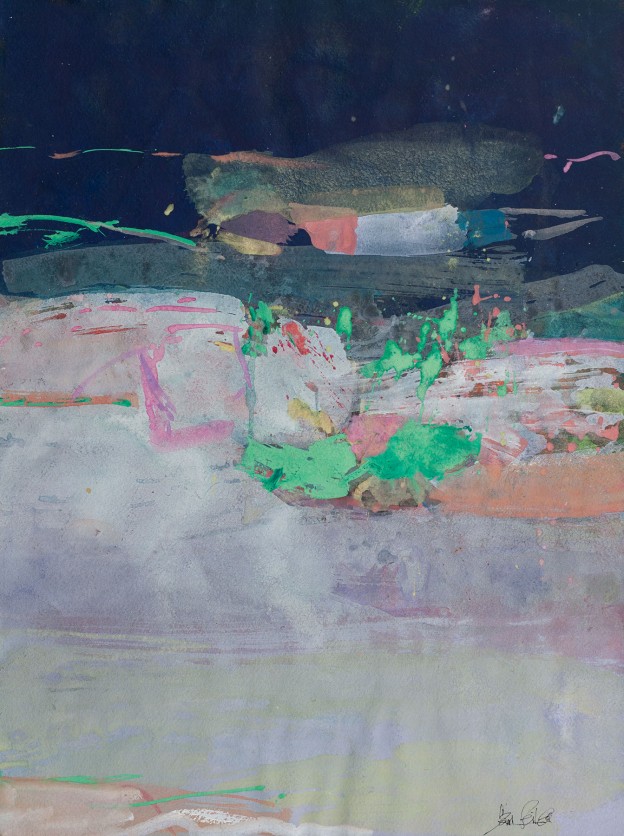
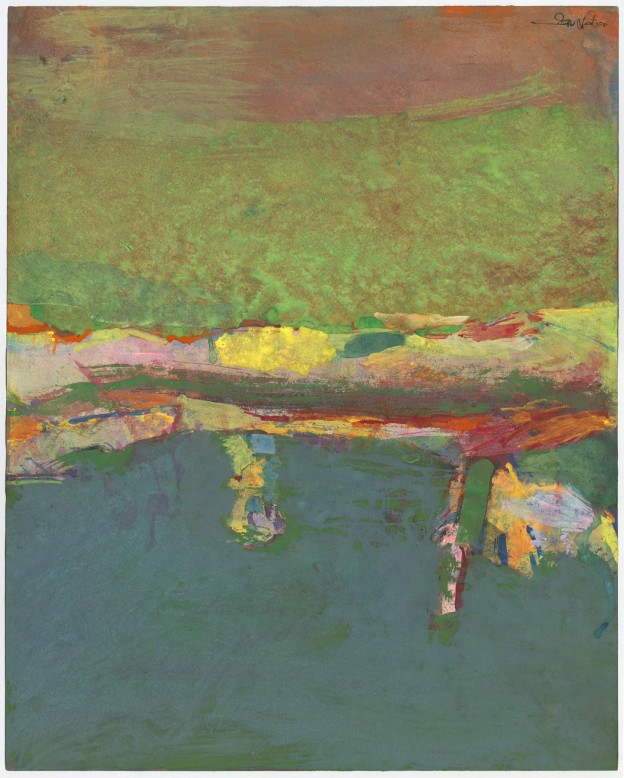
Saul Leiter has documented the world around him, capturing New York mid-century, with his beautiful colour and black-and-white photographs (see my previous post, here). But throughout his life he painted, too, and both media are on show at Hackelbury Fine Art in London (now until 27 July 2013).

His paintings are vibrant and full of life, with vivacious, playful brush strokes and pools of  intense colour. As with his photographs, the asymmetrical composition is exquisite. In both media, his influences are evident: the paintings of Renoir, Matisse and Bonnard. There is a lovely quotation in Nigel Warburton’s interview (more, here), which gives a clear indication of his regard for Bonnard:

‘Sometimes I wake up in the middle of the night and I reach over to one of my 30 books on Bonnard… if I can’t find the one I want, I go out and buy another copy’.

SL 12310 © Saul Leiter HackelBury Fine Art courtesy Howard Greenberg Gallery

© Saul Leiter HackelBury Fine Art courtesy Howard Greenberg Gallery

SL 12298 © Saul Leiter HackelBury Fine Art courtesy Howard Greenberg Gallery

© Saul Leiter HackelBury Fine Art courtesy Howard Greenberg Gallery

SL 12306 © Saul Leiter HackelBury Fine Art courtesy Howard Greenberg Gallery

© Saul Leiter HackelBury Fine Art courtesy Howard Greenberg Gallery

The documentary ‘In No Great Hurry: 13 Lessons in Life with Saul Leiter’ is being shown at Open City Docs Fest in London on 21st June, and at the ICA on the 27th June. The film is an absolute delight, with Saul Leiter as the reluctant, but utterly beguiling, protagonist.

More in the gallery, here.

All images © Saul Leiter HackelBury Fine Art courtesy Howard Greenberg Gallery

a loft in the trees.

The main feature of this New York loft is a large, glass window wall. Framed with polished black lacquer panels, it claims the view as if it belonged within, like a picture on the wall. Due to the elevation, one appears high amongst the trees.

Perimeter walls and concrete beams are painted white to emphasise the inherent qualtites of the loft; a concrete floor poured throughout provides a seamless, flowing space. A pair of full height doors defines back from front when separation is necessary. Glass blocks diffuse light along the hallway and provide privacy from neighbours. The open plan kitchen is an L-shaped wall of book-matched, mahogany cabinets; the timber panels obscure a series of doors, including the powder room and pantry. Wood is chosen again in the dining table and chairs, which together with the wonderful, tree-top aspect, provides the warmth and texture to an otherwise monochrome palette.

rd_diningrd_dining_2ny loft on owl's house londonrd_bedroomny loft2 on owl's house london

Richardson ⁄ Dondoe loft by Workshop for Architecture, here
More wonderful spaces, here.

the wonderful world of oliver jeffers.

If you haven’t read the stories of Oliver Jeffers then you should begin at once. He is a children’s book writer, and his stories are sweet, poignant and hilarious (my favourite, Stuck, is laugh-out-loud funny, and my three-year-old doesn’t mind it, either..). The illustrations are just beautiful, too – spare in detail, rich in context.

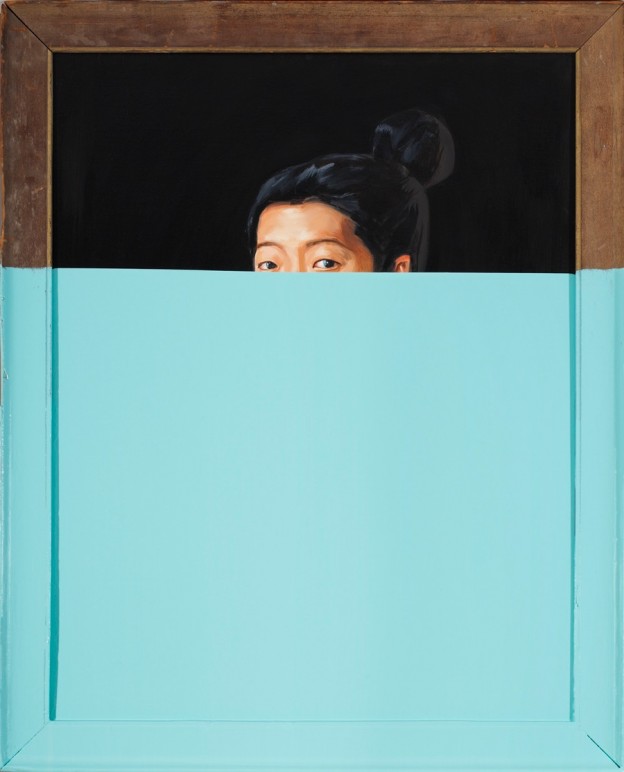
Now I have discovered (via the always wonderful French by Design blog), his dipped paintings. And now I’m crazy about them, too.

WITHOUT A DOUBT PART 2 (CUTOUT) LORESWITHOUT A DOUBT PART 1 LORESWithout a Doubt Part 3/Without a Doubt Part 2 (cutout)/Without a Doubt Part 1 all courtesy Oliver Jeffers studio

What do you think of these dipped paintings? More dipped things, here.

More in the gallery, here, and more fabulous children’s stories, here.