lights by flos.

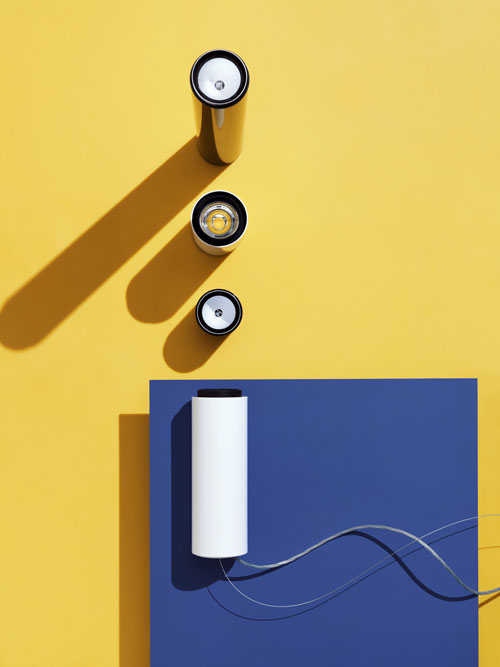
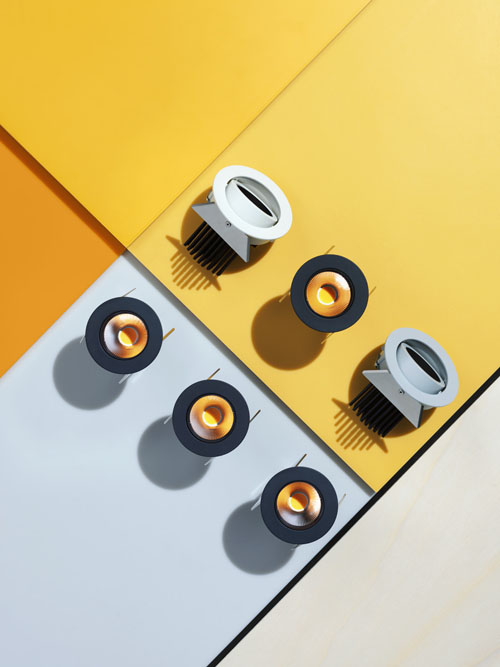
How do you make a relatively uninspiring product – a recessed downlight – look exciting and new? Here’s how.

Reminiscent of a Mondrian painting in contemporary colours, it takes a second look to realise these beautifully styled, geometric images are actually spotlights, downlights, linear strip lights.

Flos13carlkleinerFlos08carlkleinerFlos05carlkleinerCarlKleiner.FLOS-04Flos11carlkleinerFlos07carlkleiner

Photography, Carl Kleiner for Flos, here

More found objects, here

house of 150 trees.

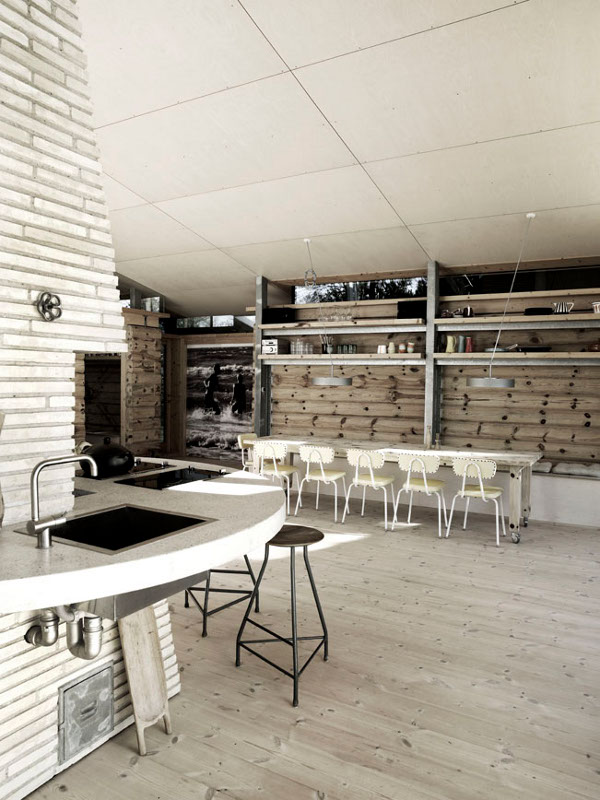
One of the most important elements of good design is context – the way a building sits within its environment, or the way the setting influences the design. Just as design is a response to a set of needs or problems, context shapes the design response. Without context there is only  art or decoration. This beautiful Danish summerhouse is a perfect example of context in design – the owner harvested 150 pine trees from the land, then cut them into beams to build his home.

Wood in its different guises create the horizontal planes – panels of ply on the ceiling, knotty pine floor boards. The interconnecting vertical planes are of complimentary materials – steel, glass and brick – all kept in their raw state. A towering, angled chimney made of blonde, double-long bricks sits centrally within the open-plan space, housing the fireplace and oven. A white concrete bench top wraps around the chimney from the kitchen to the living area. The house features large floor-to-ceiling windows, the glazing angling up and folding over to form the roof, creating views up and beyond the trees to the sky. Over the kitchen and dining area, a matte-black roof follows the same plane, then breaks form and folds straight outward, hovering above a patio. Adjacent to the main house  is the studio, whose slanted exterior beams and horizontal knotty pine walls repeat those of the primary structure.

ohl-danish-holiday-home-06ohl-danish-holiday-home-05ohl-danish-holiday-home-03-600x447ohl-danish-holiday-home-01-600x450

The exposed, galvanized-steel framing is echoed in the pendant lamps over the dining table and chair legs;  the table was made from the same pine that was milled on-site.

Summerhouse, via dwell and http://www.brask-leonhardt.dk/

More good design series, here. More wonderful spaces, here.

vertigo.

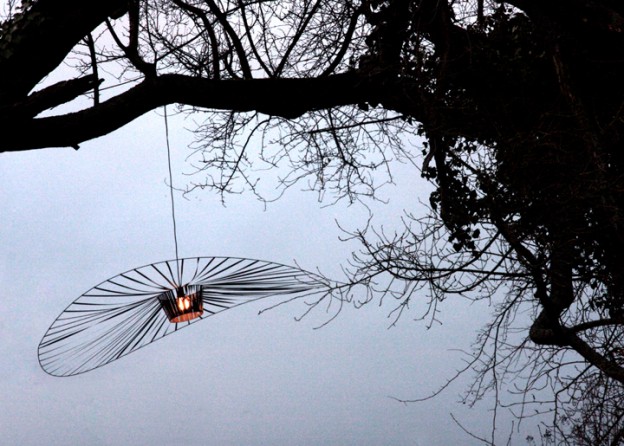
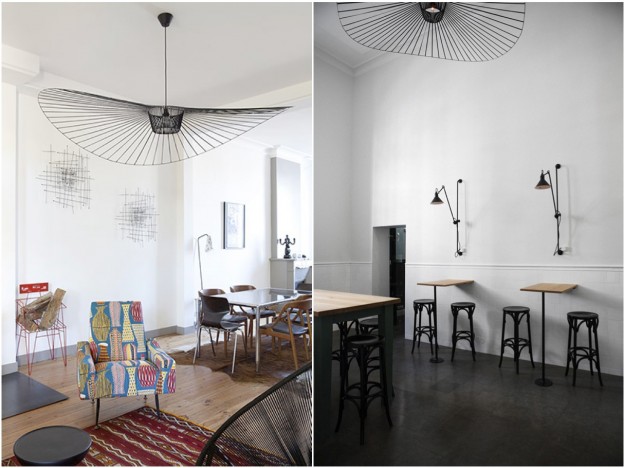
I spied this pendant lamp in the interiors of beautiful spaces long before I managed to find out any more about it. I have now tracked it down, and it’s of French provenance: Vertigo by Constance Guisset. Reminiscent of a parasol, or a wide brimmed hat; it is incredibly light which means it becomes mobile when it catches a breeze, turning and floating. And casting the most wonderful, graphic shadows.

9_3vertigo-outimagesks_080313_16-940x626

images 1 / 2 / 3 / 4

It comes in black, turquoise, copper, white and big and small: 2m diameter (500g weight) and 1.4m.

What do you think of Vertigo? Would you have one in your space?

More found objects, here

a contemporary classicist.

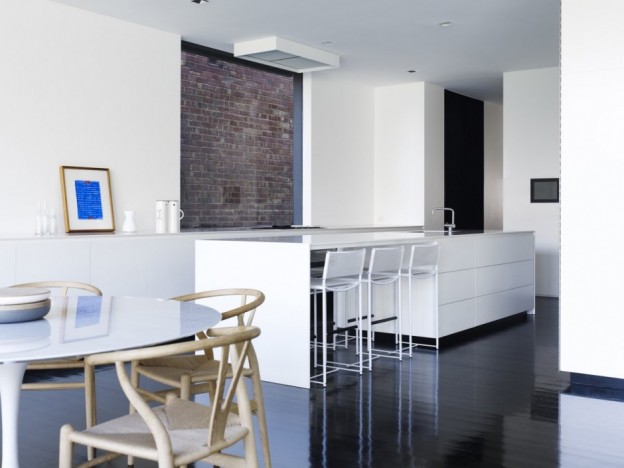
Originally built in1929, this Melbourne home has been meticulously restored and updated to create a cohesive series of beautifully proportioned, contemporary spaces.

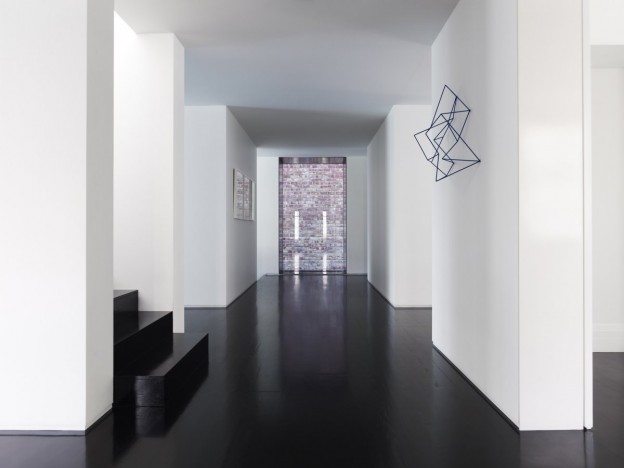
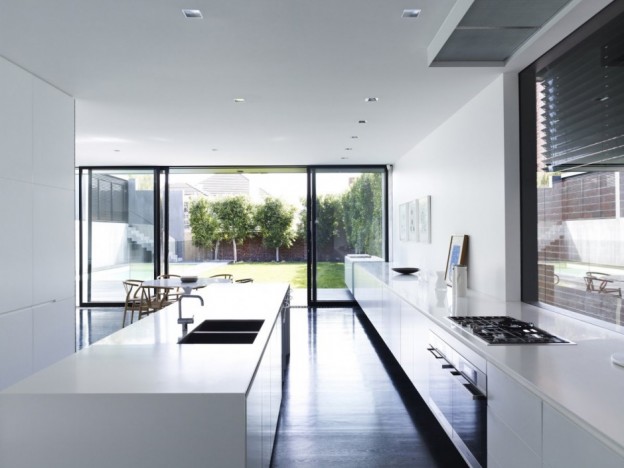
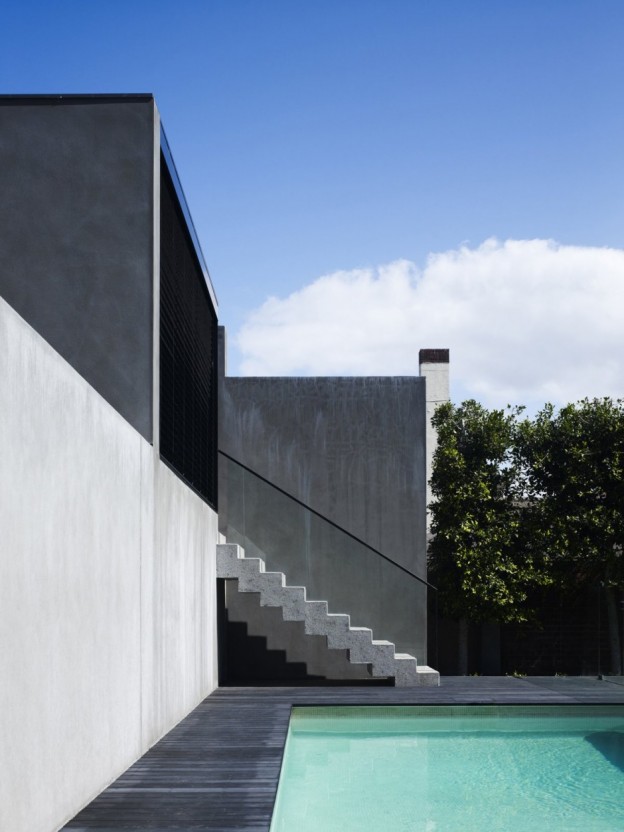
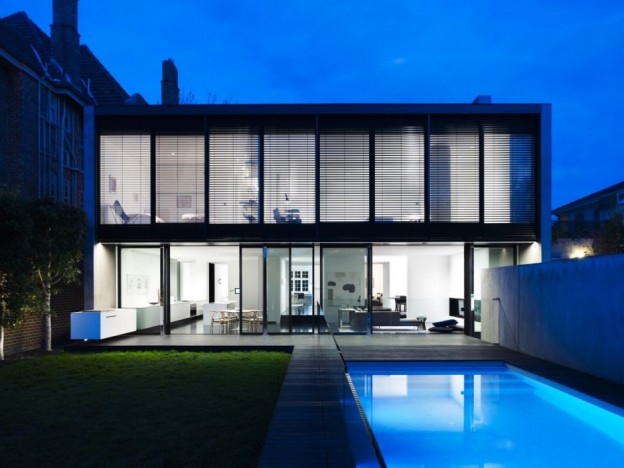
Marking the transition between original and new, openings are lined with steel to become portals, frames are painted black allowing them to recede. A two storey glazed structure to the rear brings light to the centre of the home, defining a new circulation core to the building. A large, glazed skylight tracks the path of the sun, filling the interior with more light.

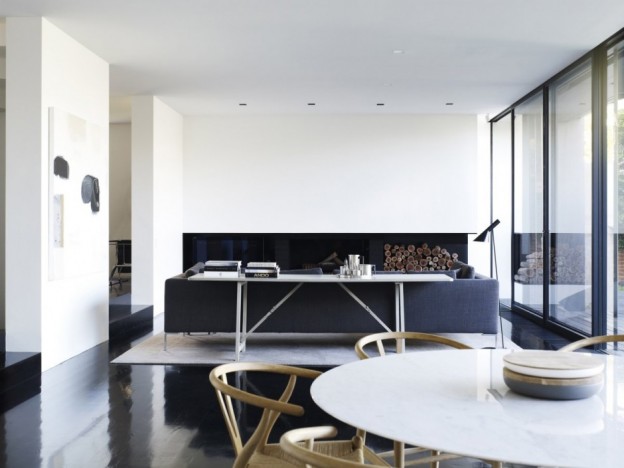
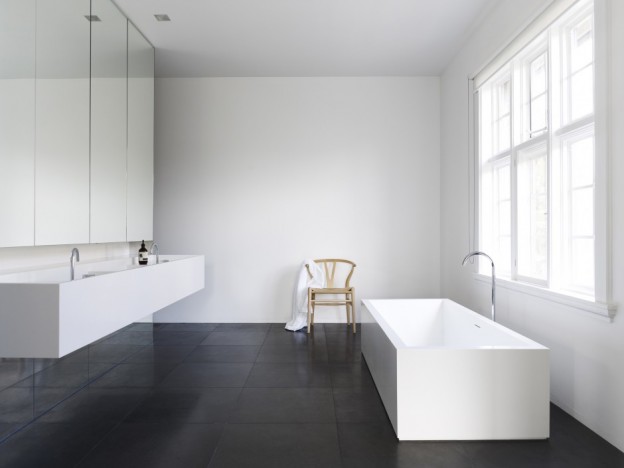
A blackest black, high gloss floor becomes a reflecting pool for the furniture pieces that sit upon it. White walls are a counterpoint for the contemporary art to reside. Kitchen and bathroom cupboards are white and elegantly minimal. The joinery is allowed to break through the external wall at the rear as the connection between indoor and outdoor living. Furniture is classic Scandinavian – Wishbone chairs, Tulip table, AJ floor lamp, as well as Italian, with simple and bold pieces by Antonio Citterio.

sy_190413_04-940x705sy_190413_05sy_190413_10-940x705

sy_190413_08-940x705sy_190413_09-940x705sy_190413_14-940x705sy_190413_02-940x1253sy_190413_01-940x705

A perfect backdrop for a modern family, who will add the vibrance and colour to this masterfully restrained home.

South Yarra residence by Carr Design Group, via

More wonderful spaces, here

happy weekend.

d62cf5ac8ca3b9cac8d447e7faaffe4e

Rachel Whiteread, Detached
Installation view, photo by Mike Bruce

Turner Prize winner Rachel Whiteread’s works, rendered from concrete and steel, are hugely impressive in scale and form.

Detached, Rachel Whiteread, April 11 – May 25, 2013. Gagosian Gallery, Brittania Street, London

More in the gallery, here

fab four: glass things.


fab four

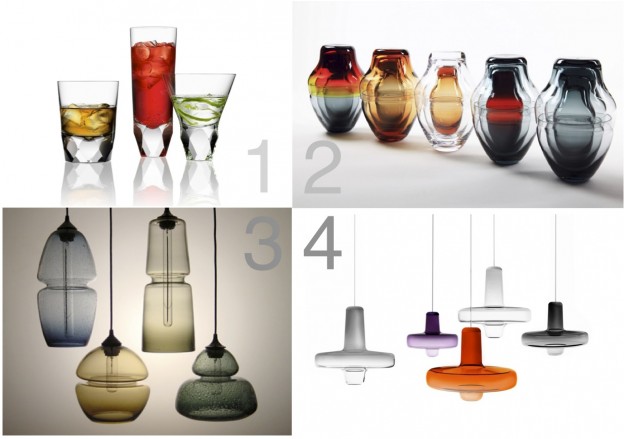
1. Carat – wonderfully heavy, geometric, facet-cut glasses by Swedish vanguard, Orrefors

2. Perfectly monikered, Babushka by the Finland based glass designer Heikki Viinikainen launched at Milan Design Week 2013, via 

3. Amber, blue, smoke and green; Groove pendants designed by William Couig, NY based glass artist of Further Design, via The Modern Syberite

4. A simple, rotational form resembling a spinning top: Spin lights by Lucie Koldova for Lasvitvia

Which is your favorite? More fab four, here

an exemplary modernist.

‘For a long time I have dreamed of executing dwellings in such conditions for the good of humanity. The building at Highgate is an achievement of the first rank’. Le Corbusier, 1935.

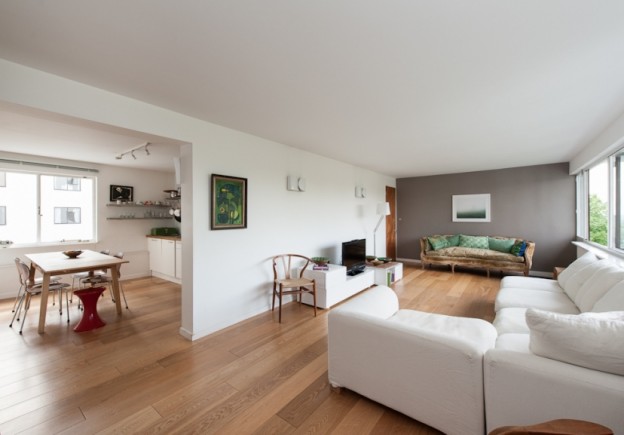
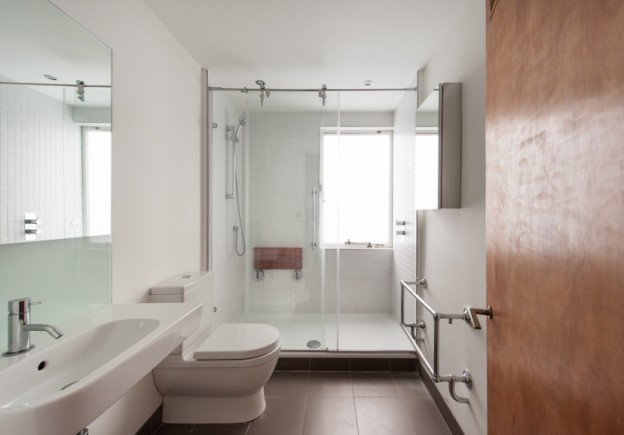
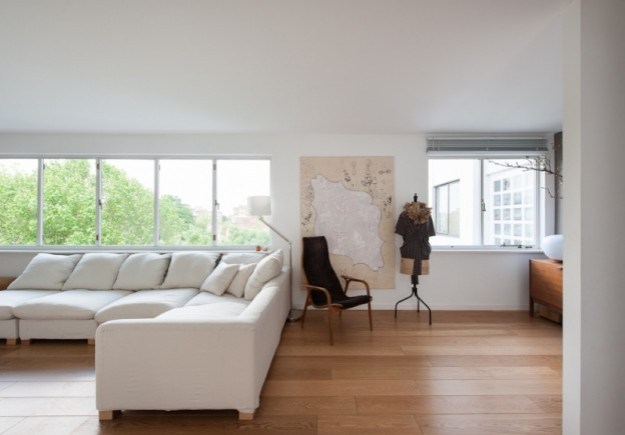
Berthold Lubetkin, one of several émigré proponents of Modernism in 1930s London, and a disciple of Le Corbusier, designed the apartment building Highpoint, in Highgate, North London. An early example of the International style, and engineered by Ove Arup, I had the opportunity to visit Highpoint last weekend, on an open day for the sale of one of the apartments. Recently refurbished, the attention to the original detail was superb. (That apartment was sold immediately, and sadly, not to me, so the photographs I am showing here are for another in the building).

Original features and fittings – cork floors, door furniture, bathroom fittings – have mostly been replaced. Other fittings are consistent for the era – the Arne Jacobsen wall lights for example. The colours were inspired by Le Corbusier’s ‘polychromie architecturale’ – two palates of colour he produced for the wallpaper company Salubra in 1931 and 1959.

DSC_6902_LargeDSC_6896_LargeDSC_6816_LargeDSC_6861_LargeDSC_5917_LargeDSC2808_Large

Highpoint is a much lauded, grade 1 listed Modernist building. Rendered white, as was the modernist way, the building is monolithic but elegant. Berthold Lubetkin is among the most important figures of the Modern Movement in Britain. Born in Georgia in 1901, he studied in Berlin and Paris, before moving to London in 1931. The following year he founded the famous Tecton practice with 6 other Architectural Association graduates.

Lubetkin and Tecton’s buildings are among the most iconic of the period, and include the marvellous penguin pool at London Zoo, again, designed in conjunction with the engineer Ove Arup.

Highpoint, Highgate via The Modern House

More wonderful spaces, here

fab four: colour-dipped things.

fab four

Two years ago it looked like a trend. But here it is still. It’s been renamed for fashion, too – dégradé, or the modern dip-dye.

1. Konkret pendant light by Jonas Edvard. More, here 

2. Kebnekaise pouf from Story North.

3. Pulp pendant light from Folkore. More about Folklore on owl’s house london, here.

4.  Frost glass for Stelton.

And I love these (entirely dipped!) rooms:

dip rooms

(first image Pinterest, second image unknown)

What do you think of colour-dipped things? Would you have them in your home?

More fab four, here

a pared back parisian.

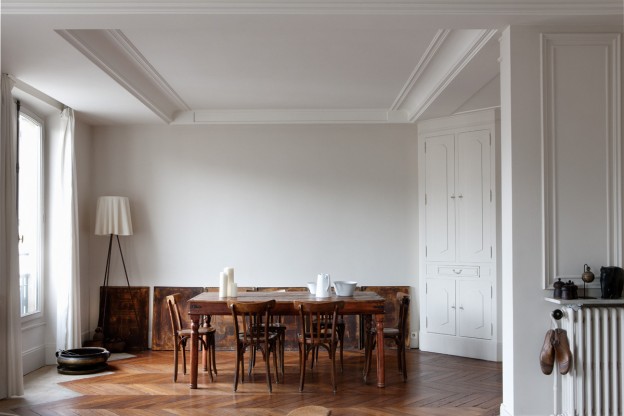
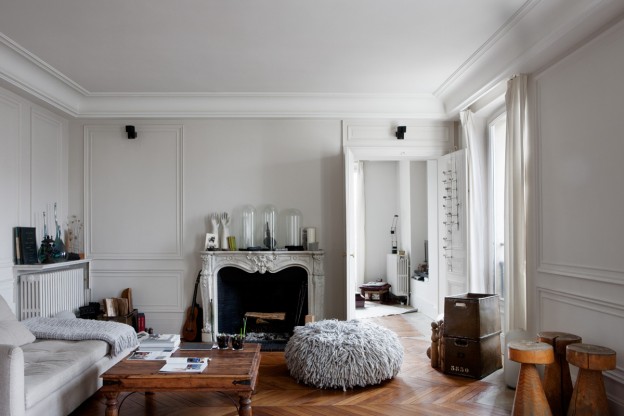
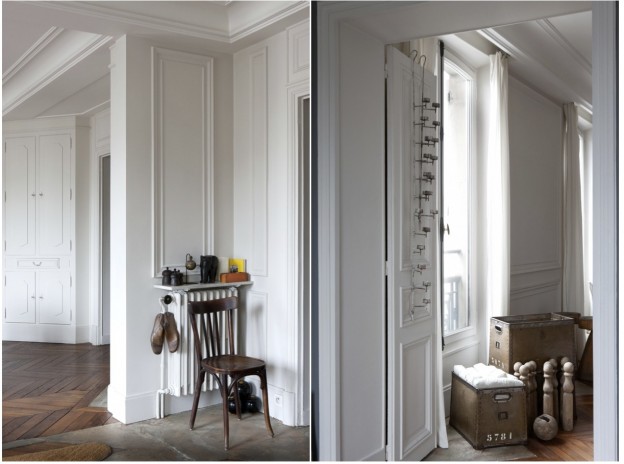
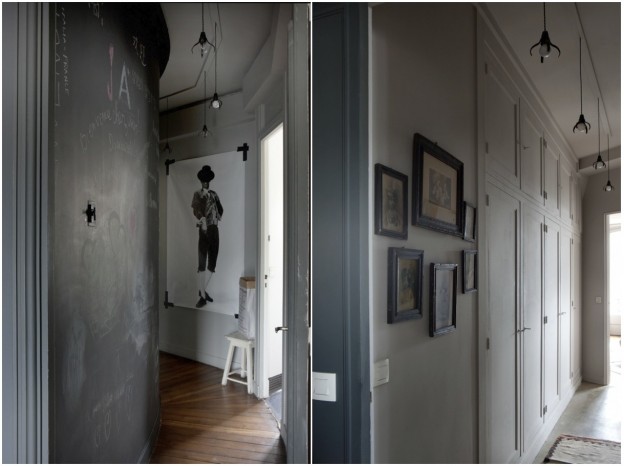
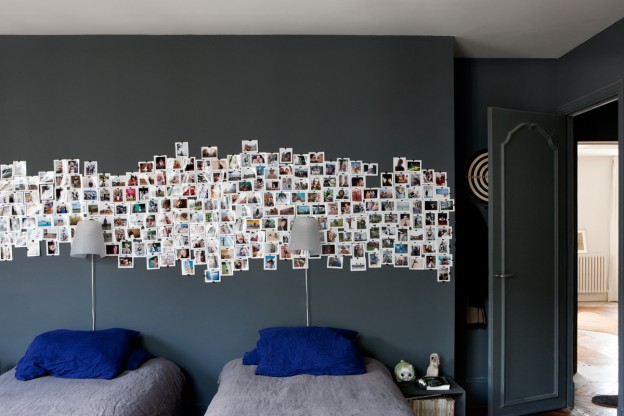
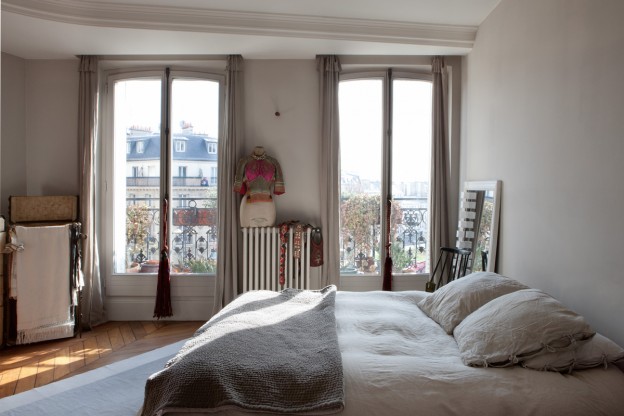
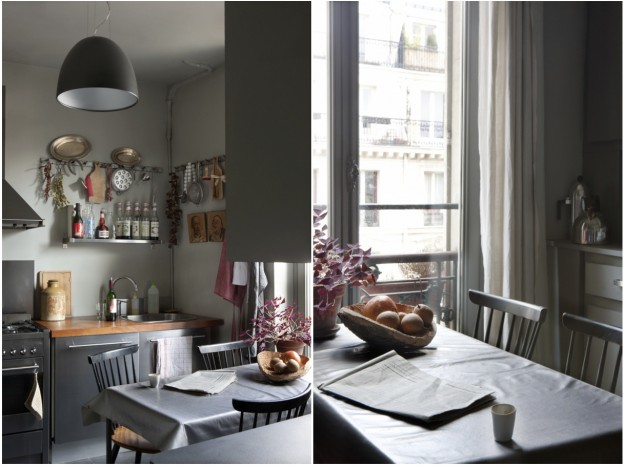
Beautiful photographs, a beautiful home. Housed in an 1860s Haussmann building, the original shell has been retained – parquet floor, period mouldings – and given a wash of warm white. With high ceilings and a wealth of natural light, steel grey creates atmosphere and compliments the wood and white. Fabulous furniture pieces are placed rather than hung, against a wall here, or hanging from a door knob there. A blackboard-painted curved wall in the hallway invites guests to write and draw. Artwork in the children’s bedroom is in the form of a montage of photographs.

Beautifully shot by NY-dwelling Englishman, Paul Raeside, the photographs capture the spirit of the space and the family who live there.

paul raeside - atypyk - 5395paris apartment_paulraeside1paris apartment_paulraeside2paul raeside - atypyk - 5414paul raeside - atypyk - 5601parisapartment_paulraeside3

More Paul Raeside, here

More wonderful spaces, here
happy weekend.

58126_1000

Candida Höfer Galleria degli Antichi Sabbioneta I 2010, Light Jet print, 180 x 221 cm

DSBcandida_hofer

Candida Höfer Teatro Scientifico Bibiena Mantova I 2010, Light Jet print, 180 x 225 cm

58130_1000

Candida Höfer Teatro Olimpico Vicenza II 2010, Light Jet print, 180 x 235 cm

Höfer produces large-format photographs of interiors of palaces, opera houses and theatres, without digital enhancement or alteration, working only with the existing light source. The result is a ‘rare combination of intimacy and scale, in which intricate architectural detail is captured without sacrificing the sense of space and civilised order’. Just sublime.

A Return to Italy, Ben Brown Fine Art, London, until 12th April. More, here

More in the gallery, here