Category Archives: wonderful spaces.

a modernist in berlin.

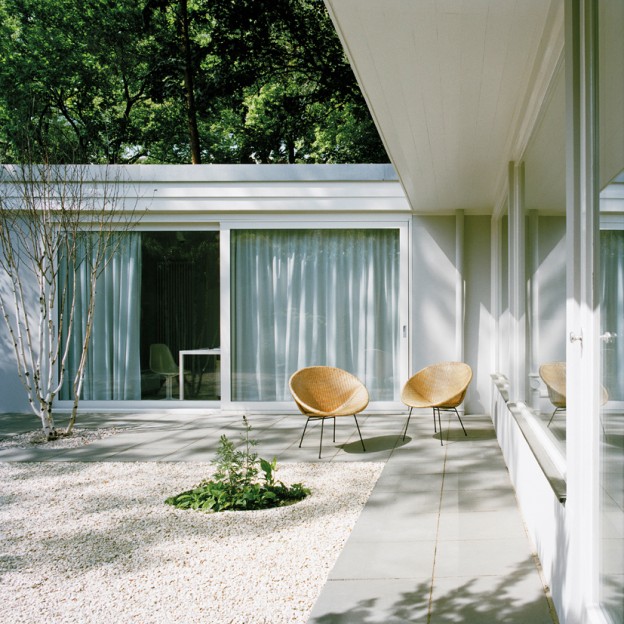
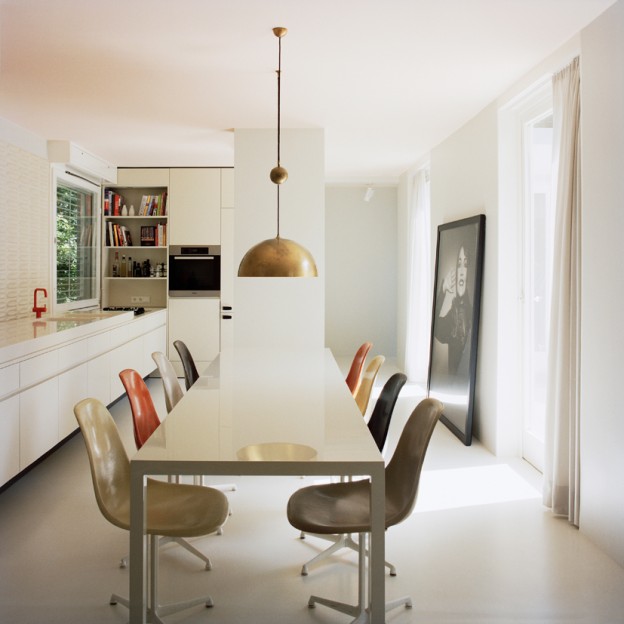
Part of the 1957 building exhibition in Berlin’s Tiergarten park, this Modernist glass atrium house was designed by Eduard Ludwig, an architect who studied briefly at the Bauhaus, and whose passion lay in the design of bungalow-style houses. He studied under Mies van der Rohe and the influence of modernist masterpiece the Barcelona Pavillion is evident here.

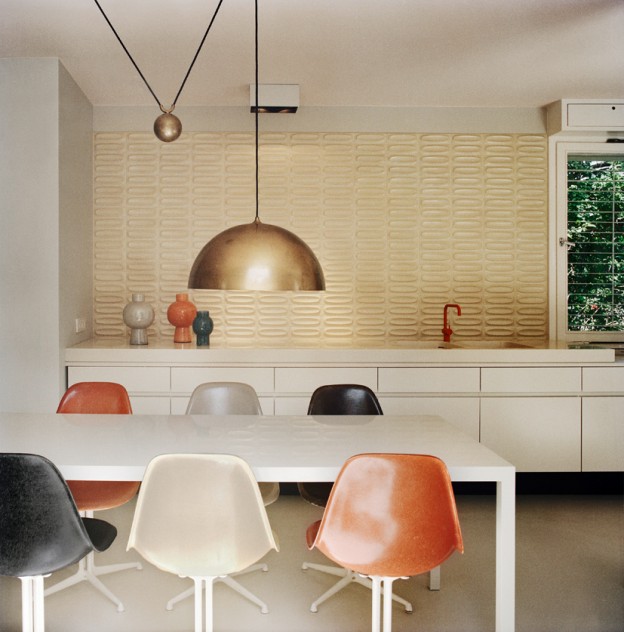
The simple lineality of the building is echoed internally with the floating linear kitchen cabinets, built-in, low-level storage lining the living area, and bathroom vanity in palest stone suspended against a full wall of mirror. Textured surfaces abound and are enhanced with splashes of intense colour in the palette of dark orange, black and off-white. Simple, classic furniture pieces like the shaker style chair (Hay do a simlar one, here) and brass domed kitchen pendant hold their own and yet perfectly compliment the space.
Atrium-House-in-Berlin-by-bfs-design-102214_03 0012214_12 0012215_11 0012215_02 001Atrium-House-in-Berlin-by-bfs-design-1

Beautifully restored by architectural firm bfs design: Atrium House by Eduard Ludwig via Daily Icon.

Photos: Annette Kisling

a neutral palette.

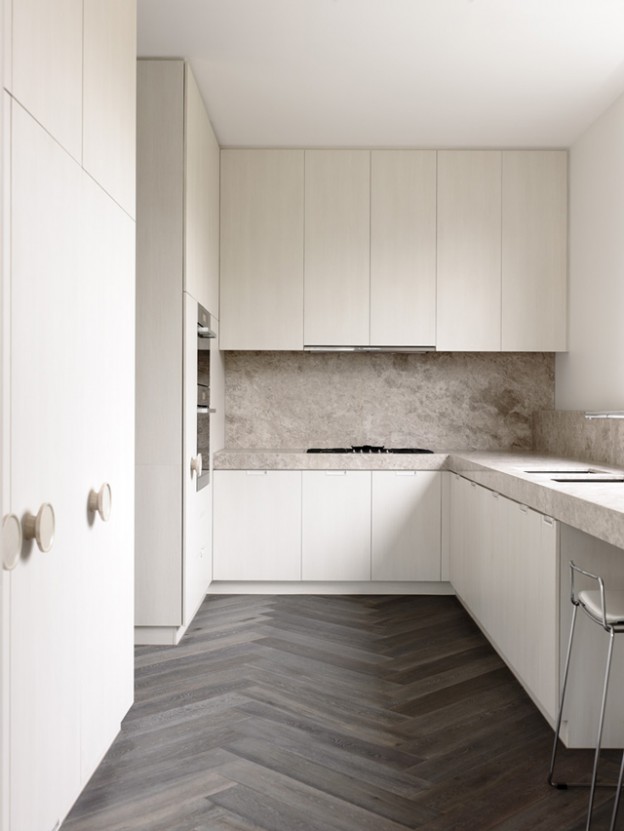
A development of five apartments in Melbourne caught my eye whilst scouring the internet, as did the design blog of its author, pages from my moleskine (well worth a peek, here). Although undecorated and uninhabited, a bland developer’s palette has been avoided with rich, subtle texture and beautifully detailed finishes. French grey parquetry flooring, palest timber veneer panelling and honed limestone provide the neutral backdrop. Generous proportions are evident with full height doors, and weighty stone benchtops. Plate sized, bespoke turned timber handles are the only extraneous elements. The black shutters of the facade create the only pattern within – that of the sunlight striping across the floor.
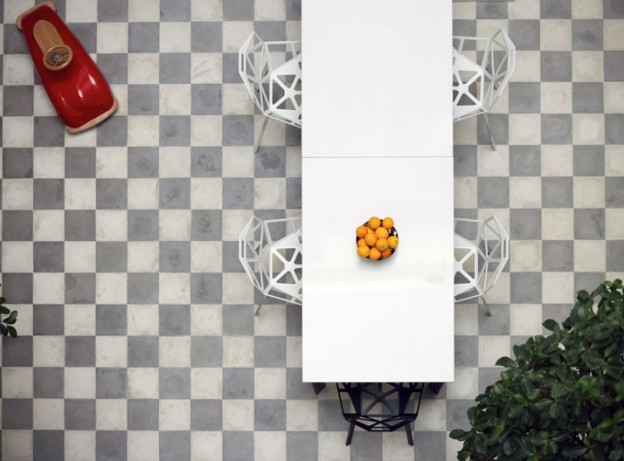
The otherwise achromatic colour scheme is only broken in the Powder room, with rich, grey/green mosaic tiles, and a single Alvar Aalto-designed A330 brass pendant floating assymetrically in the space. I love this palette of materials most of all.

CJA_Washington_015CJA_Washington_017CJA_Washington_013CJA_Washington_016CJA_Washington_023CJA_Washington_002

Gorgeous photographs by Derek Swalwell give life to the otherwise vacant spaces.

Could you live here? Toorak apartments, Melbourne by Chamberlain Javens Architects, via

More wonderful spaces, here.

cabin in wood and grey.

I wrote about Diogene, an experimental, minimalist living unit, here. APH80 is not autonomous (nor is the name poetic…), but it is a similarly small, perfectly formed, portable dwelling designed by architecture firm abaton.
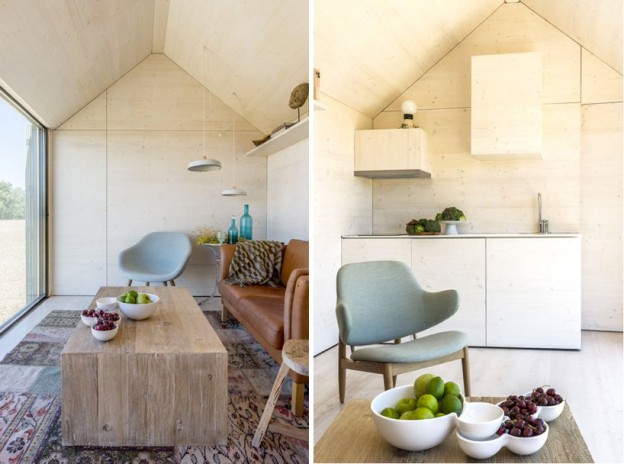
Measuring 9 x 3 metres, it comprises a fully equipped interior with living-room/kitchen, bathroom and double bedroom. The material palette is all pale woods – a selection of FSC-certified spanish fir, local lumber and grey cement wood board cladding the facade. A solid timber skeleton allows large openings to the outdoors. It can be transported by road and placed anywhere.

abaton-low-cost-prefab-cement-home-designboom01abaton-low-cost-prefab-cement-home-designboom08

Just perfect for two. Low cost Prefab Home by Abaton via

Another small space, this time an enchanting, magical shed, here

More wonderful spaces, here

a monolithic modernist.

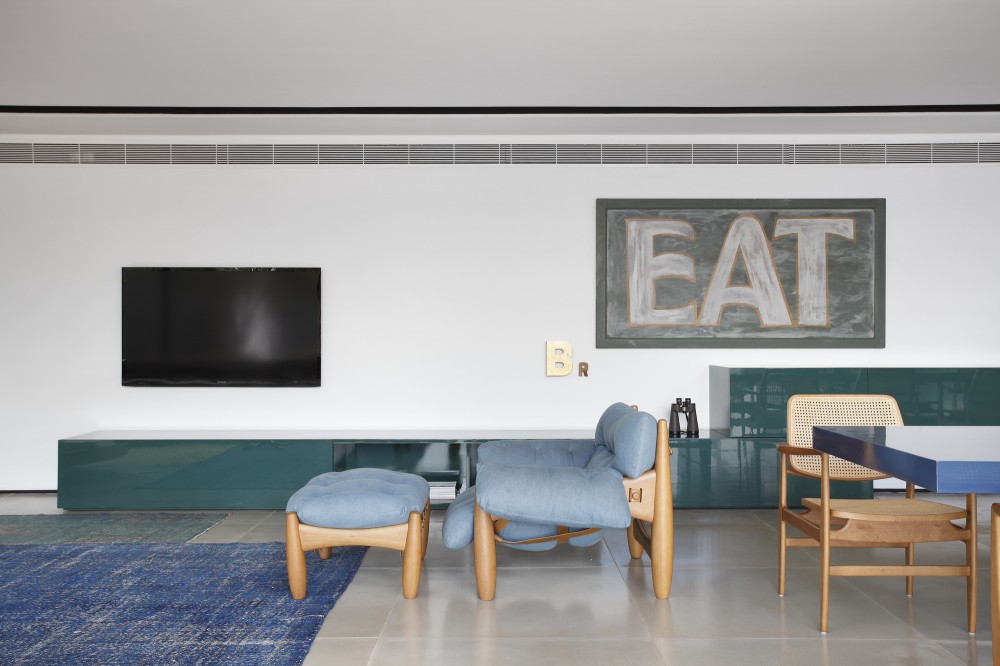
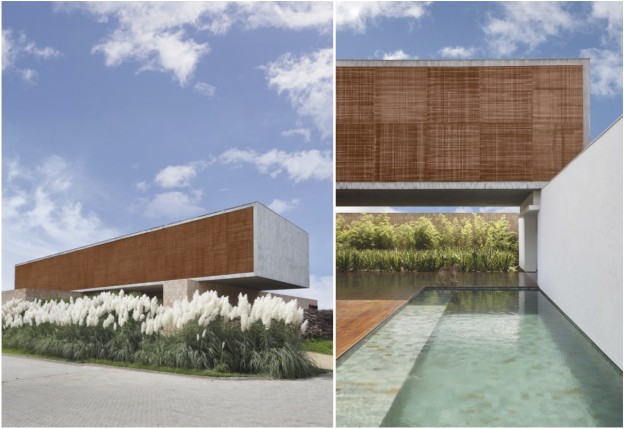
Monolithic and undeniably modern, the building stands as two low linear brickwork blocks supporting an upper volume of concrete. Between, water and landscaping provide a refuge and, with the rather wonderful giant Texan plume grass, give the house an ethereal quality.

São Paulo based architect Guilherme Torres’ own house features a chequered wood screen or brise soleil called muxarabie, a classic feature in Eastern architecture, assimilated by the Portuguese and later brought to Brazil. Acting as a wooden curtain to allow air flow, it also filters the light, offers privacy to the inhabitants and adds security.

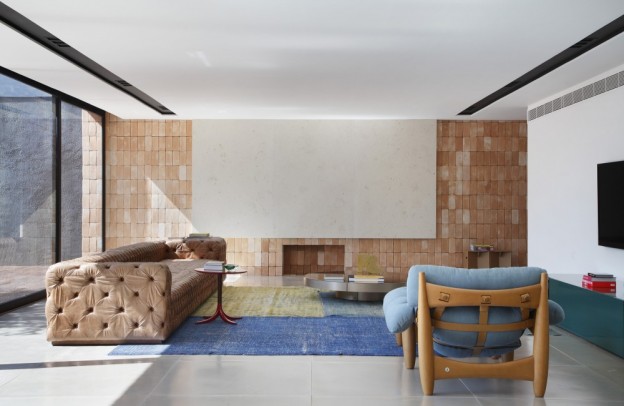
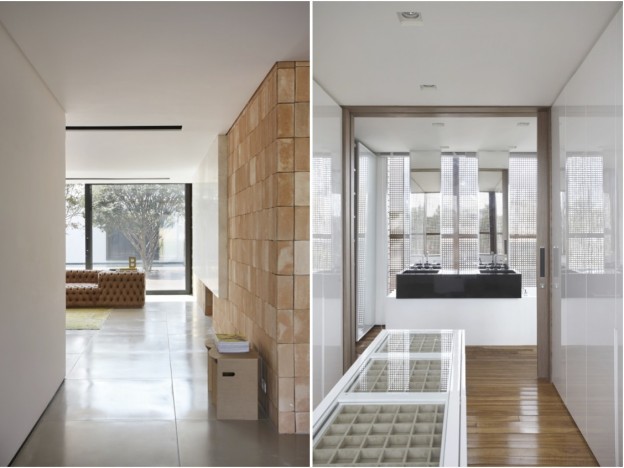
The external elements (screen, brickwork) can also be read internally. Other materials are kept simple – wood and stone floors, white walls and dark metal framed windows. The loose furniture is a combination of the architect’s own design, pieces by known Brazilian designers (Sérgio Rodrigues and Carlos Motta), and international pieces – Tom Dixon lighting, for example. Brazilian in style and quite jovial, the decorations are either neutral or fabulous shades of blue…

bt-house-studio-guilherme-torres__ohlbt-house-studio-guilherme-torres__ohlimages ohlbt-house-studio-guilherme-torres__ohl

bt-house-studio-guilherme-torres__ohl.

images ext ohl

BT House by Studio Guilherme Torres via Arch Daily, here 

Images: Denilson Machado

More wonderful spaces, here

elemental house.

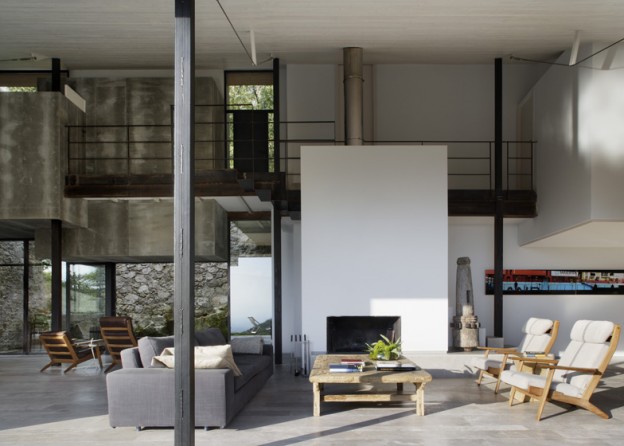
What was a crumbling stone stable in the countryside of western Spain is now a totally self-sufficient family home. Too remote to be connected to an electrical grid or water supply, the converted stable utilizes renewable energy sources such as hydro electricity and drinking and bathing water from two nearby streams. Deep eaves help control summer sun, large wooden shutters that slide closed like a second skin cover the windows at night to trap the daily solar heat gain.

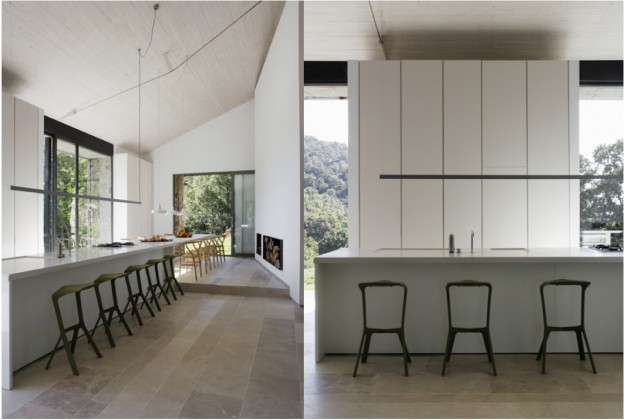
The rustic stone of the exterior was restored using cement and local stone. Windows sit within deep recesses and can be screened behind large wooden shutters, referencing old stable doors. Within, floors are limestone, walls of exposed concrete are interspersed with slender metal posts and pale wood-lined ceilings rising to form double-height spaces. The internal structure of iron beams, metal posts and corten metal landings and steps are kept deliberately light and elegant. Internal interventions – kitchen units for example – are simple, white and linear. The kitchen bench top extends the length of the main room to form a table for dining, flanked by classic wishbone chairs and minimal black stools.

dezeen_Off-Grid-Home-in-Extremadura-by-Abaton_ss_4stablehouse_ohlimagesimages4

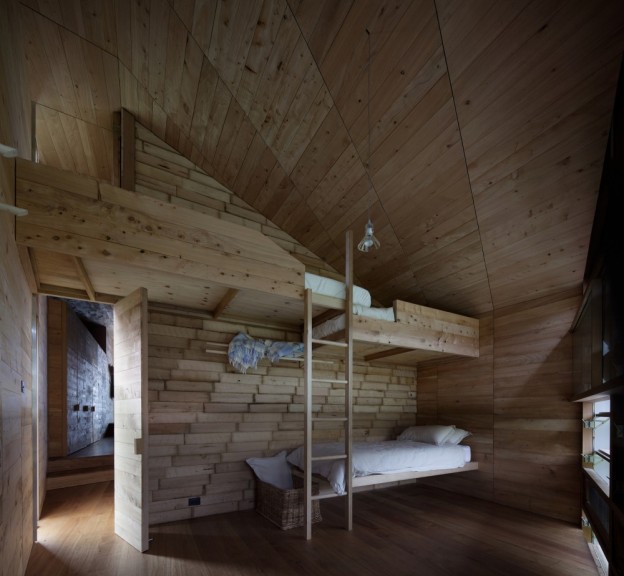
Did you notice the books hanging from the top bunks to allow easy reach?

Off Grid Home in Extremadura by Abaton Architects, here.

More wonderful spaces, here.

a madrid penthouse in white.

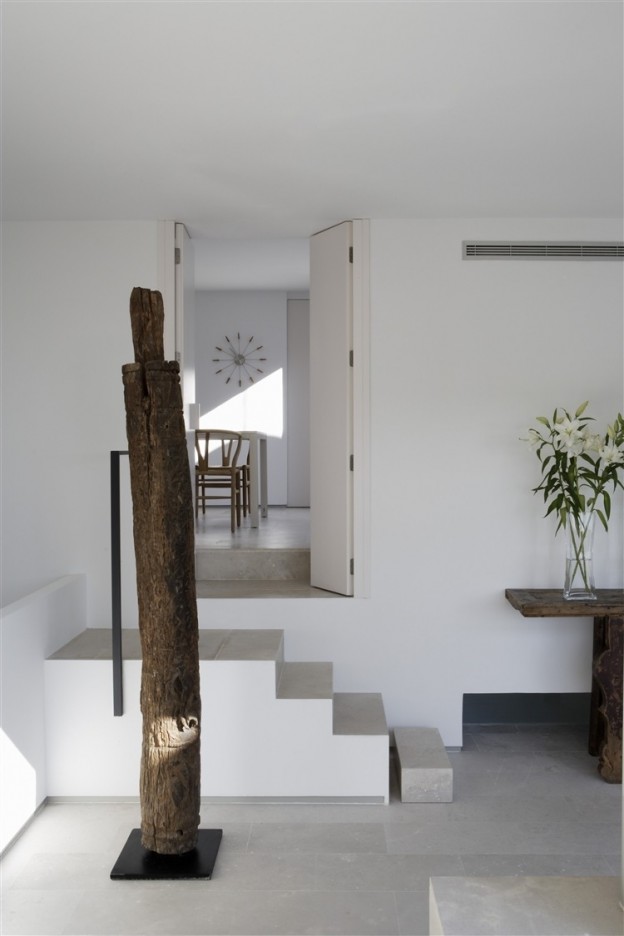
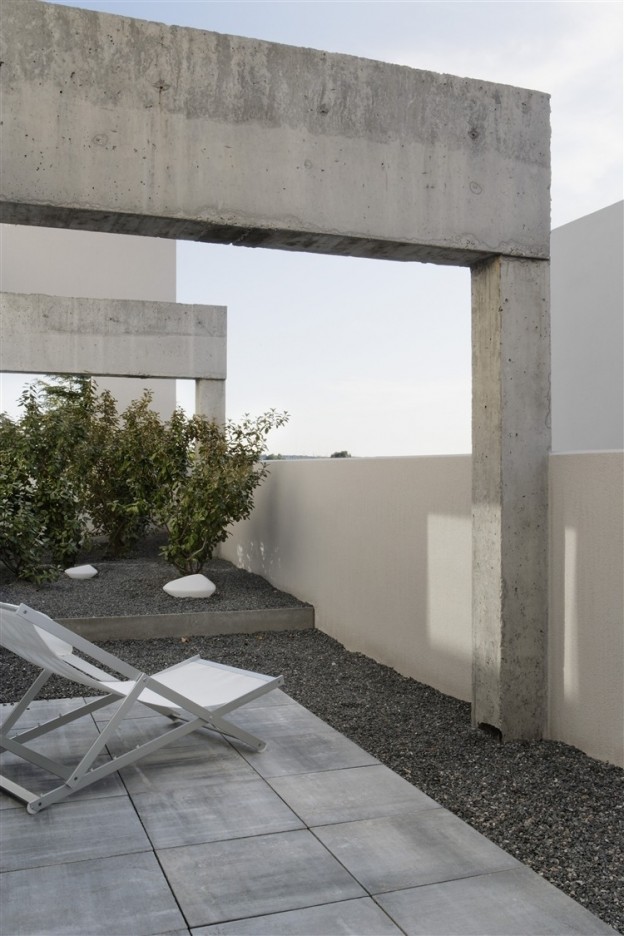
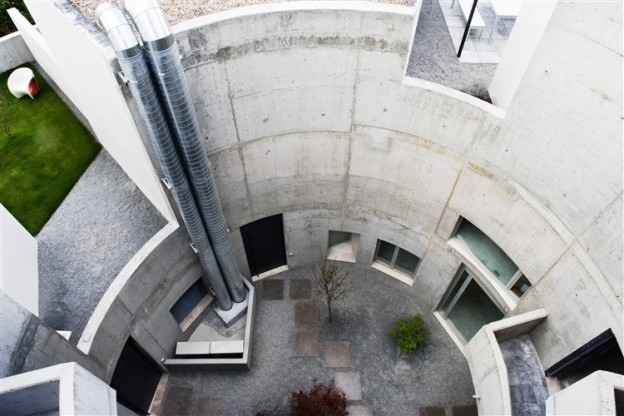
Coolness and light abound in this split-level penthouse in Madrid. All access areas to the property were conceived as outdoor spaces to increase privacy and a sense of seclusion. Terraces on different levels are fed with a natural irrigation system and rain water from the roof tops; these terraces of warm earth along with the concrete structure also serve as insulators.

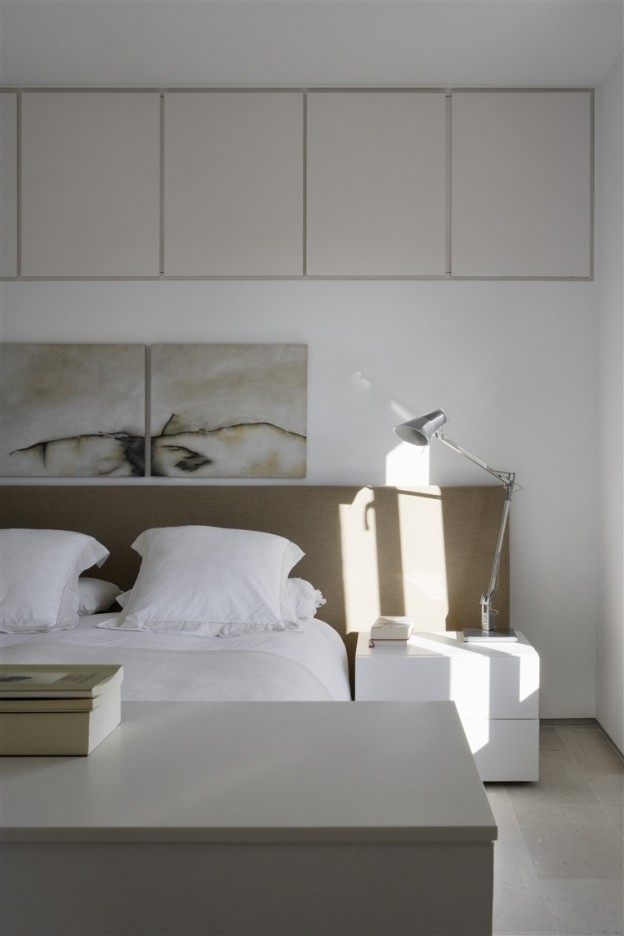
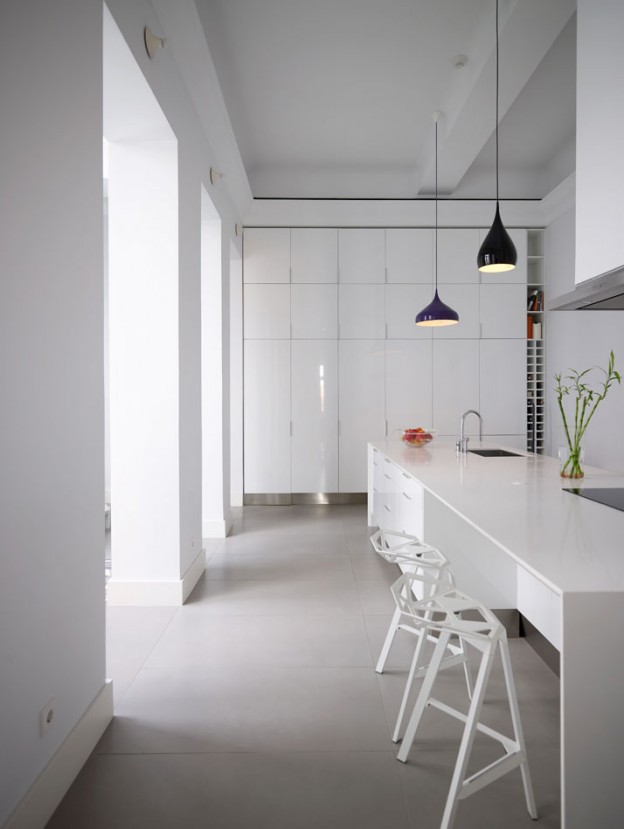
Internally, white walls provide the backdrop, pale wood floors and stone offer coolness under-foot. Seamlessness is created with flush, built-in cupboards and shadow gaps where level changes meet the floor. I spy: light wood Wishbone chairs, Eames DSW and Catifa chairs with their shells in white; a George Nelson clock, Panthella table lamp. The simplest metal handrails.

009-atico-en-u-abaton-arquitectura007-atico-en-u-abaton-arquitectura011-atico-en-u-abaton-arquitectura014-atico-en-u-abaton-arquitectura015-atico-en-u-abaton-arquitectura019-atico-en-u-abaton-arquitectura

Which details do you like best?

Split-level penthouse in Madrid by Abaton Architects, here.

More wonderful, cool, white spaces, here.

shearers quarters house.

Vernacular architecture has always fascinated me – a building that is perfectly allied to its landscape, is contextual, and serves its end use with maximum function and purpose. This building appears to follow that philosophy and then some..

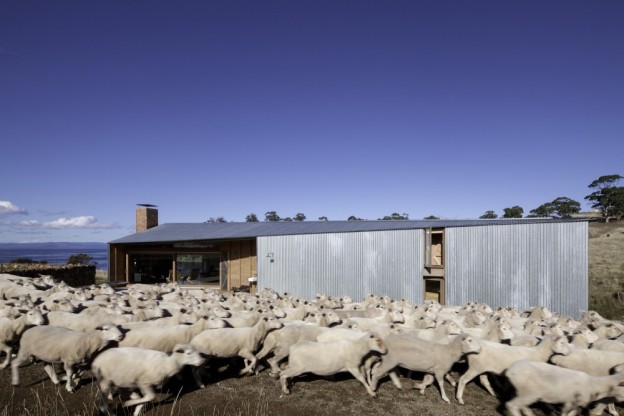
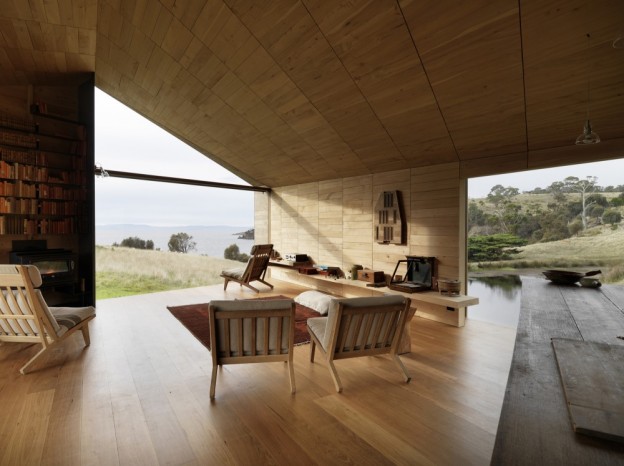
Shearers Quarters house sits as a companion building to an existing historic cottage on a working sheep farm, on an island off the Tasmanian coast. Not your average brief – it was designed to house shearers, family and friends on annual tree planting weekends and retreats. It comprises an open-plan living/dining/kitchen, bathroom and utility, two bedrooms and a bunkroom. A slender skillion roof at one end transforms to a broad gable at the other, opening up the form to the wonderful views beyond. The geometry of this shift is evident internally in the geometry of the internal walls and window frames.

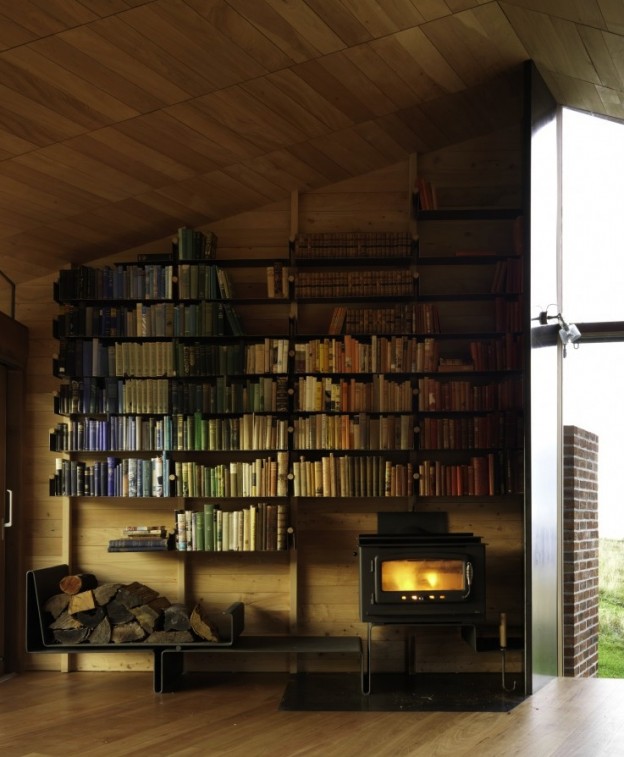
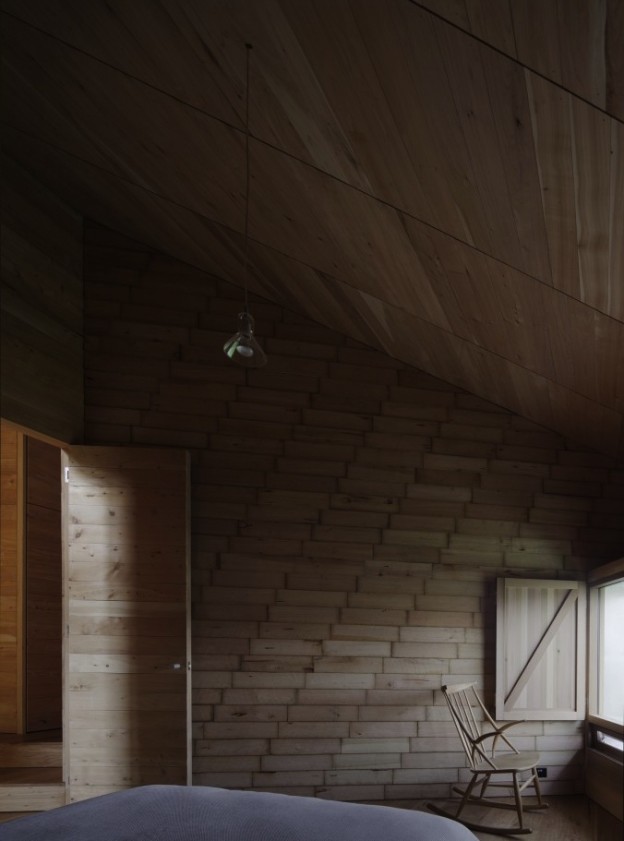
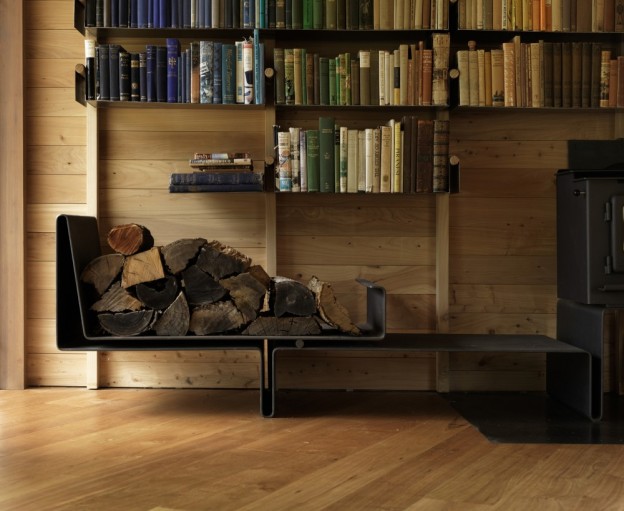
The simplest palette of materials has been used: corrugated galvanised iron to the exterior, timber internally. Pinus Macrocarpa is the primary timber used, sourced from old rural windbreaks. The bedrooms are lined out in recycled applebox crates, gathered from orchards of a nearby valley where the timber had remained stacked but unused since the late 1960s. This rhythm of small, regular pieces of wood becomes the decoration. Metal is also used folded to form shelves to store logs, and to create a wall of books.

shearers-quarters-john-wardle-architects_08_trevor-mein_owlshouselondon shearers-quarters-house-john-wardle-architects_09_trevor-mein_owlshouselondonshearers-quarters-house-john-wardle-architects_15_trevor-mein_owlshouselondonshearers-quarters-house-john-wardle-architects_14_trevor-mein_owlshouselondonshearers-quarters-house-john-wardle-architects_10_trevor-mein_owlshouselondon

Shearers Quarters House by John Wardle Architects, via

Photographs: Trevor Mein

Another wonderful example of vernacular building, this time in the Danish forest, here

a modern neo-classicist.

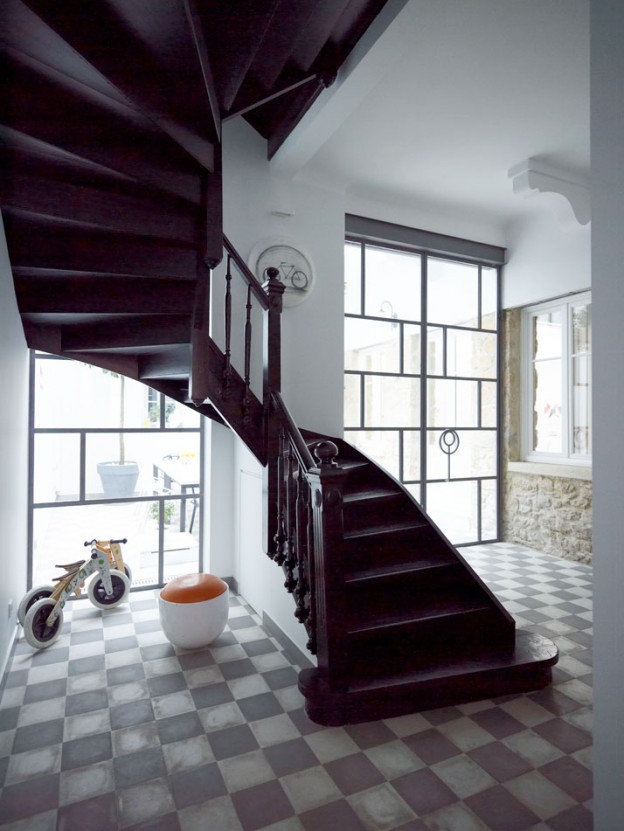
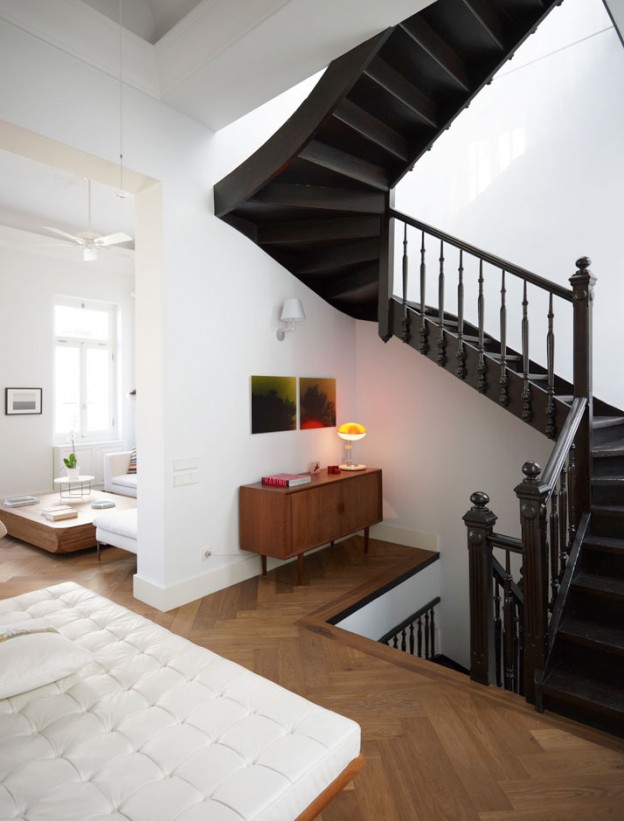
Set within a neoclassical building in Piraeus, Greece, the journey begins in the wonderful, tiled ground floor courtyard, previously a place for residents of old to meet and chat. Then on, up through original stonework and 19th century walls to the 1930s, and on to the contemporary new build extension and penthouse on the fourth floor.

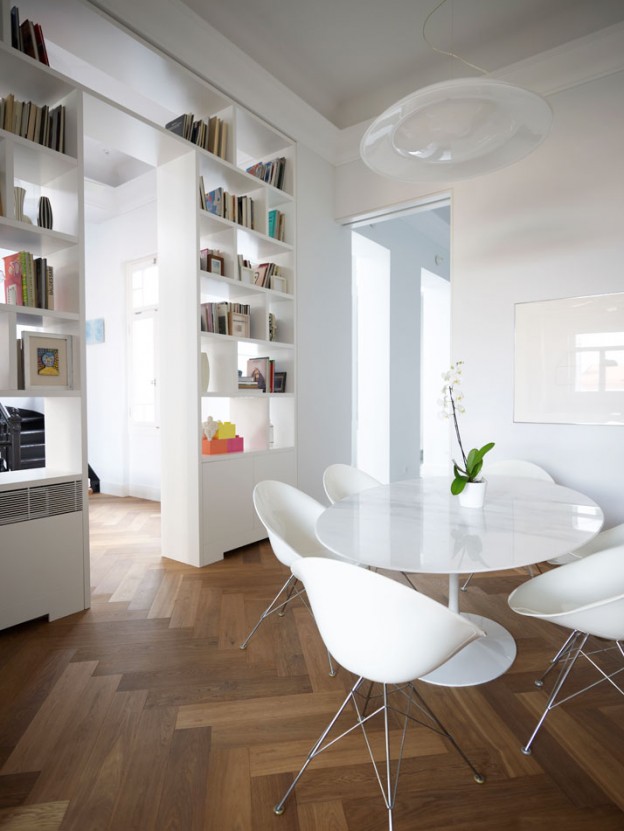
The original staircase painted glossy black wends and winds its way through the spaces in dramatic fashion; elsewhere, white predominates as the background. Original tiles are maintained in the courtyard, new wood floors are laid in a herringbone pattern giving warmth and a contemporary flavour.  Original details are evident throughout. All existing interior walls have been demolished and replaced with sliding doors and walls for flexible living; the courtyard too has over-sized glazed doors emphasising the verticality of the space. Bold colours and contemporary furniture pieces chosen for their sculptural forms create a wonderful blend of old and new.

The-Grand-Dame-stella-konstantinidis-askarchitects-photo-Vangelis-Paterakis-yatzer-1The-Grand-Dame-stella-konstantinidis-askarchitects-photo-Vangelis-Paterakis-yatzer-19The-Grand-Dame-stella-konstantinidis-askarchitects-photo-Vangelis-Paterakis-yatzer-7The-Grand-Dame-stella-konstantinidis-askarchitects-photo-Vangelis-Paterakis-yatzer-10The-Grand-Dame-stella-konstantinidis-askarchitects-photo-Vangelis-Paterakis-yatzer-13The-Grand-Dame-stella-konstantinidis-askarchitects-photo-Vangelis-Paterakis-yatzer-12Grand Dame by ASKarchitects, Piraeus, Greece via

Photos: Vangelis Paterakis

More wonderful spaces, here

a loft in the trees.

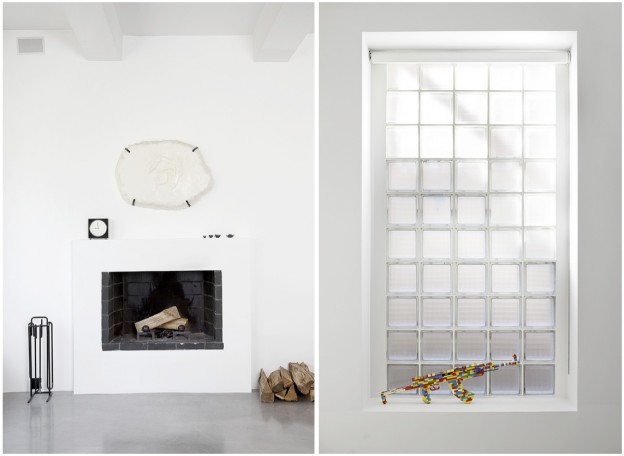
The main feature of this New York loft is a large, glass window wall. Framed with polished black lacquer panels, it claims the view as if it belonged within, like a picture on the wall. Due to the elevation, one appears high amongst the trees.

Perimeter walls and concrete beams are painted white to emphasise the inherent qualtites of the loft; a concrete floor poured throughout provides a seamless, flowing space. A pair of full height doors defines back from front when separation is necessary. Glass blocks diffuse light along the hallway and provide privacy from neighbours. The open plan kitchen is an L-shaped wall of book-matched, mahogany cabinets; the timber panels obscure a series of doors, including the powder room and pantry. Wood is chosen again in the dining table and chairs, which together with the wonderful, tree-top aspect, provides the warmth and texture to an otherwise monochrome palette.

rd_diningrd_dining_2ny loft on owl's house londonrd_bedroomny loft2 on owl's house london

Richardson ⁄ Dondoe loft by Workshop for Architecture, here

More wonderful spaces, here.

interior of the year.

I’m always curious to see what is new and happening in my home town of Melbourne, especially when it comes to design. Winner of the Residential Design awards at this year’s Australian Interior Design Awards was this house – Park House in Melbourne. The design was celebrated for its ‘seamless and effortless spatial flow, which achieves a sincere sense of livability and controlled softness throughout’.

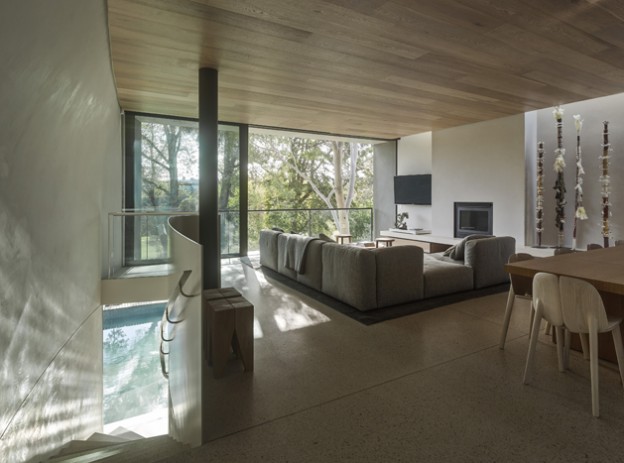
Everything in this home is highly controlled, from the super-fine, curved metal balustrade and opposing recessed handrail through to the vertical garden. However, an organic quality also exists – horizontally, in the flow of the spaces, as well as vertically, with curved, plastered walls continuing up past the ceiling planes, allowing the light to stream down in between in a controlled, but playful, manner.

The palette and detailing is again purposefully restrained, with a clear emphasis on materiality. Wood ceilings, for example, are a wonderful way to bring in warmth and softness as a counterpoint to the hard stone floors. Glass, plaster and metal elements are all utilised in the creation of the flowing forms and spaces. Furniture and fittings are perfectly suited and again selected for finish and form.

park house on owl's house london2owl's house london. park house4owl's house london. park house1park-house-05

The house was a collaboration between Leeton Pointon Architects + Interiors and Allison Pye Interiors. Park House via Australian Design Review, here. Photographs, Peter Bennetts.

Which of the elements stand out for you?

More wonderful spaces, here