villa altona.

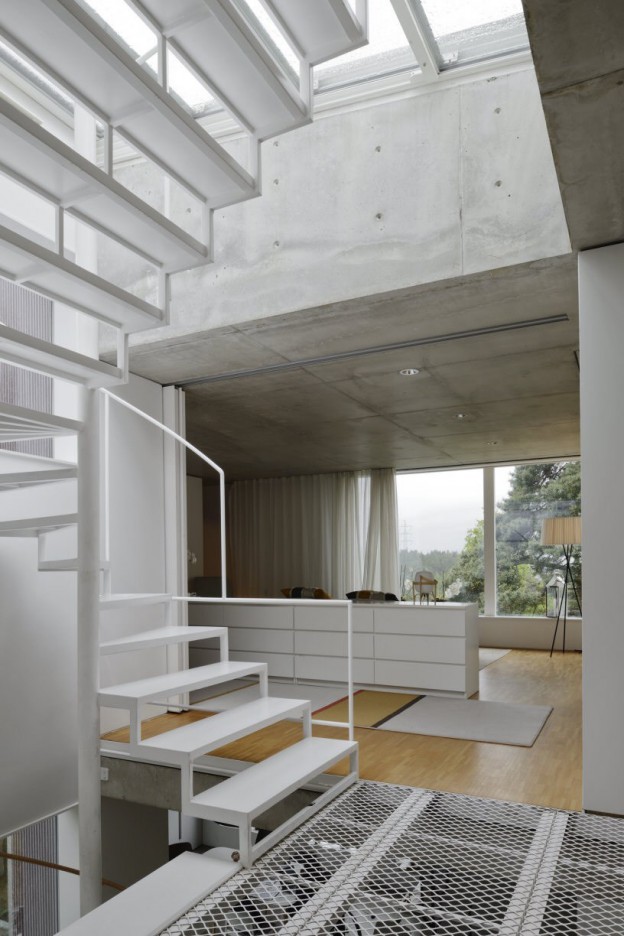
Villa Altona is located on a dramatically sloping site in Sweden, with villas on one side and forest on the other. These site characteristics have clearly generated the form, placement and tones of the building. It is a bold, modern structure, with a low pitch roof, covered in sedum. Designed by The Common Office, it is considered one of Sweden’s most interesting buildings by the Swedish Association of Architects. And it’s for sale.

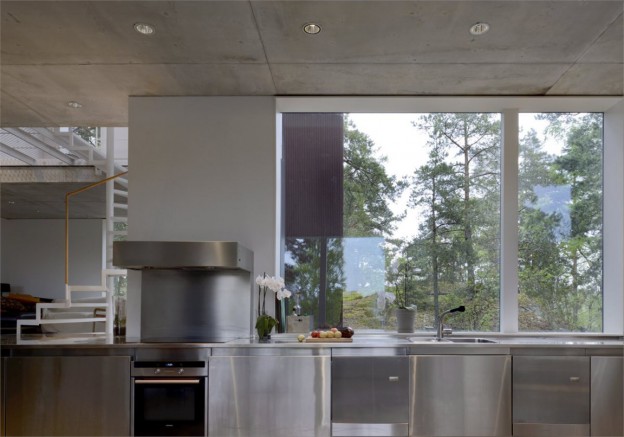
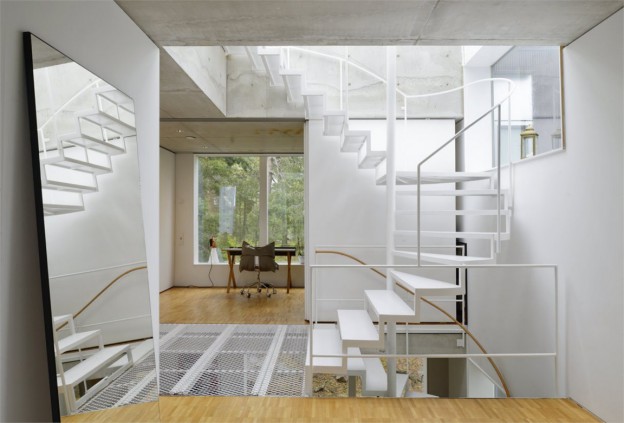
The interior is almost one continuous room, rising up over several levels, connected by a thinly profiled metal stair. At the top, a large, central retractable skylight (providing access to a roof terrace, of course), fills the interior with light and adds transparency to the building. Light abounds, with window walls everywhere. Family and private zones are separated, or not, with large sliding walls.
villa-altona_ohl.

villa-altona4_ohlvilla-altona3_ohl.villa-altona8_ohl.villa-altona7_ohl.villa-altona2_ohl

Floor and roof slabs are concrete, cast in situ and left raw. Slender steel columns offer support.
A perforated metal floor gives an industrial feel, with the main floor of oak parquet. This is the least successful material to my mind: the sections of parquet too small for the scale of the building. Otherwise the materials are used boldly – stainless steel, mirror, brushed concrete.

What do you think?

Villa Altona, The Common Office, for sale here, via
happy weekend.

02_LFAPavillions_ohl.

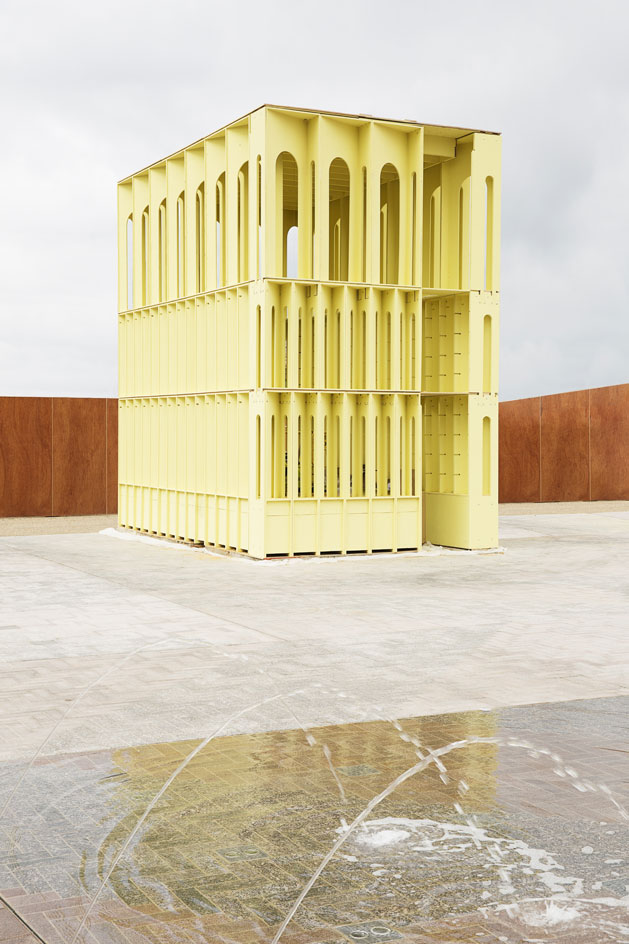
LFA Pavilion by Hall McKnight architects, Lewis Cubitt Square. Photography: Ed Reeve

The annual London Festival of Architecture has begun: a celebration of architectural experimentation, thinking and practice, with lectures, exhibitions, student shows and tours. This year’s theme is Work in Progress, and for the first time, a new initiative is launched, a Focus Country. Ireland is the focus, with two pavilions – including this beautiful yellow one – in Kings Cross’ new public space, the Lewis Cubitt Square.

London Festival of Architecture, June 1- 30 2015, various venues around London. More, here, and a useful round up, architecturaldigest.com.

Happy weekend.

house of concrete and corten.

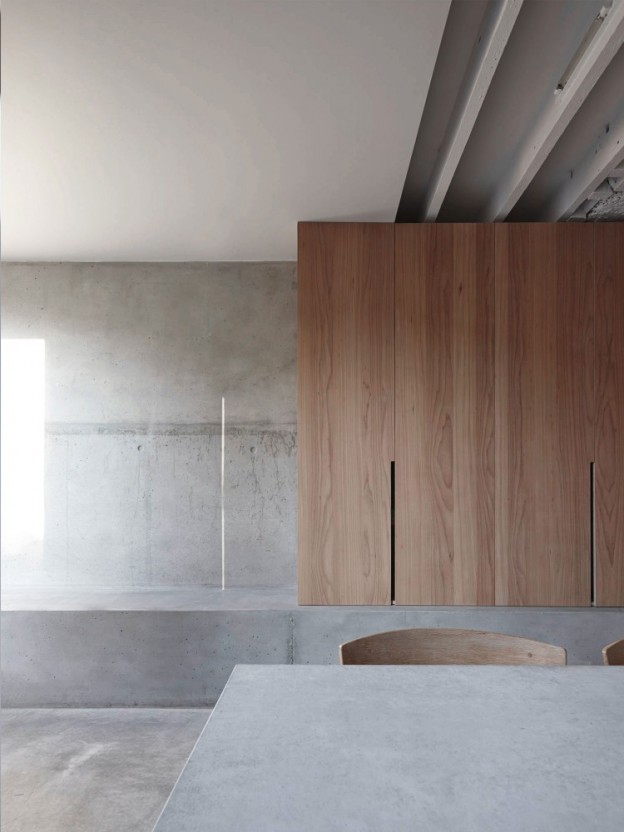
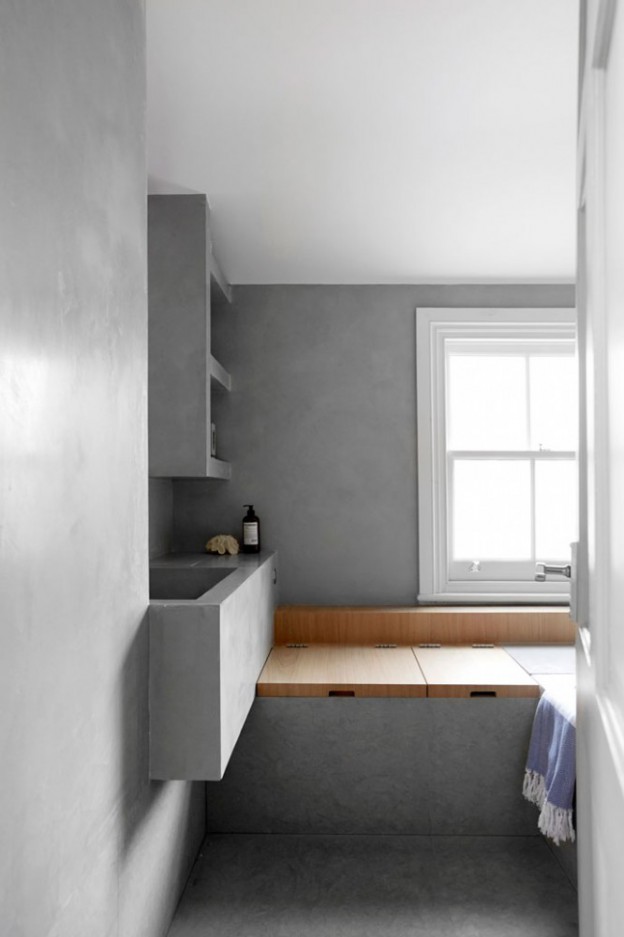
Concrete is the predominant material used in this beautifully considered renovation in an otherwise archetypal Victorian terrace in West London.

Cast insitu and finely detailed, it is used for floors, walls and furniture elements. Forming a storage unit or bench, walls and plinths change level or quietly recede, accommodating the day-to-day activities of a family – eating, reading, playing – whilst blurring the traditional division of rooms. The boundary is further blurred between indoor and outdoor spaces with a large window seat projecting into the garden.

The facade is clad in Corten steel with its wonderful rusted, oxide patina. Inside, Grey Elm joinery,  pale walls and brass fixtures also soften the palette and add warmth to the cool, grey concrete.

mxl-ingersoll-web-12_ohl.mxl-ingersoll-web-18_ohl.mxl-ingersoll-web-7_ohl.mxl-ingersoll-web-29a-web.1428664808mxl-ingersoll-web-32_ohl.mxl-ingersoll-web-27_ohl.

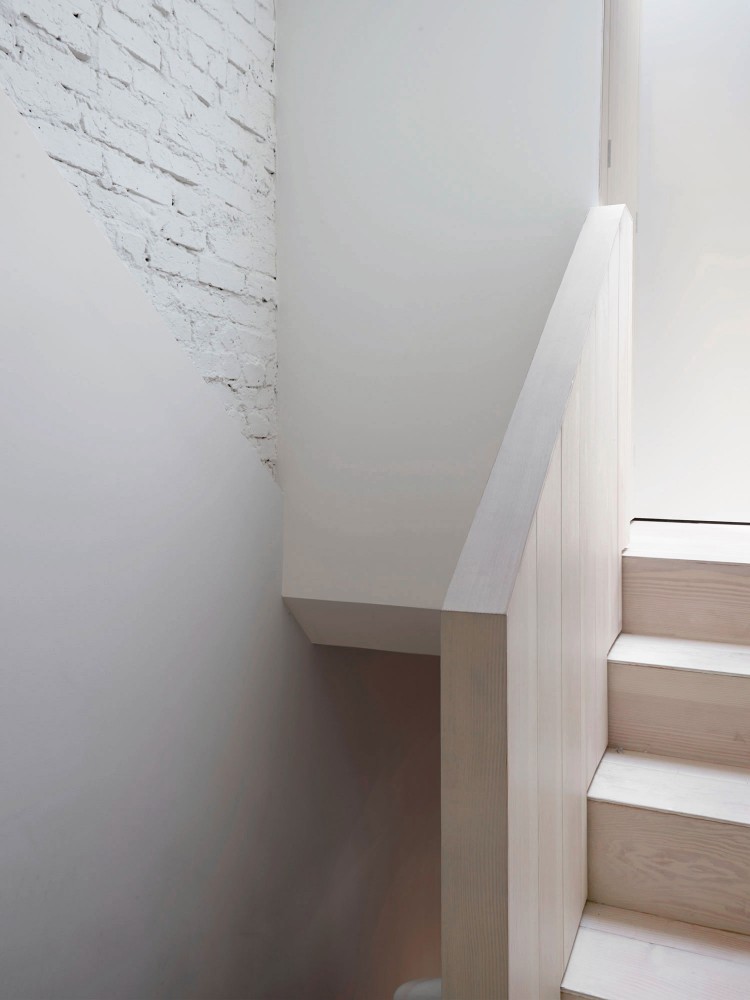
Moving up through he building, the existing structure and materials are allowed to coexist with the new. A palette of Douglas Fir floor boards, light coloured walls and exposed brickwork are the basis for a loft extension. A built-in desk extends the width of the study and becomes an open shelf as it wraps around the corner.

To me, this is the perfect solution for contemporary family living. What you think?

More Ingersoll Road by Mclaren Excell, here.

happy weekend.

kengo-kuma1000x750

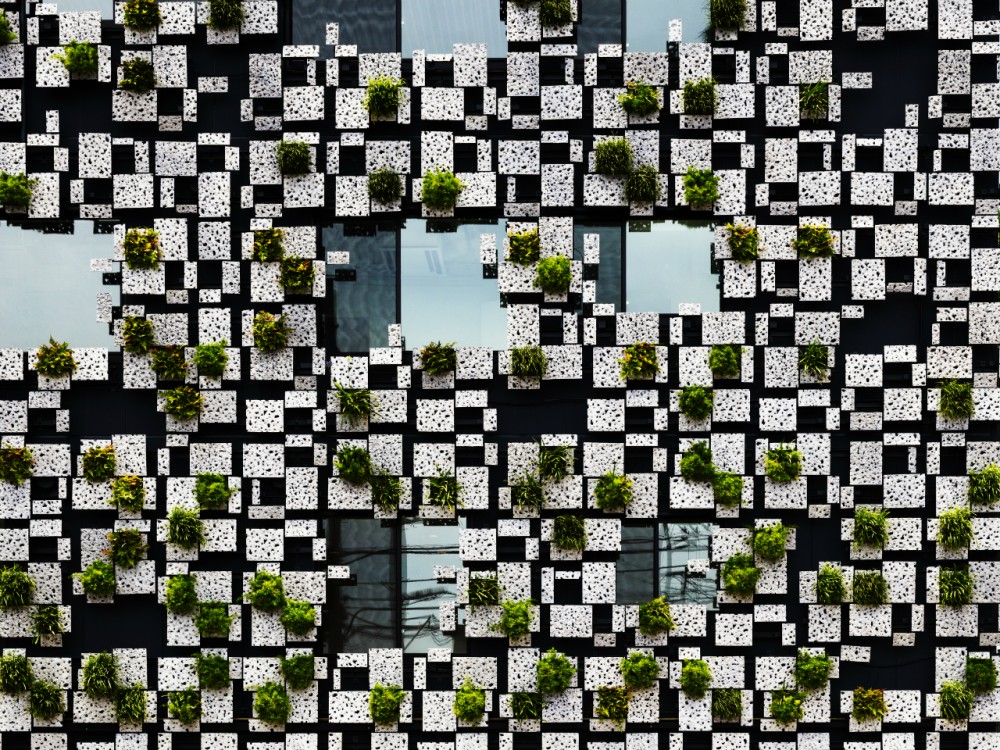
I love this image of a vertical garden, which could also read as a plan view; part of a mixed-use building in Japan by Kengo Kuma & Associates. The living facade is made of aluminium die-cast panels that serve as vertical planters. More, here.

More green inspiration on my pinterest board, here (I’m researching all things green for a current garden project in Brooklyn). And it’s Chelsea Flower Show time here in London.

Happy long weekend.

mid century east.

Yesterday’s Mid Century East show at Erno Goldfinger’s marvellous Haggerston school was the usual trove of fabulous modernist finds. Apart from the pieces, what I love about the show is how everyone who attends is passionate about design. Dealers love what they do and love to talk about their wares. And, of course, the pieces themselves always come with a fascinating provenance.

A brief walk-through below, featuring just a few favourite pieces and their dealers; some known, others new.

MARDEN_ohl

Mar-Den had the wonderful, on-end, angled brick wall as a backdrop in which to display, in the beautifully proportioned double-height space of the hall.

PF_ohl.

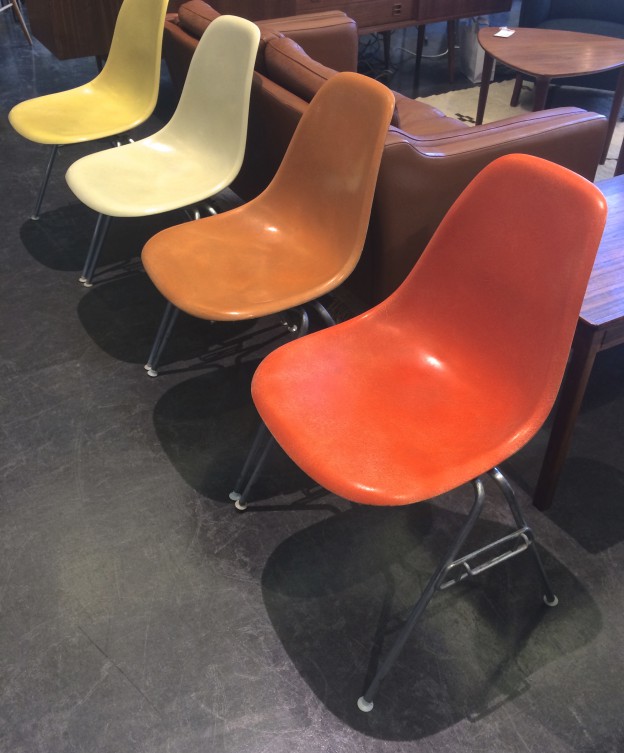
Pink Flamingoes specialise in American design, and showed Eames classics in fabulous colours.

BB_ohl.BB_ohl.

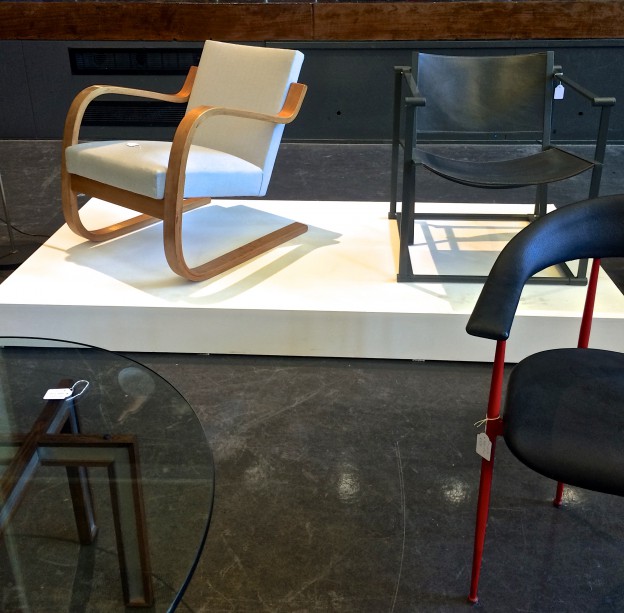
Beton Brut specialise in architect-led design from post-War France, Italy, Netherlands and Scandinavia. I’m yet to visit their new showroom in East London but they have a very seductive  website in the meantime.

SFA_ohl.

Saunders Fine Art always tempt with their modern British and European art and also collectables.

KULA_ohl.

My favourite of the show was a pair of lounge chairs from the ‘50s, with a wonderful back-story, having been languishing with their original owners in the south of France until now. From The Kula.

MCEimages_ohl

Lovely accessories at Fragile Design

1934_ohl.

1934, named for Gerrit Rietveld’s ‘crate furniture’ series in 1934, has a tightly curated collection of simple, functional pieces.

saloneMCM_ohl

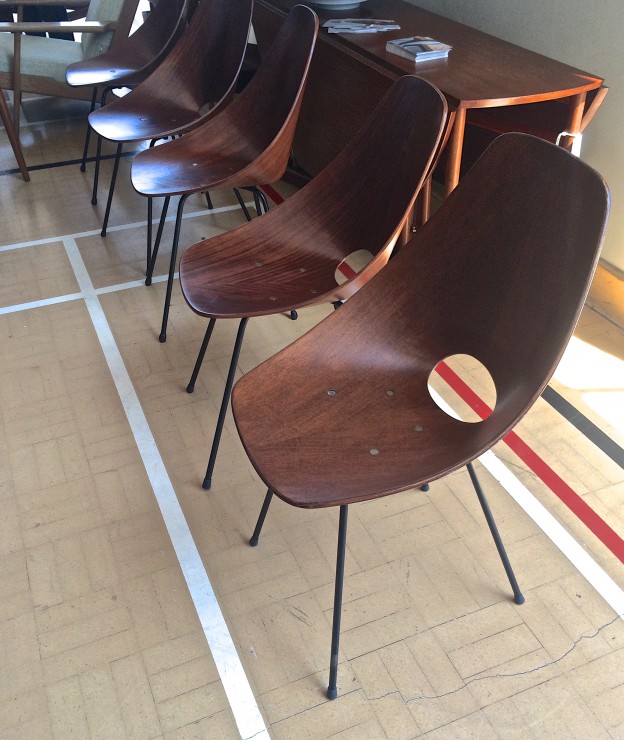
Gorgeous Vittorio Nobili Medea Chairs (and a few knock-out light fittings) at
Salone MCM

Dd you go? Any favourites? More mid-century show round-ups, here and here.

All images owl’s house london taken on my iPhone 5.

happy weekend.

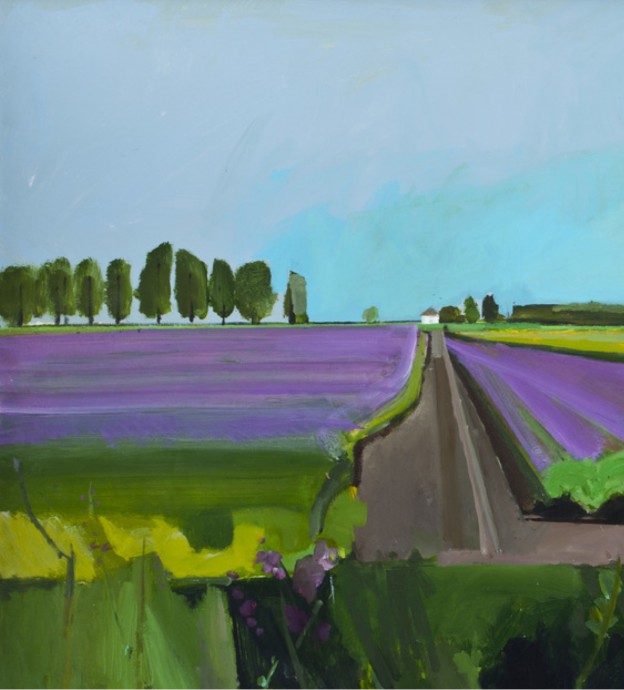
Fred Ingrams2

Flowering Potatoes, Dairy Drove, Ten Mile Bank, Aug 2014
Acrylic on panel
116 x 123cms

Vanishing Lines is a current exhibition by the Norfolk-based artist (and friend) Fred Ingrams.

Painting en plein air, Fred captures the flat marshland typical of the region in vivid and dramatic colour.

Vanishing Lines, Art Bermondsey 183-185 Bermondsey Street, London SE1 3UW
until Sunday 17th May 2015.

More images from the opening night on owl’s house london Instagram, here

today’s image.

isokon-penthouse_ohl.

View from the penthouse of the wonderful Isokon building, from a private tour at the weekend.

Follow owl’s house london Instagram, here.

happy weekend.

Christo_The-Floating-Piers_ohl.

Christo
The Floating Piers (Project for Lake Iseo, Italy)
Collage 2014 in two parts. Pencil, charcoal, pastel, wax crayon, fabric, enamel paint, cut-out photographs by Wolfgang Volz and map
Photo: André Grossmann

He’s back, and I’m thrilled, being a huge fan. The Floating Piers is Christo’s first work since the death of his wife and collaborator Jeanne-Claude in 2009 (they were also born on the same day in 1935).

For 16 days in June 2016, Christo will reimagine Italy’s Lake Iseo. The work will consist of swathes of shimmering yellow fabric, carried by a modular dock system of polyethylene cubes floating on the surface of the water. The walkways will continue on land, connecting the mainland to the island of San Paolo. More, here

Other works by Christo and Jeanne-Claude include Surrounded Islands and, possibly his best known work, Wrapped Reichstag, completed in 1995. Happy weekend.

covert house.

CF074314_440

Covert House has been much acclaimed in the architectural press of late. It offers a successful case study for good design despite difficult site demands – the house is mainly underground, restricted by a 3.5 meter height limit and huge boundary setbacks. But equally successful to my mind is the interior. There is too often an overwhelming gap between architecture and interior, with architects neglecting the interior for sake of the big architectural expression, and interior designers having little if any influence over the outside form. Here, the architect owners have embraced both.

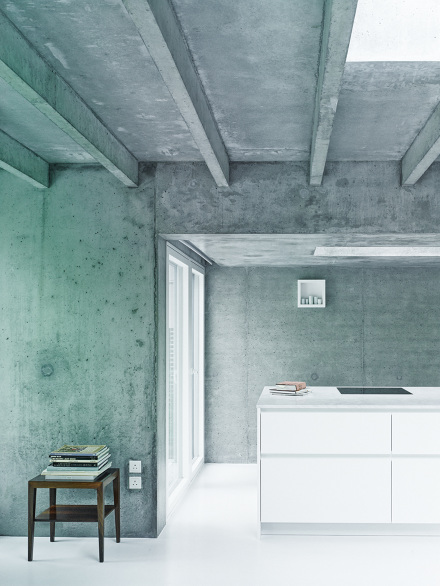
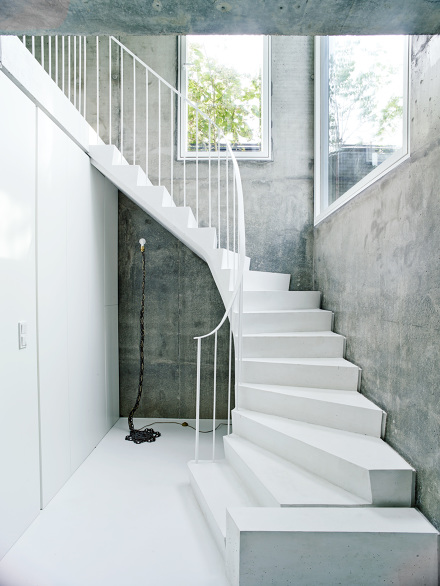
Concrete is used outside and in in various forms – cast in situ, left raw, highly polished. In its unfinished state, it provides the perfect backdrop. The imperfections – discolouration and mottling – show the effort and craft involved in making the structure. Light abounds, via light wells and the white and light reflecting surfaces. The effect is elegant and light-handed and the resulting spaces appear calm and domiciliary. Furniture is mostly mid-century and there is a mix of timbers used in the furnishings, and a timber lined bathroom. The only soft surfaces appear to be the upholstery fabrics.

CF074233_440CF074325_440CF074240_440CF074342w2_440CF074368_440

For me, concrete has always been the ultimate building material (more concrete inspiration, here). It can work very successfully in commercial interiors. Here, it is equally successful in a residential setting. What do you think? Would you live here?

Covert House by DHDSA, via The Architects’ Journal. Photographs: Christoffer Rudquist via

Another successful concrete house, here.

happy weekend.

shard-views_owlshouselondon.

Shard views.

Follow me on instagram, here