a modern house.

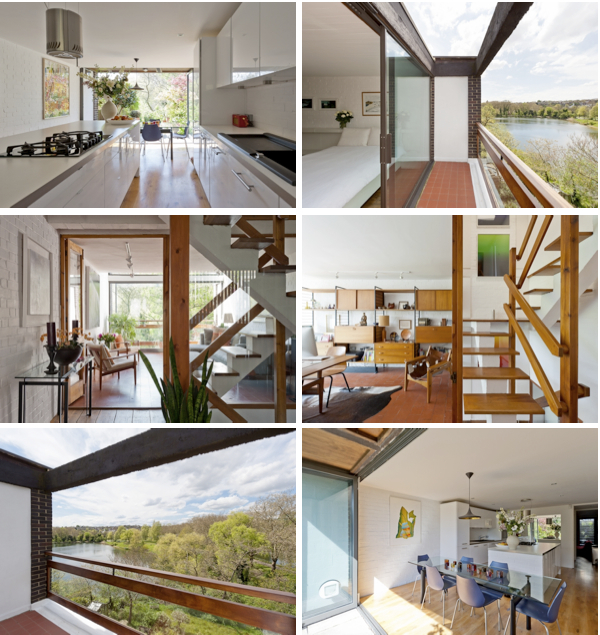
In a very lovely part of North London, not far from home, is this house. It is properly modern –  built in the mid 1950s by the architects Howell and Amis. It is one of six built as a terrace, there is a shared orchard and its back garden is the wonderfully wild but utterly civilised Hampstead Heath.

The layout is over four storeys. Being a terrace it is narrow – a smidgen over 3.5 metres wide. But every level has full-width floor-to-ceiling glazing across the rear elevation, providing wonderful framed views of Hampstead Ponds and lots of natural light. The interior palette is simple, with white washed walls, wood and terracotta tiled floors, and an open tread timber stair forming a spine through the floors. I’ve already interior-decorated it in my mind.

And best of all it’s for sale! Now, about that price tag…

All images The Modern House

found objects.

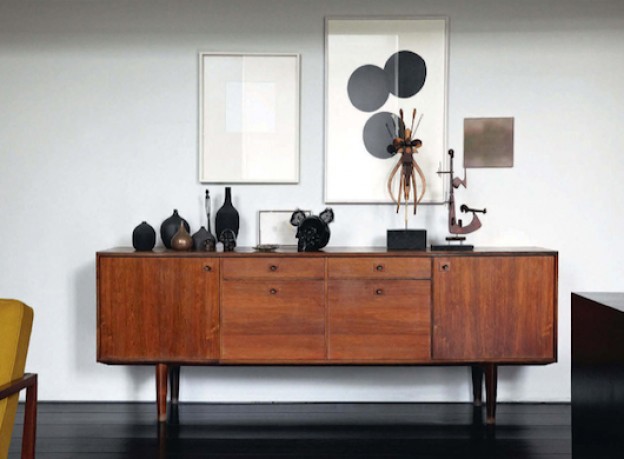
Browsing through some favorite blogs this morning, I came across these beautiful interior images  posted by French By Design. Resting on a simple backdrop of white walls and a pitch black painted floor, these beautiful pieces sit as if in a gallery, but are also part of somebody’s home, and are used and sat upon. I would like to sit and stay awhile…

All images via

danish delight.

The launch of a new chair is something to be celebrated. This most utilitarian of objects has had so many reincarnations (one of the most thumbed tomes in my book case is 1000 chairs by Charlotte and Peter Fiell), but how many new chairs go on to become design classics?

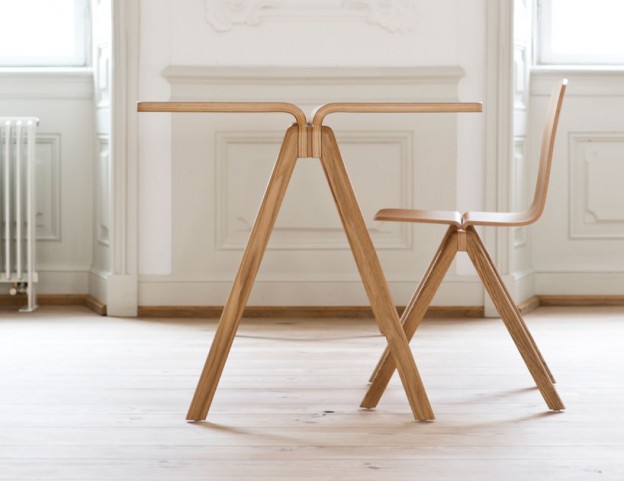
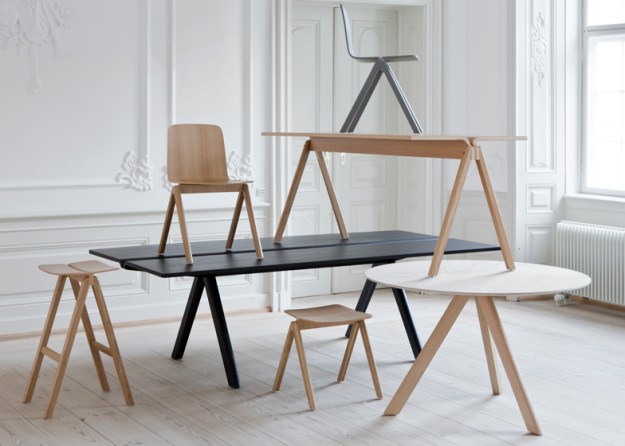
This chair by Ronan and Erwan Bouroullec, launched at Orgatec 2012 in Cologne, has a distinctly Scandinavian feel to it in its elegance and simplicity (it is for the Danish company Hay). The pronounced seam in the middle reminds me of an open book when seen in profile. The pairs of legs attach at the top creating an A-frame structure allowing it to stack. It is fabricated from oak and beech, and its inspiration comes from old wooden university trestle tables. The series also features tables (with the seam this time cleverly serving to conceal cable runs), benches and stools. It is designed as educational furniture, conceived for the University of Copenhagen, and it has something of the utilitarianism of the Bauhaus era, but in a refined, light and elegant form. Was the open-book profile intended? I don’t know, but I think it is a stand-out chair and would work in so many settings. What do you think? Will it make the cut?

All images © studio bouroullec

lina bo bardi.

Lina Bo Bardi (1914-1992) was an Italian architect who moved to Brazil in 1946. Her work is in the spotlight right now, with a current exhibition at the British Council in London (until 30 November), and a seminar at the ICA on the 10 November. The Architecture Association mounted an exhibition earlier this year of her work along with that of her ex-boss (another design hero of mine), Giò Ponti.

Bo Bardi was a modernist in her use of simple forms, concrete and glass, but rather than making the grand gestures of her contemporaries (Mies van der Rohe, Philip Johnson amongst others) she embraced the traditional cultures of her adopted country Brazil in her very contextual, playful buildings. Her work is more organic, informed out of a response to its inhabitants and environment, rather than being simply a ‘machine for living’. Her work is characterized by a celebration of the everyday and the ordinary.

Social concern did not, for her, mean she had to be sentimental, but that her professional skills should be applied to spaces available to everyone. Herman Hertzberger is another proponent of this approach: both aim for a balance of content and form.

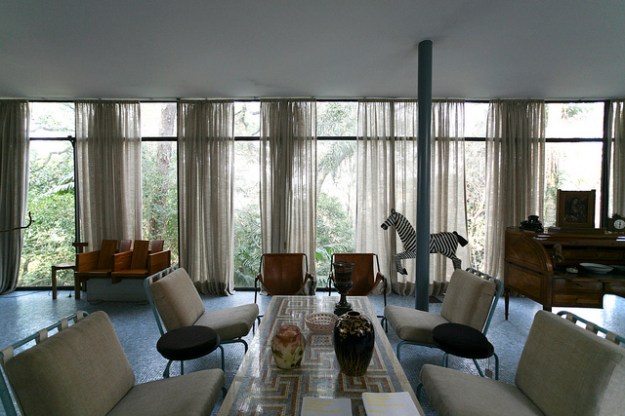
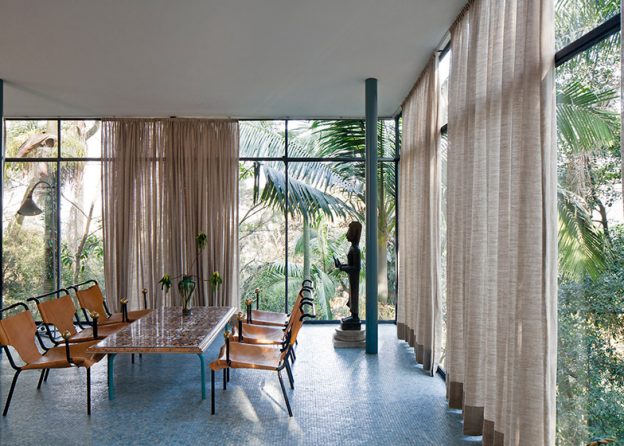
She designed private homes including her own, the Glass House in Sao Paolo (1951, now the Instituto Lina Bo e P.M. Bardi), an early example of the use of reinforced concrete in domestic architecture. It is a beautiful, simple form, a glass box sitting atop long thin posts, allowing the landscape to flow beneath. It is integral with its environment.

Bardi designed modern furniture in plywood and native Brazilian woods; she believed that every designed object ought to take on a form that would display its own ‘natural logic’.

The Museum of Art in Sao Paolo (1957-68), perhaps her most famous building, is a monumental but very humane building. Her solution to the hillside setting was to arrange the building in two parts, one raised up on enormous concrete columns, the other half-buried. This created a third space, the void between the two, which was the ‘belvedere’: a meeting place for work and play; an open arena for gatherings, exhibitions and festivals. For the interior the paintings were removed from the walls instead supported by freestanding glass ‘easels’ sunk into concrete, accompanied by seemingly floating sculptures on transparent blocks.

Her other main civic building, the SESC leisure centre in Sao Paolo, is an example of her desire to create democratic spaces. A conversion of an old factory, she did not try to hide the building’s origins, as it spoke of its location in a working class area of Brazil. ‘It achieves things often hoped for, such as the co-existence of high and low culture, chess, football and ballet, of old and young, of ambitious architecture and the everyday’ (Rowan Moore, The Observer, Sunday 9 September 2012)
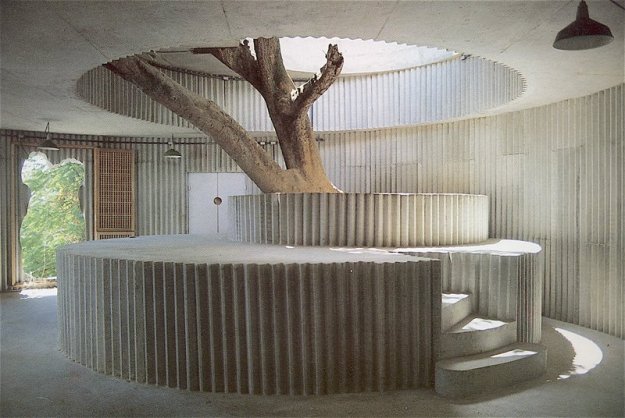
Coati resturant & bar, Ladeira da Misericórdia, 1987 via

Interior of Bo Bardi’s Glass House, Sao Paolo, 1951 via

Feature image: Interior of Bo Bardi’s Glass House, Sao Paolo, 1951 via

functional form.

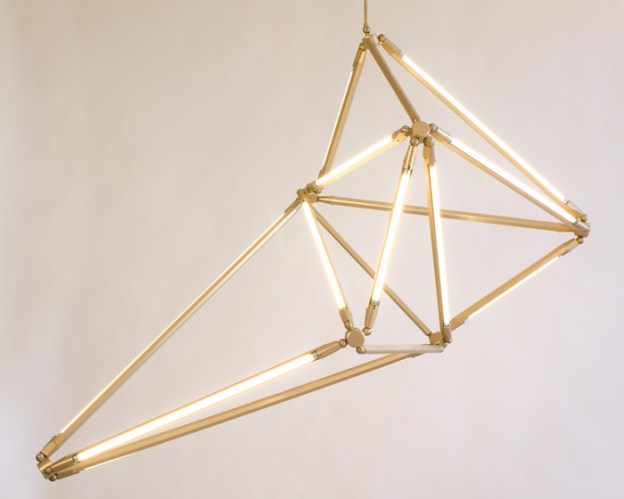
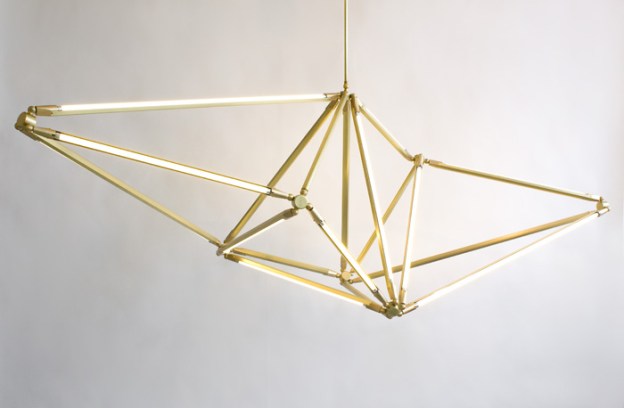
This is a very clever light fitting. The arms are fine LED tubes that can be shaped and formed every which way to create a very individual piece. The finish is brass or black aluminium or oil-rubbed bronze, which makes it very current. The piece takes its inspiration from crystalline structures, both in their static form and as they grow.

It is a very contemporary chandelier, a sculptural piece that has movement and presence. I’m not crazy about the lifestyle images on the web-site, and even though I’ve not met it in person, as it were, I think the geometric form would work in a big industrial space or warehouse or a clean, minimal retail or residential environment.

It can be found, here

owl’s house mood.

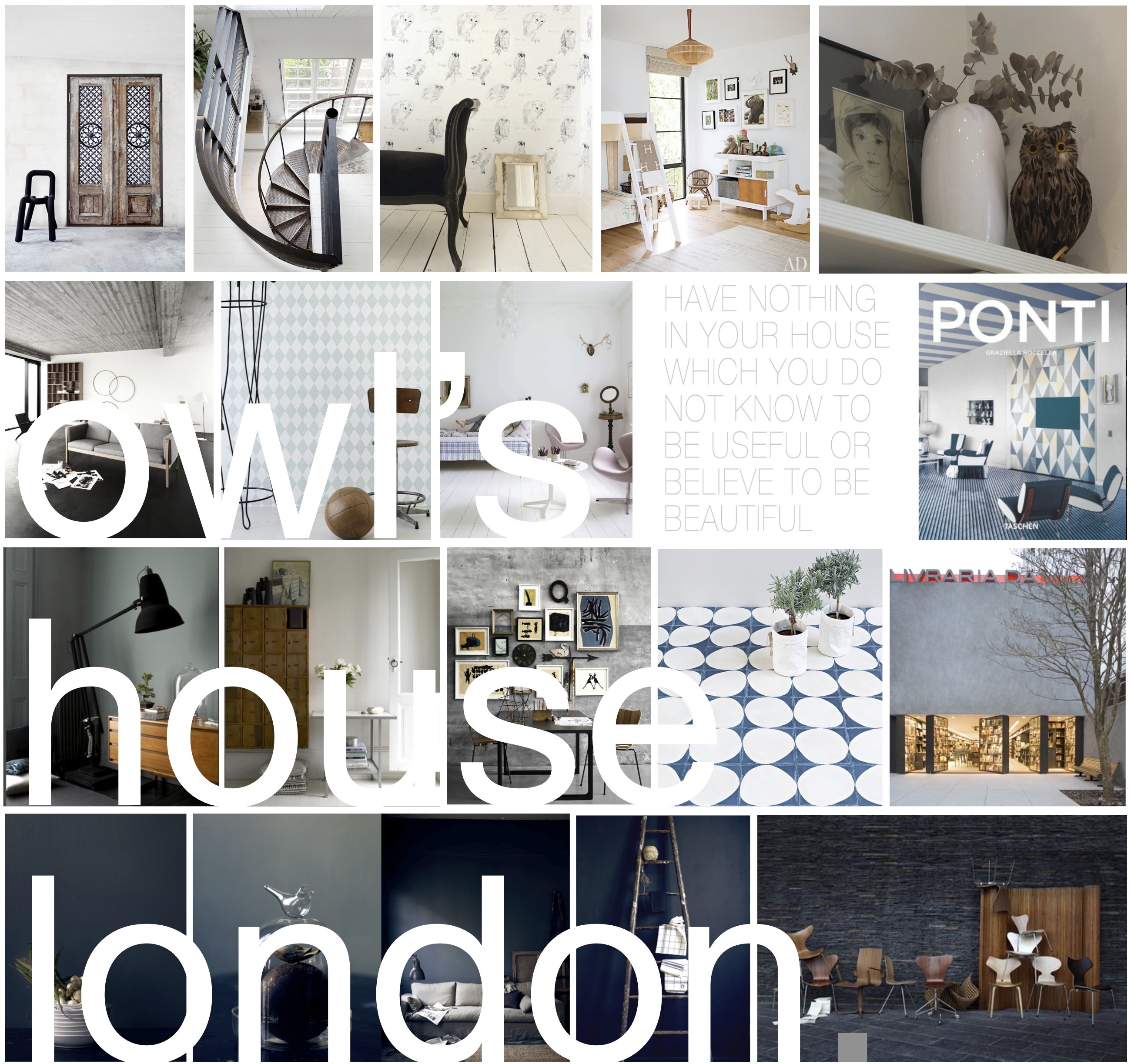
My desire to inspire, create, teach and learn, all of which are culminating in this blog, has led me to undertake an on-line blogging course, led by Holly Becker of Decor8 (here). The course is full of inspiring ideas and skills, which up until now were the domain of people who did that kind of stuff.. Little by little that person is becoming me.

The mood board I have created is the look of things to come. Called ‘modernism, minimalism, tones and texture, objet trouve and beauty found all around’, owl’s house is a design sourcebook, a harbinger of all things wonderful. Interior spaces. Materials and finishes. New products and old ones revisited. Design heros. Local influences and ones from further afield. And, perhaps most importantly, musings to ponder on what makes good design. I hope you will join me!

owl’s house london.

‘And if anyone knows anything about anything’, said Bear to himself, ‘it’s Owl who knows something about something’ he said, ‘or my name’s not Winnie-the-Pooh’, he said. ‘Which it is..’

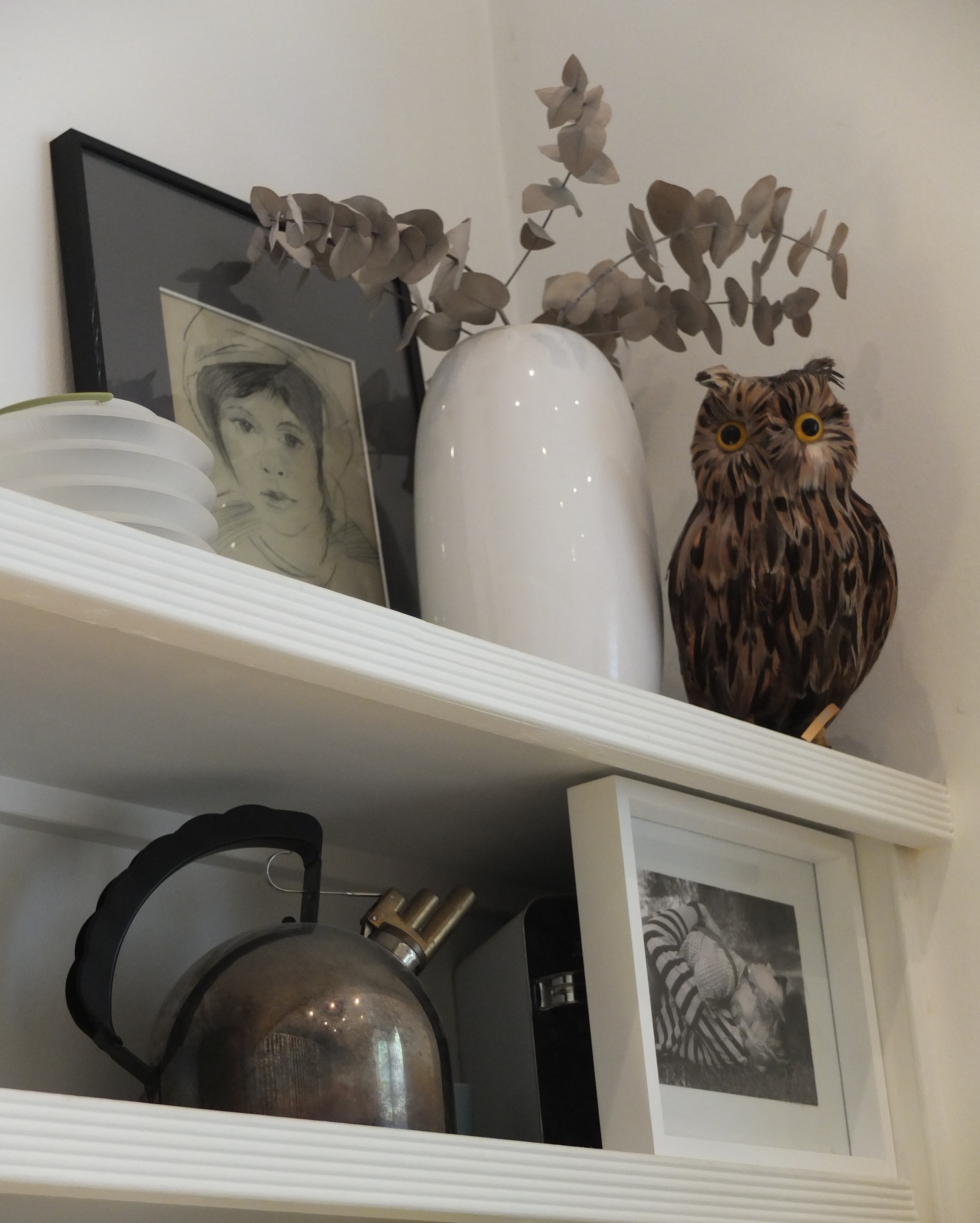
The name came first. Then, happening upon the wonderous Places and Spaces store at design junction in London last month, owl was discovered.  The appellation behind my blog. Wise old owl now sits high up (out of Henry’s grasp), master of all he surveys.

London was added later to the title, as it is where I draw much of my inspiration. London, with a European flavour, perhaps, in particular Scandinavia. A design sourcebook from London with a European sensibility.

image by owlshouse.

on the road.

‘Nothing behind me, everything ahead of me, as is ever so on the road.’
Jack Kerouac, On the Road

Here we go, the first post. Passion? Check! Inspiration? Check! Bucketfuls of ideas? Check!

Via